Plenty of salon clients who don't come back aren't mad at you. They forgot. Or they meant to book, got slammed at work, and suddenly it's been three months.
That's actually good news. If you're dealing with clients not rebooking, forgetting is the easiest cause to fix, and it says nothing bad about your work. But it's not the only cause, and a couple of the others are harder to hear.
So let's go through all six, how to spot which one you're dealing with, and which ones automation really solves. Spoiler: a reminder fixes forgetting. It won't fix a blowout that didn't land.
In short
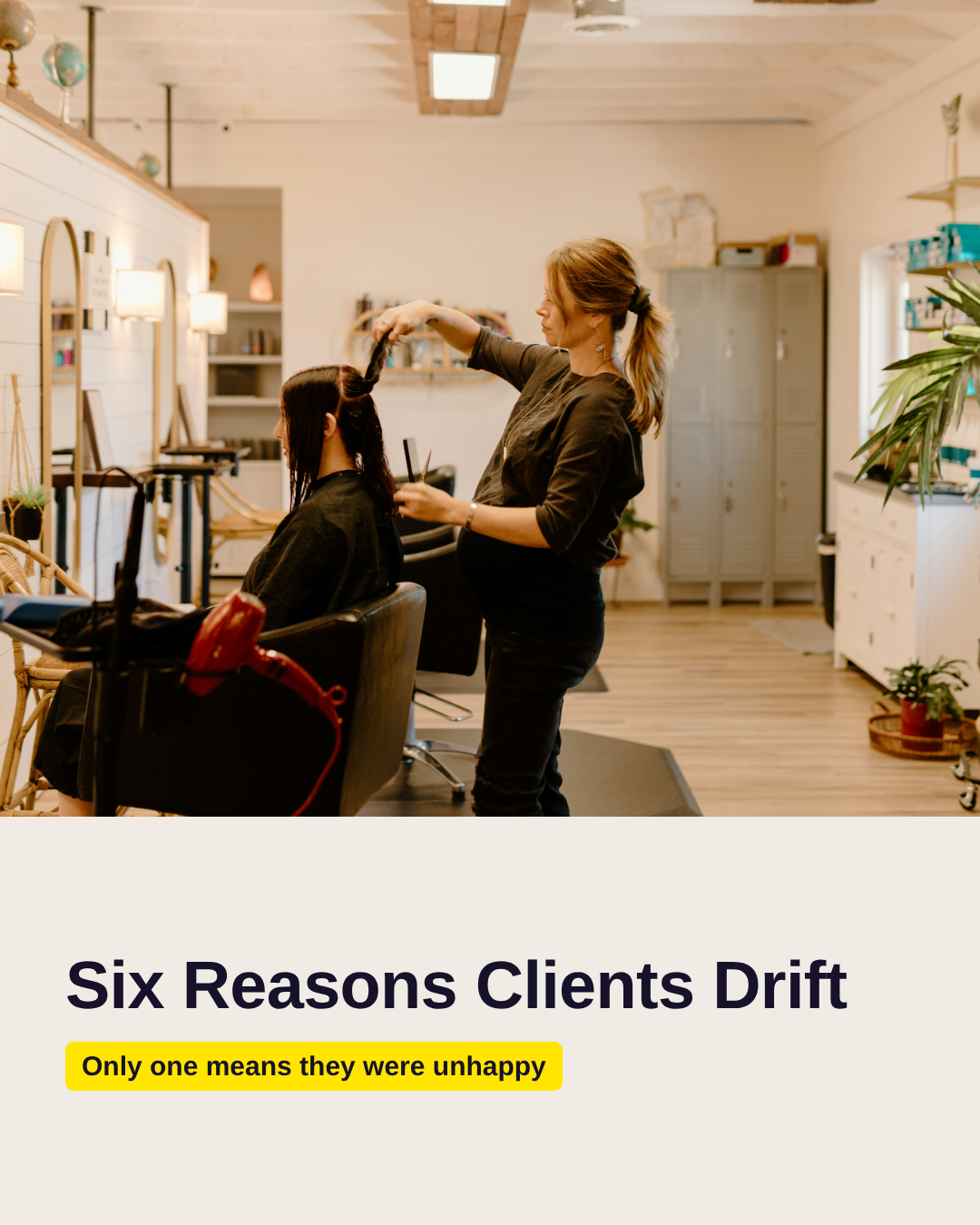
Clients not rebooking usually comes down to one of six reasons, and only one of them means they were unhappy. Here's the full list:
People often search "why don't clients come back salon" when the real question is whether the problem is the service, the booking process, or the follow-up. Most of the time, the service was great and the system around it let the client slip.
Forgetting is one of the simplest reasons clients drift, because it doesn't signal a problem with the service. A client can leave happy, fully planning to come back, and still lose track of when to book.
Think about a gel manicure client. Her nails look great for about three weeks. By week four she notices the grow-out, means to text you, and then it's Friday night and she's booking whoever has a Saturday opening.
A systematic review in the British Journal of General Practice found that simply forgetting was one of the most common reasons people missed scheduled appointments, right alongside work and childcare.
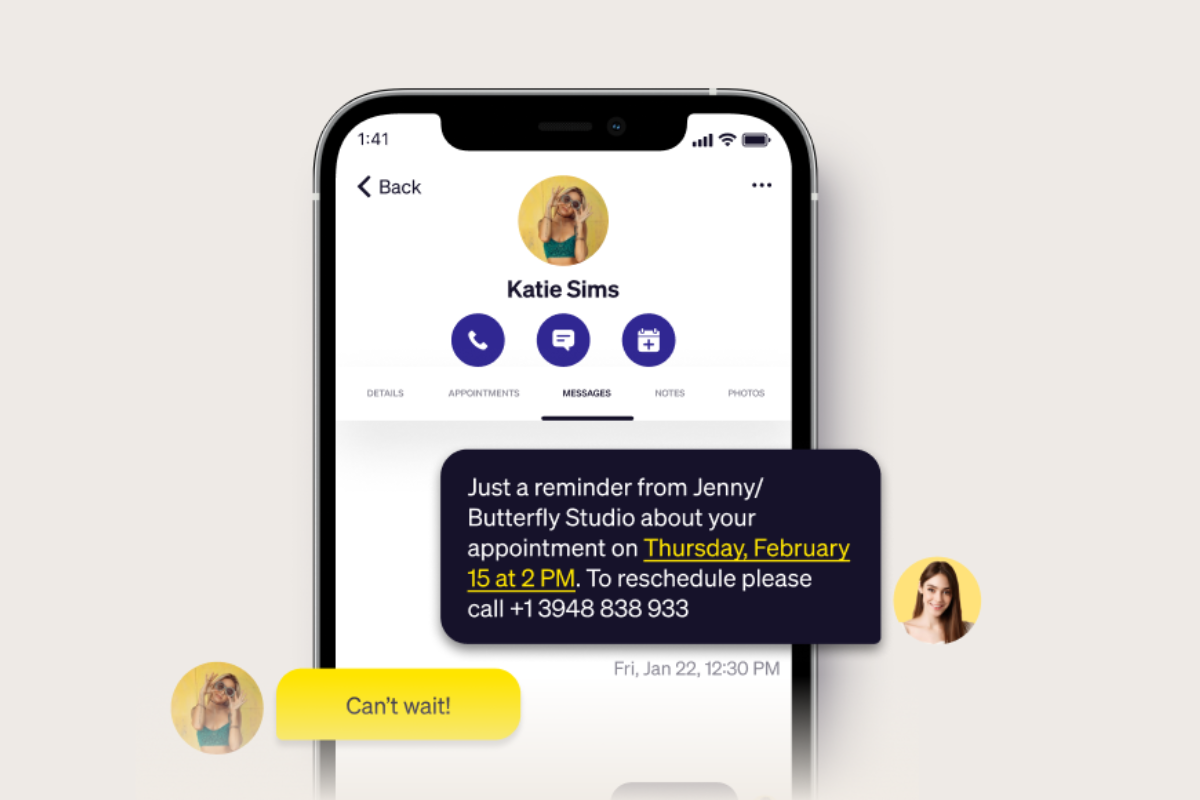
A rebooking reminder is a text that goes out after a visit and nudges the client to book the next one before their results fade. The key word is automatic. You set it once, and it keeps working while you're behind the chair.
Goldie's rebooking reminders go out 30 days after an appointment by default, and you can adjust the timing to fit each service's cycle. They only send if the client doesn't already have a future appointment, so nobody who's booked gets pestered. The message includes your booking link, so rebooking takes one tap.
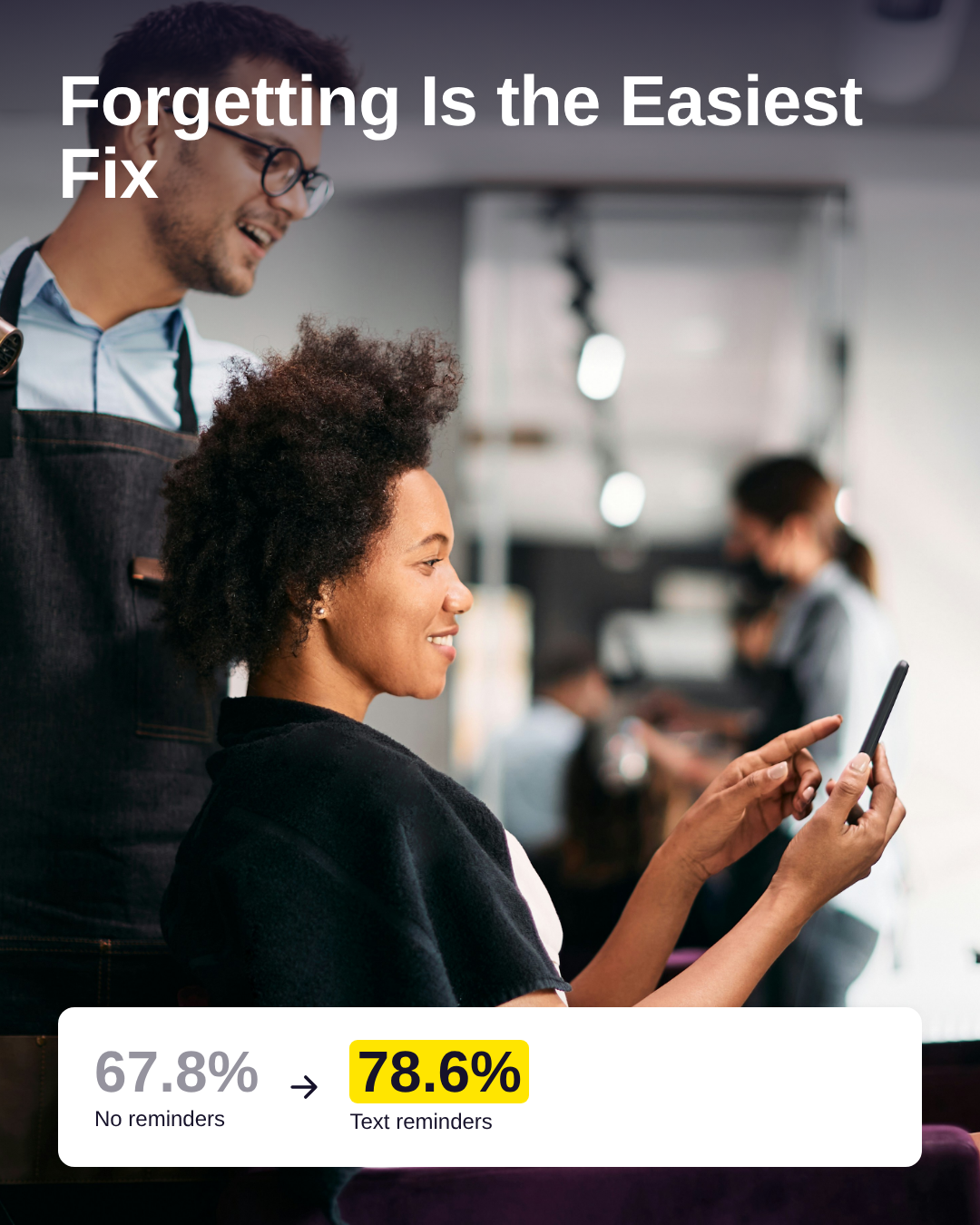
And texts work. A Cochrane review of mobile phone reminders found attendance rose from 67.8% with no reminders to 78.6% with text reminders.
When life gets busy, clients don't decide to leave. They skip one cycle, and then quietly skip another.
That's the drift pattern: one missed visit, then awkwardness, then someone else. A new job, a move, or a new baby can trigger it.
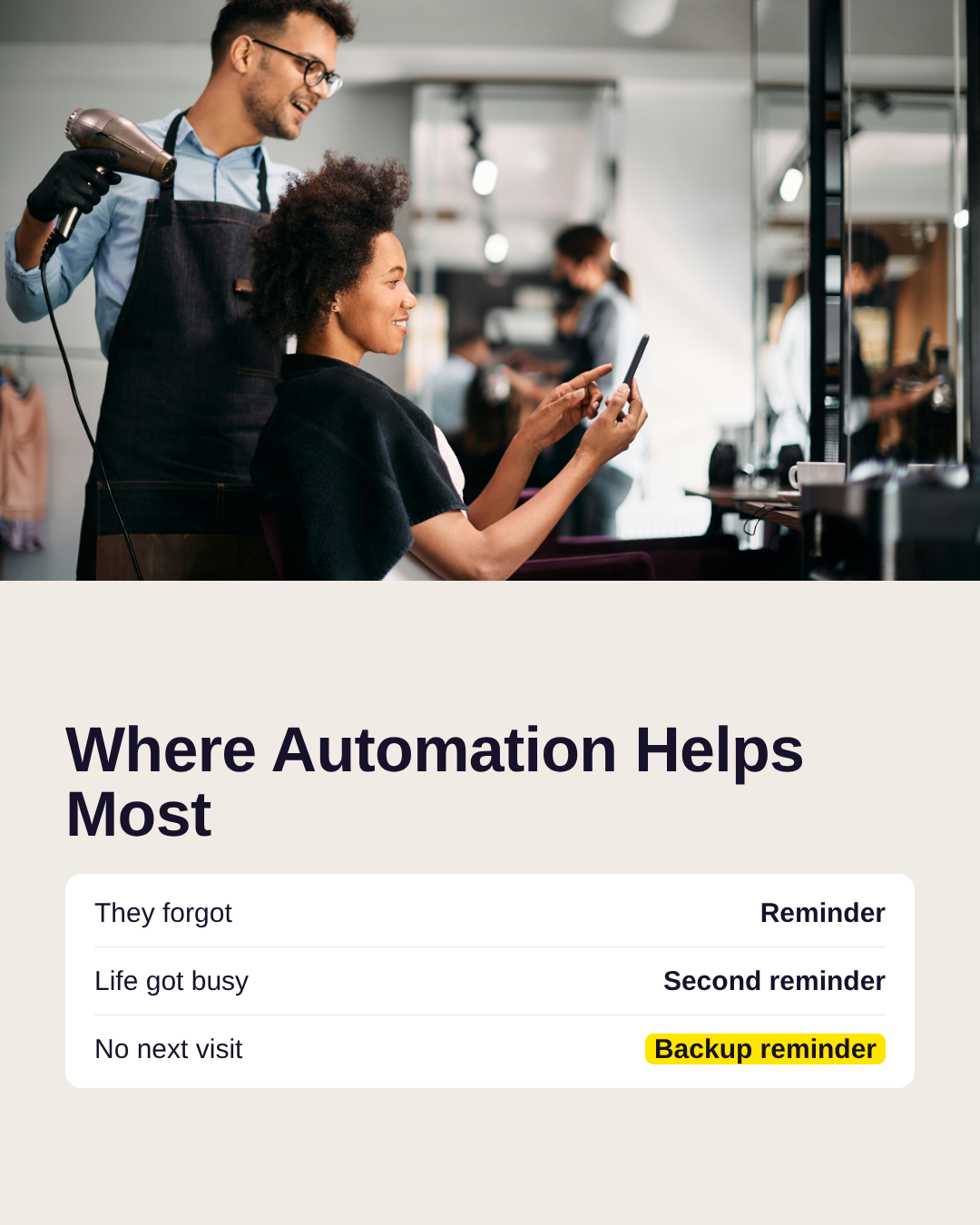
Automation really helps here. One reminder can get lost in a crazy week, so a softer second nudge a few weeks later helps. Something like: "Hey Maria, no pressure, just wanted you to know I have openings next week if you need a refresh." You can set up both as automated text reminders, and with two-way texting she can reply right there instead of hunting for your number.
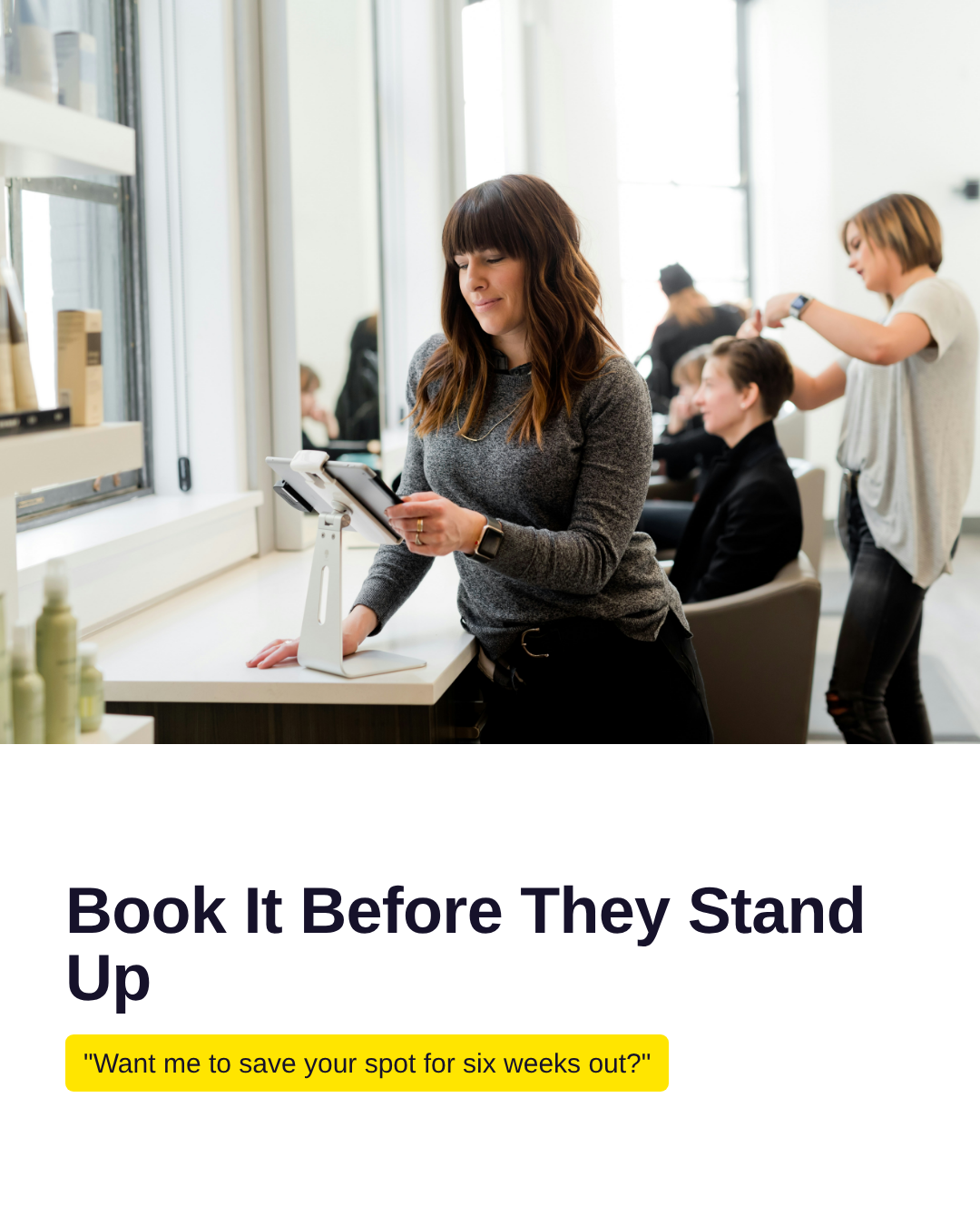
If nobody asks at checkout, most clients assume they'll book later. And later rarely comes.
If you want to increase rebooking rate without spending a dollar, start at checkout. No software replaces a stylist saying, "Want me to save your spot for six weeks out?" Try this checkout routine:
A lot of pros skip the ask because it feels pushy. It isn't. You're saving them a spot on a calendar that fills up.
Sometimes a client books with another pro because it was convenient, not because you did anything wrong. Your openings didn't match their week, a friend raved about her lash artist, or someone was two blocks from their new office.
This is where salon loyalty issues get real. Loyalty is partly emotional and partly practical. If booking you means sending a DM and waiting a day for an answer, the pro with an online booking page wins at 11 p.m.
Make booking you the easiest option in their week. And if a regular has gone quiet, check in and ask how they've been or how their last service held up. It gives them an easy way back into the conversation without making the message feel like a sales pitch.
This one's hard to hear. If a service was fine but not great, most clients won't complain. They'll smile, tip, and never book again.
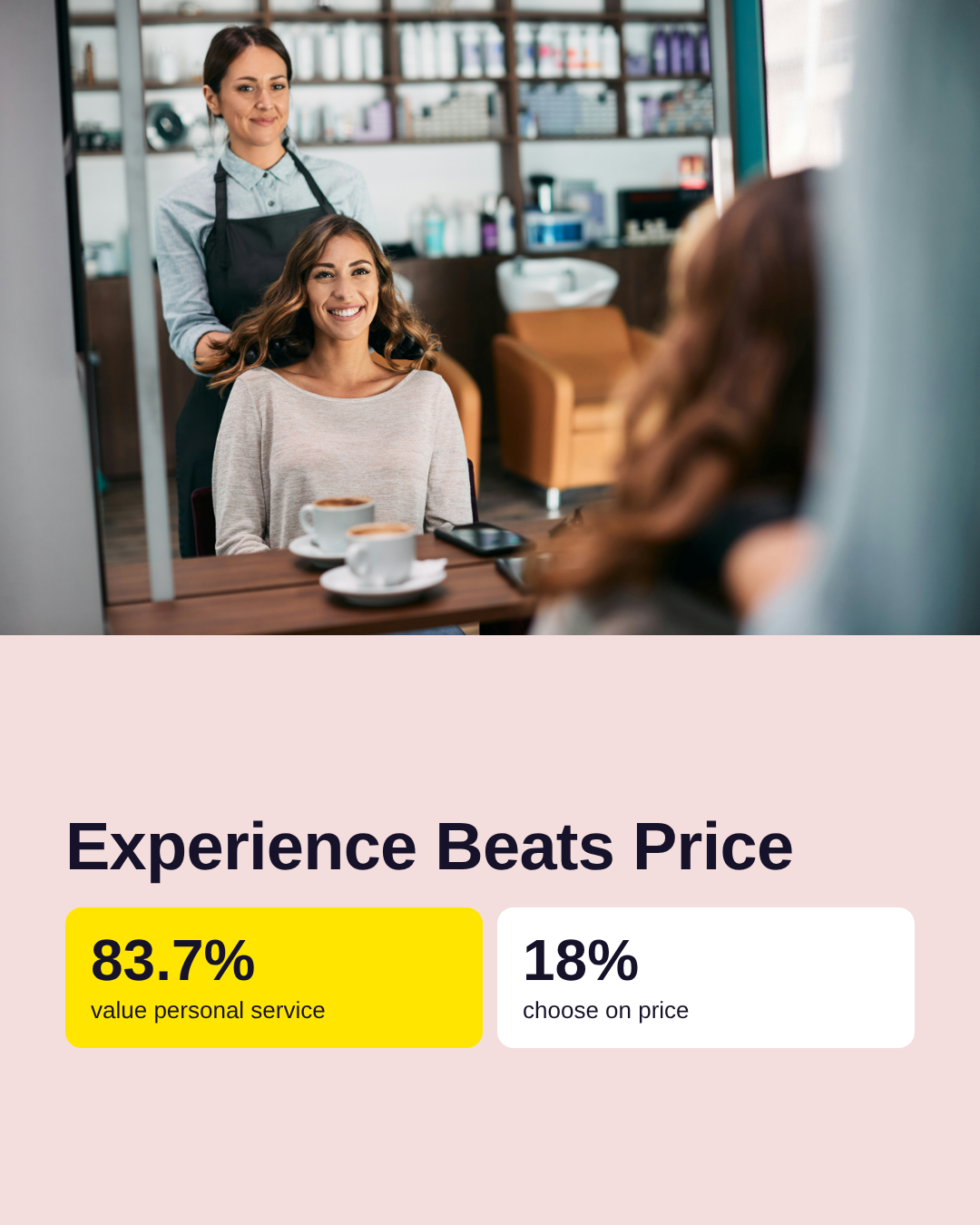
And the experience weighs more than price. In a survey of more than 400 salon clients reported by PBL Magazine, 83.7% said they value friendly, personalized service and 81.4% value their stylist's expertise. Only 18% said price was their main deciding factor.
Maybe the cut was shorter than she pictured, or you were running 20 minutes behind. It feels small to you. It's enough for her to try someone else.
Automation can't fix this on its own. A reminder sent to someone who was quietly disappointed just gets ignored. What helps:
Your follow-up style can quietly push people away. Total silence after a visit feels transactional, and three promo texts a week feels like spam.
Here's the thing: most salon loyalty issues start in the gap between appointments. A good rhythm is simple: one thank-you with aftercare tips, one rebooking reminder when they're due, and the occasional personal touch like a birthday text. A couple of warm follow-up messages for clients will always do more than a weekly promo blast.
Automation helps most when clients forget, get busy, or leave without booking, and it gives you a hand with the rest too. Here's what to switch on for each problem:
Your client list gives you strong clues about which client retention problem you actually have. Look at who hasn't been back in two service cycles and has nothing booked.
If most of them are happy regulars who just faded out, it's probably forgetting. If they were first-timers who never returned, look harder at the experience. In Goldie, each client profile shows their full appointment history, upcoming bookings, and notes, so you can see who's gone quiet and what their last visit looked like. Knowing how to calculate client retention rate then gives you a baseline to track.
It's worth the effort. According to Harvard Business Review, research from Bain & Company found that increasing customer retention by 5% can raise profits by 25% to 95%. Solving even one client retention problem adds up fast.
Rebooking means scheduling a client's next appointment before their current one ends. Pros track it as a rebooking rate: the share of clients who leave with a future visit booked.
Ask for the next appointment before the client leaves, then let an automated reminder catch anyone who said "I'll text you." Track the percentage every month so you know whether it's working.
Usually because nobody gave them a reason or a date to return. First-timers haven't built a habit with you yet, so a clear next step and a timely reminder matter even more for them.
You don't need a big retention overhaul. Start small: practice your checkout ask this week and text three regulars you haven't seen in a while.
Automation will catch the forgetters. Set up automated rebooking reminders in Goldie today, and let those clients find their way back to your chair. With the right reminders in place, clients not rebooking could become the easiest problem you ever solved.

.webp)