Think about your 10 most loyal clients right now. They come back reliably, they refer friends, and they don't haggle over prices. Now think about how many clients have visited you once or twice and then disappeared without a word.
That gap is where a loyalty program lives. It gives clients who already like you a structured reason to keep choosing you. According to research by Accenture, members of loyalty programs generate between 12% and 18% more incremental revenue per year than non-members.
The right salon loyalty program ideas make all the difference, and there are more options than most salon owners realize. A good loyalty program isn't a discount scheme. It's a retention engine.
There's no single best structure. The right one depends on your clientele, your services, and how much you want to manage day-to-day. Here's how the main options compare.

Clients earn a reward after a set number of visits, the simplest loyalty structure you can run. Popular hair salon punch card ideas include a credit after a fixed number of visits or a free service after a longer streak.
Example: Hair salon punch card ideas that work well include a $15 credit after 8 visits, a free blowout after 10 appointments, or a complimentary add-on after 6 color services
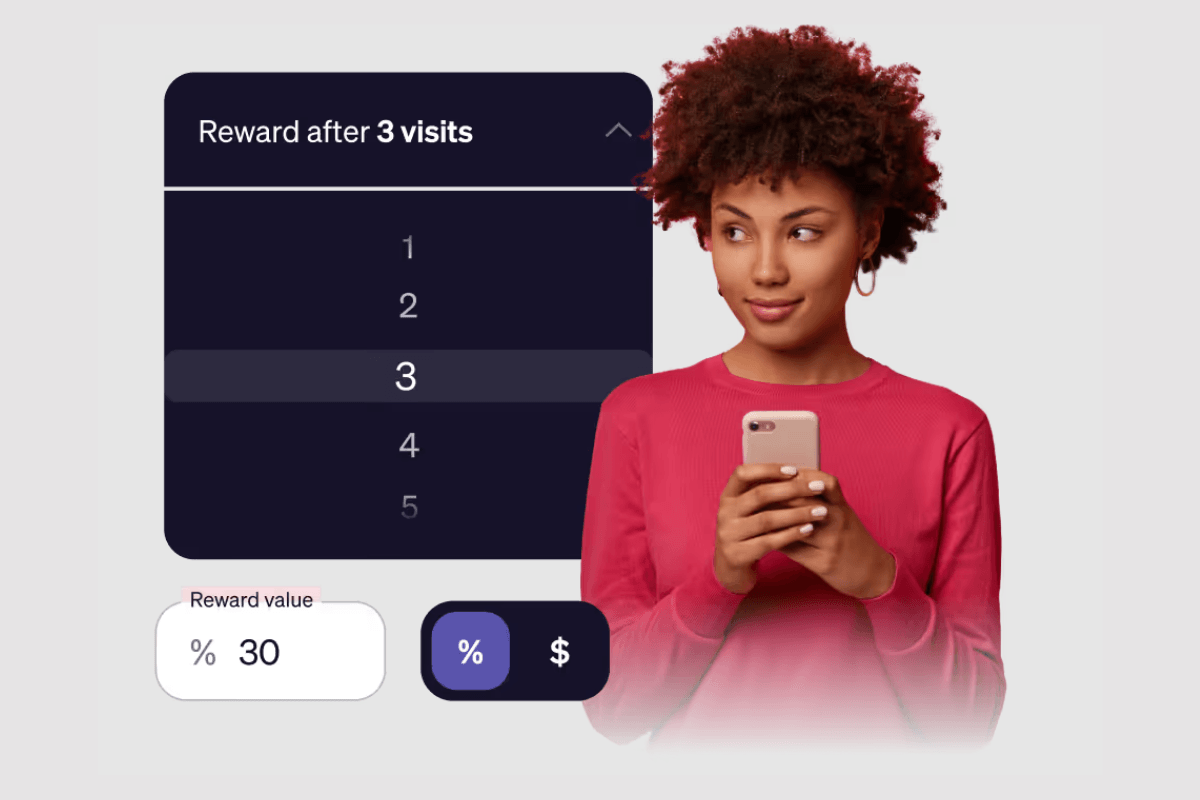
A digital version of these hair salon punch card ideas solves the tracking problem entirely. Goldie's loyalty program runs on visit-based tracking with automatic stamp recording and a fixed dollar reward, so neither you nor your client has to manage anything manually.
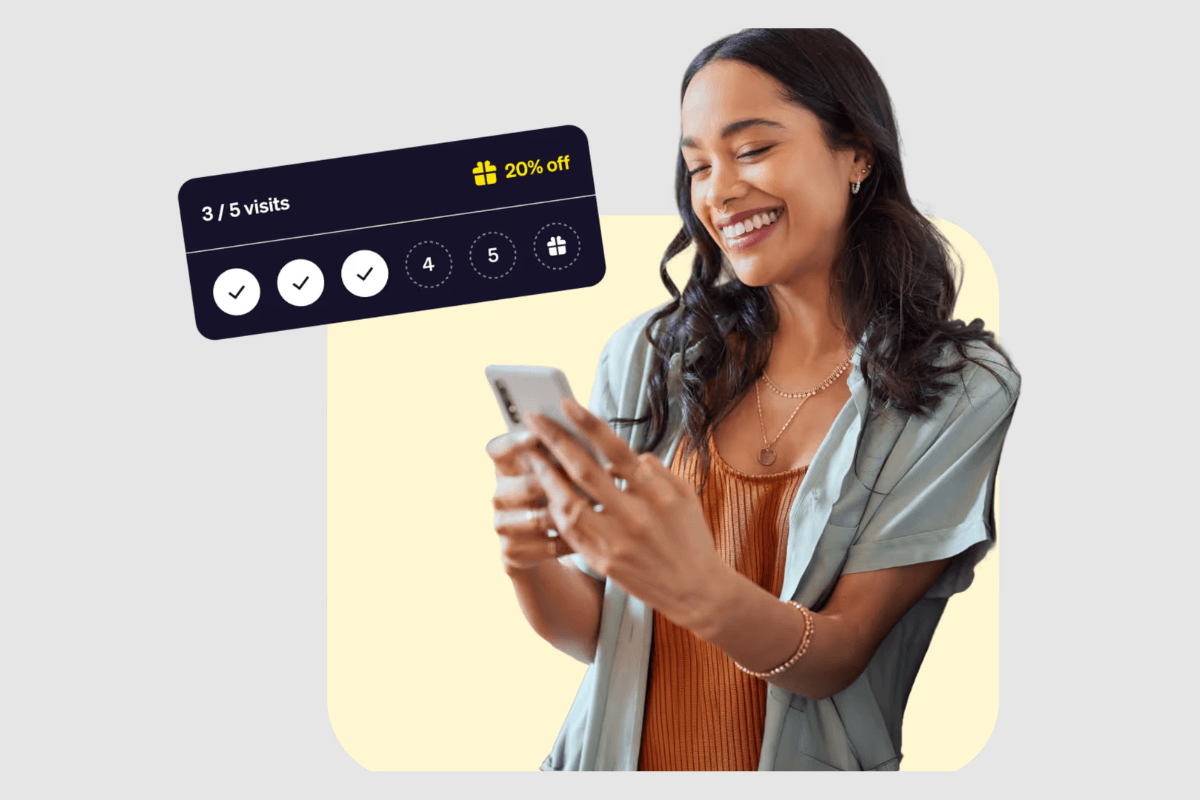
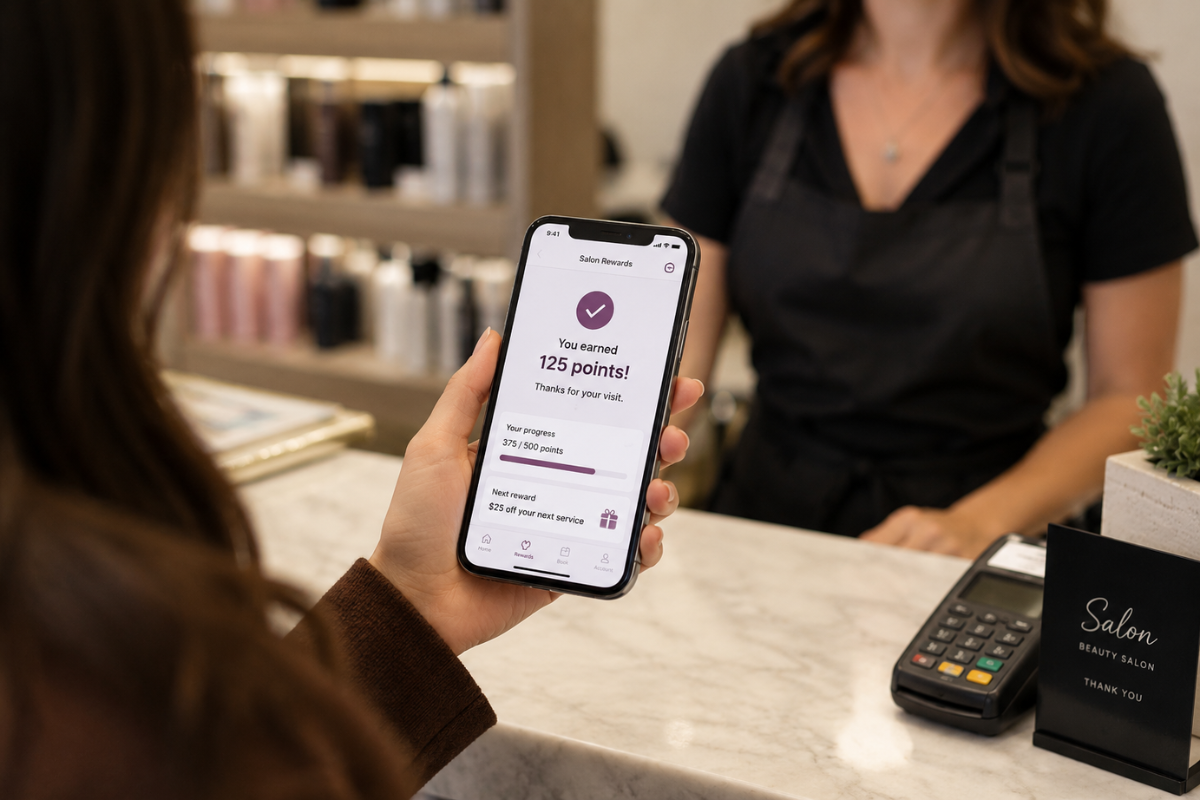
A beauty salon points system awards points for purchases or visits, which clients redeem for rewards once they hit a threshold.
Example: A simple beauty salon points system looks like this: "Spend $500, earn $25 off." Compare that to "Earn 1 point per dollar, redeem 200 points for a $10 credit," which starts to feel like math homework.
Keep the conversion simple enough that a new client understands it in 30 seconds.

A VIP tier program for beauty salon groups' clients into tiers based on visit frequency or spend, with each level offering increasingly valuable perks.
A Gold client who gets pushed to a slot three weeks out will feel like the tier means nothing.
A membership means the client pays a flat monthly or annual fee upfront in exchange for services or perks at a reduced rate.
Example: $89 per month for one haircut and priority scheduling.
Memberships work best for clients who come on a consistent schedule, like a barber client every three weeks or a blowout regular every two.

A referral program rewards your existing clients for sending new people your way, and it pairs naturally with any salon loyalty program ideas you already have running.
Example: Referrer gets a bonus visit stamp or $15 credit, new client gets $10 off their first service.
It works best alongside a loyalty program, not instead of one. Loyalty brings clients back, referrals bring new ones in.
A value-based program ties a portion of every appointment to a cause your clients care about beyond discounts.
Example: With each booking, a small amount goes toward a cause clients vote on each quarter, whether that's a local charity, a community fund, or an environmental initiative.
If your clients already feel a personal connection to your business and strong word-of-mouth is driving your growth, this can be worth exploring.
The salon membership vs loyalty program decision is one most beauty pros wrestle with once they've had a basic loyalty structure running for a while. Both retain clients. But they do it differently, and the tradeoffs matter.
Worth noting: according to McKinsey, paid loyalty program members are 62% more likely to spend more after subscribing, compared to 30% for free programs. But McKinsey also found that 50% of paid memberships cancel within the first year, usually because clients didn't use the benefits enough.
Most independent beauty pros are better served by starting with a free loyalty program and upgrading their most frequent clients to a membership structure once they've identified who visits 6 or more times per year.
Most salon owners guess wrong here. Either the reward feels too small to matter, or it's generous enough to notice but quietly eats into your margins over time. The sweet spot sits between 4% and 6% of total pre-reward revenue.
Average service price × number of visits = revenue before reward. Your reward should be 4-6% of that total.
That translates to roughly 15-20% off one visit, the range clients actually notice and appreciate without you feeling it every month. If your services vary a lot in price, build the math around your most common service: a $60 cut, not a $200 color treatment.
Goldie's loyalty program lets you set both the visit threshold and the reward dollar amount, so you can run this math first and plug in the numbers that work for your specific business.

Absolutely, and it doesn't take much to set up. Loyalty rewards keep clients coming back, referral rewards bring in new ones. They solve different problems, which is exactly why they work well together.
A clean two-sided structure looks like this:
A referral that rewards only the new client tends to flop because your loyal client has no skin in the game. Getting both sides right is what turns a referral bonus into something people actually use. There are a few referral program ideas worth knowing before you decide which one fits your clientele.
A program you're not measuring is just an expense you can't justify. These are the metrics that tell you whether your loyalty structure is changing client behavior or just rewarding behavior that would have happened anyway.
The redemption rate is the one most salon owners overlook. Below 20% means clients don't see the value or don't know they have rewards. Above 40% means you're likely giving away too much margin. Both are signals to adjust something.
Loyalty metrics don't exist in isolation either. Redemption rate, visit frequency, and average ticket all connect to the key performance numbers your salon should be tracking anyway.
A loyalty structure that felt exciting at launch can start to feel stale after a year if you don't revisit it. Client preferences shift, your service menu evolves, and what worked in January might need adjusting by fall.
Set a calendar reminder to review your program every six months and ask yourself two questions:
Slow seasons are a natural moment to run a limited-time bonus:
You don't need a new program. Small updates to an existing structure are usually enough to re-engage clients who have gone quiet.
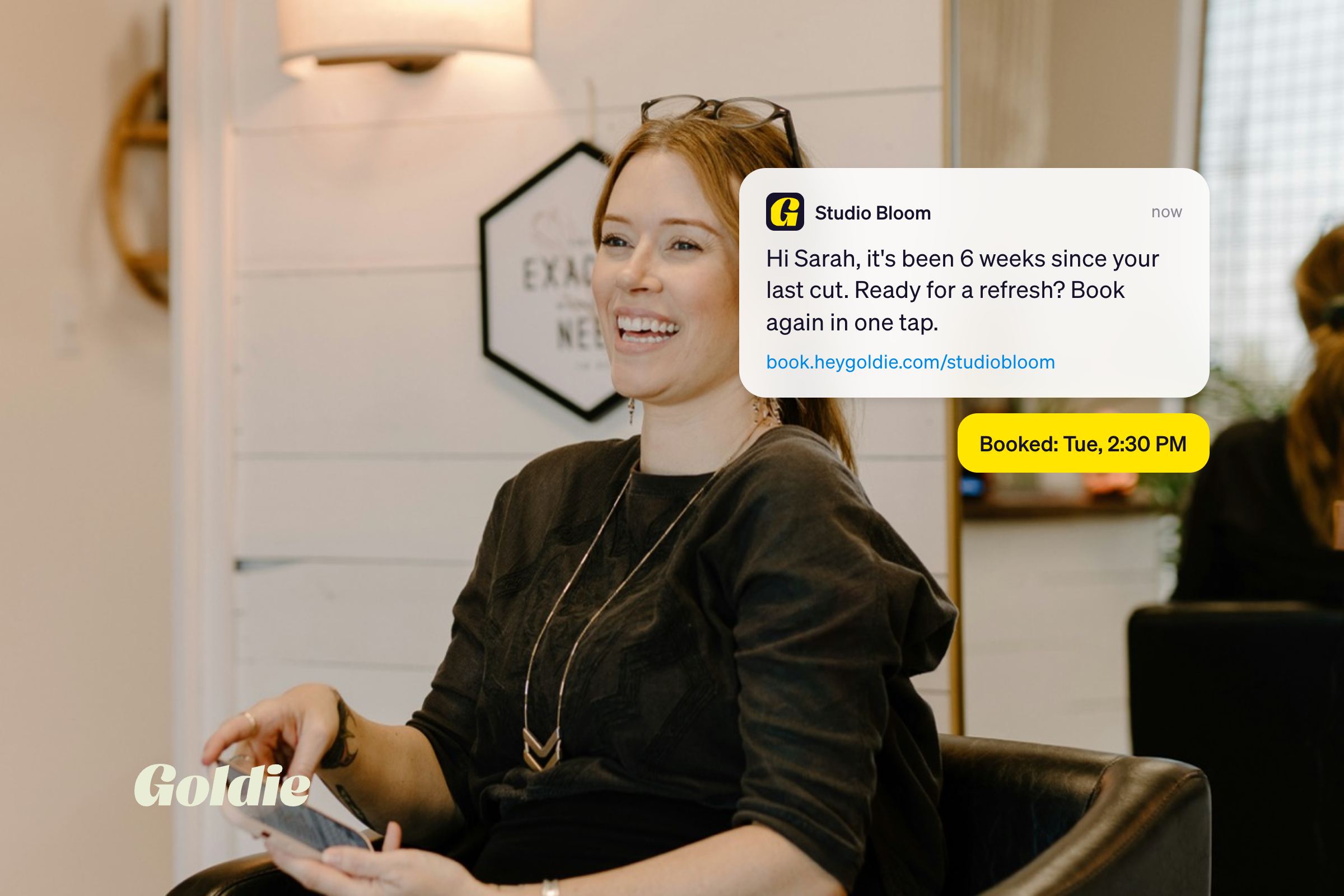
The reward motivates the next visit. But what actually gets clients to rebook is often something simpler: a well-timed message after their appointment. Rebooking reminders do a lot of the quiet work that loyalty programs get credit for. Together with the right marketing tools, they're much harder to ignore than either one alone.
The best salon loyalty program ideas are the ones simple enough to explain, sustainable enough to maintain, and compelling enough to make clients feel like coming back is worth something.
A visit-based reward tracked automatically through your booking system is the lowest-effort, highest-return place to begin. Goldie's loyalty feature handles the tracking, applies the reward automatically when a client hits their goal, and gives you full visibility into where every client stands.
Once you know which clients visit most consistently, you can layer in a VIP tier program for beauty salon or a membership for your top customers. But that comes later. Loyalty programs work best as part of a wider client retention approach, not as a standalone tactic.

.webp)