A client wants the full balayage, the bond treatment, and a glaze. Her total lands at $320, and you watch her pause, run the math, and trim the booking back to a single-process color. That pause is the exact moment buy now, pay later was built for. The real question for your salon is whether BNPL wins back that bigger ticket, or whether the fees quietly cost you more than the upgrade is worth.

Buy now, pay later is a short-term financing option that lets your client split the cost of a service into a few equal, interest-free payments while you receive the full amount upfront, minus a transaction fee. The most common structure is “pay in 4”: the client pays a quarter at checkout and the rest across three installments over six weeks. Providers like Afterpay, Klarna, Affirm, and Zip run a soft credit check, approve the client in seconds, and take on the repayment risk themselves. For the client it stays interest-free when payments are made on time, and the soft check does not dent their credit score, which is a big part of why younger clients reach for it instead of a credit card.
For you, the mechanics look a lot like a normal card payment. The client picks BNPL at online checkout, the provider pays you the service total minus the fee, and the provider handles collecting the installments. If the client stops paying, that is the provider’s problem, not yours.
This matters most for premium work. Trade publication Salon Today notes that beauty and spa services priced from $400 to $1,000 and up are exactly where clients hesitate, and where splitting the cost into interest-free payments removes the sticker shock.
BNPL is growing in beauty because service prices keep climbing while the clients most drawn to premium work, younger women, are also the heaviest users of installment payments. The overlap is hard to ignore.
The category is now mainstream. PYMNTS Intelligence pegs the US BNPL market at roughly $175 billion, up from about $2 billion in 2019. More than half of US consumers have used a pay-later option, and the demographics line up tightly with a beauty clientele: Empower research finds more than half of BNPL users are 35 or younger, and women use BNPL at noticeably higher rates than men (around 20% versus 14%). Monthly BNPL spending per user also climbed about 21% between mid-2024 and mid-2025, a sign that this is a habit, not a fad.
Put those two facts together. Your highest-value services keep getting more expensive, and the clients booking them already pay this way nearly everywhere else.
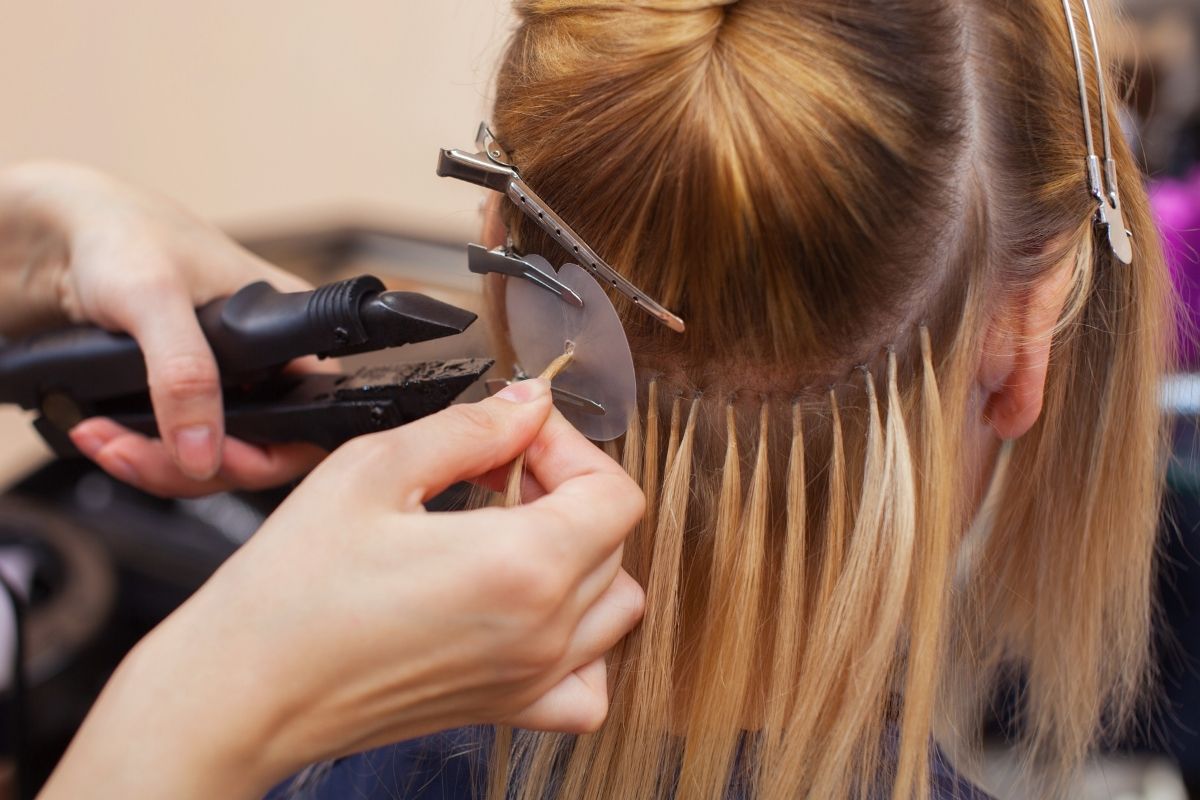
Consider what a single appointment can cost now. A full head of hand-tied extensions, install plus hair, routinely runs $600 to $1,500. A bridal trial and wedding-day package can clear $500. Microblading lands around $400 to $800, and a multi-session laser or color-correction plan can run higher. At those prices the client is rarely choosing between you and a cheaper artist. She is deciding whether she can put it on one card this month, and BNPL answers that question for her.
The core appeal of BNPL is straightforward: clients book bigger when the price is split into smaller payments. Goldie reports that salons using its buy now, pay later feature see roughly a 20% lift in total revenue, driven by clients trading up to larger services and packages they would otherwise postpone. Broader retail data points the same direction, with many merchants reporting double-digit increases in average order value after adding BNPL [VERIFY: cite a specific average-order-value lift figure, ideally from Afterpay or Klarna merchant data].
There is a second, slower payoff: new clients. BNPL is concentrated among exactly the people booking high-end beauty work, so a younger client who books her first $300 service because she can split it is a client you can rebook for years. The flexible payment removes the one-time price barrier on the appointment that turns her into a regular.
Run the math on one booking. A client comes in for a $150 color, and you offer to add extensions and a bond treatment that would take her to $450. On a single card charge, she balks. Split into four payments of about $112, she says yes. You net roughly $423 after the 6% BNPL fee, against the $150 you would have taken otherwise. The fee is real, but it is sitting on top of $270 in revenue that simply would not have existed.
BNPL is not free money. You trade a higher processing fee and a little extra admin for the bigger ticket, and that trade only works when the ticket is genuinely bigger. Here is the honest cost.
The fee is the headline. BNPL merchant fees typically run 4% to 6%, well above standard card processing. Inside Goldie’s payment processing, US BNPL transactions carry a 6% plus $0.30 fee, so a $100 service nets you $93.70, compared with about $97 on a standard card. On a $400 balayage, that 6% is about $24. On premium work, the bigger booking usually more than covers it. On a $40 brow wax, it does not.
The low-ticket trap is subtle. If you switch BNPL on across your whole menu, you can end up paying 6% on the $45 services clients were always going to book anyway, quietly shaving points off your busiest, lowest-margin work. The feature only pays for itself where it actually changes a decision, which is why the price threshold matters as much as the feature itself.
BNPL is right for premium, high-ticket services and wrong for quick, inexpensive ones. The dividing line is roughly the price at which a client stops and thinks before booking.
Strong fits:
Weak fits:
This is also why Goldie only surfaces BNPL on online charges of $50 or more, so it shows up on the bookings where it helps and stays out of the way on the ones where the fee would just eat your margin. If most of your menu sits under $75, BNPL is a nice-to-have, not a priority. If you sell $200-plus transformations or packages, it can change how often clients say yes. Payment plans for a hair salon built around color corrections and extensions are a very different proposition than for a barbershop doing $35 cuts.
Packages are the quiet winner here. A six-session laser course or a three-appointment color-correction plan is far easier to sell when the client can spread it across installments instead of paying for the whole arc on day one. If you have ever lost a series sale because the lump sum scared someone off, that is the exact booking BNPL is designed to rescue.
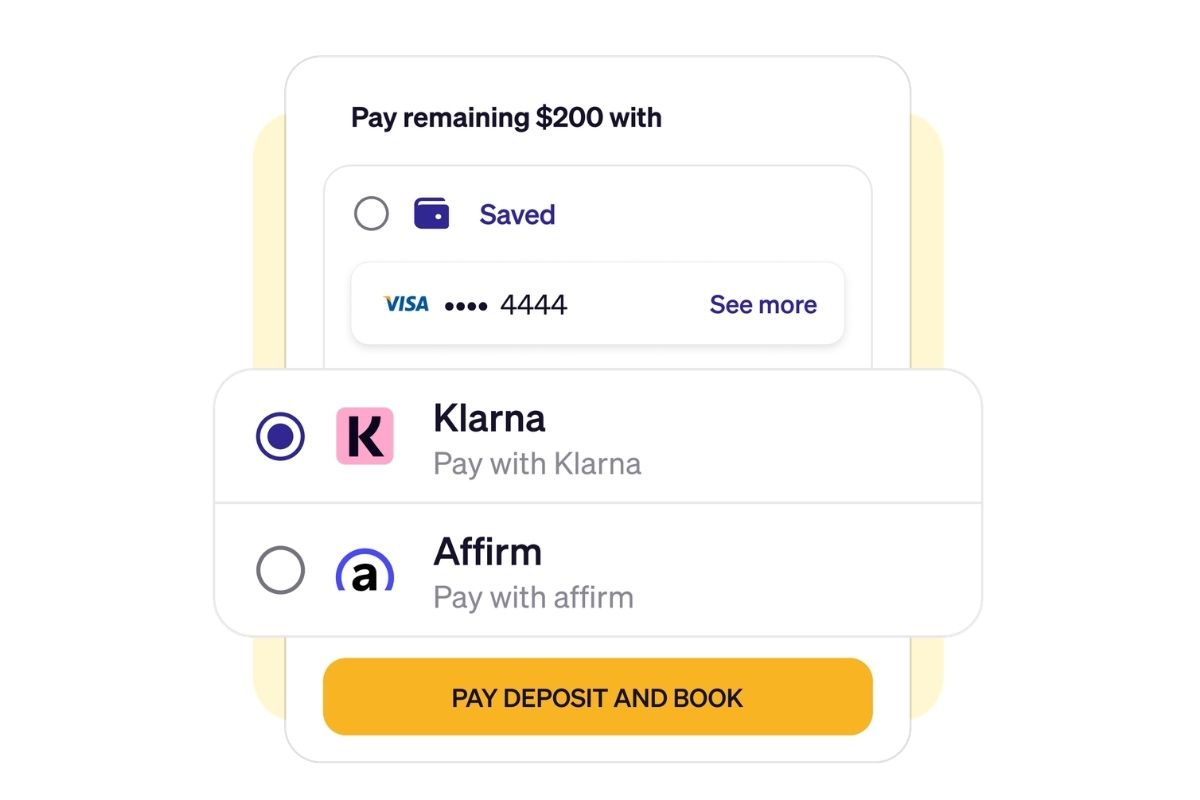
You offer BNPL by switching it on inside the tool you already use to take payments, then deciding which services and price points it applies to. You do not need a separate contract with Afterpay or Klarna.
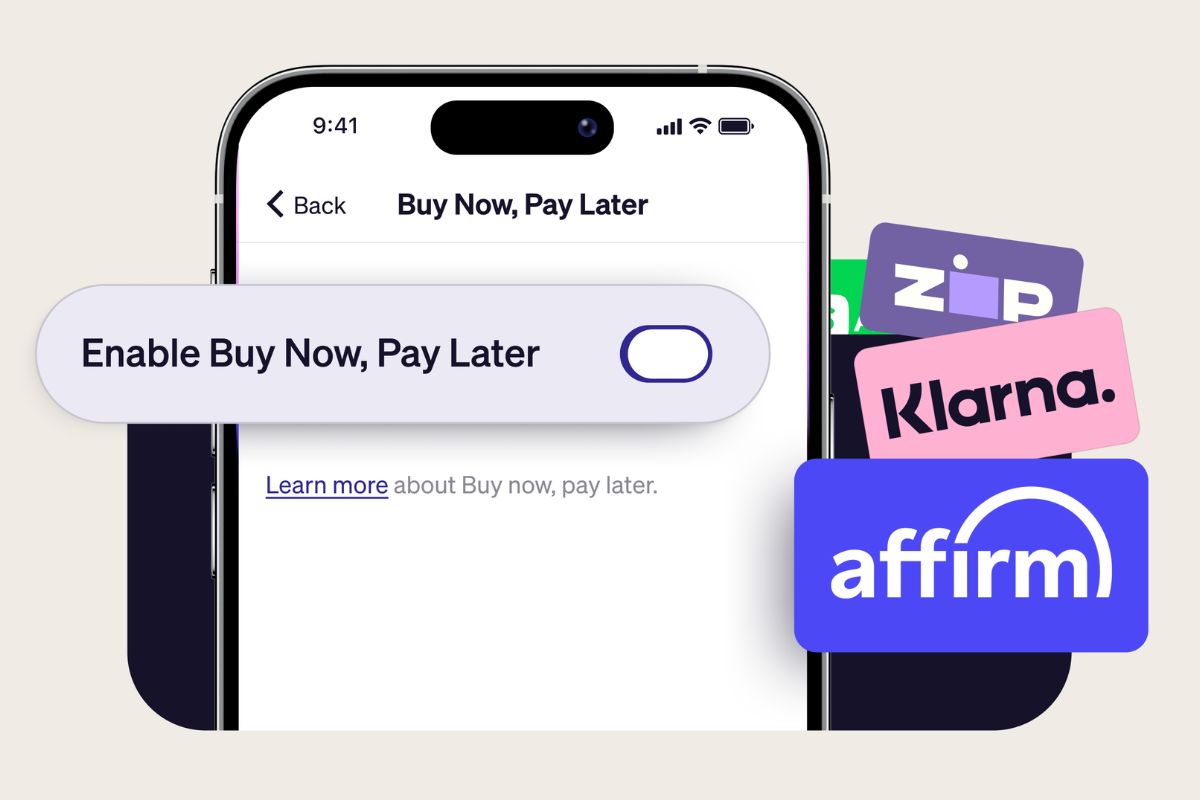
In Goldie, BNPL is built into the booking and checkout flow on the Pro plans, with no separate setup fee. You enable deposits first, then toggle BNPL on in Payment settings. Clients see the option at online checkout (it is not available for in-person payments) on charges of $50 and up, choose a provider, and get approved in under a minute. You are paid in full on your normal payout schedule, and the provider collects the rest. Goldie supports Afterpay, Klarna, Affirm, and Zip, so most clients find an option they qualify for.
One honest caveat on the trend itself. BNPL growth has cooled slightly as some shoppers shift back toward credit card installment plans, per PYMNTS, so treat it as one useful payment option rather than a guaranteed growth lever. Pair it with clear policies and watch your numbers. If Goldie’s reporting shows bigger average tickets and steady payouts after a few months, keep it. If it is mostly adding fees on services that would have booked anyway, scope it down to your premium menu.
Should your salon offer buy now, pay later? Yes, if you sell premium, high-ticket services. Probably not, if your menu is mostly quick, low-cost appointments. BNPL trades a higher fee (around 4% to 6%) for bigger bookings and less hesitation from younger clients who already pay this way. It pays for itself on a $400 color correction. It just burns margin on a $40 fill.
The practical next step: list your five highest-priced services. If three or more regularly make clients hesitate, downgrade, or delay, turn BNPL on for online bookings over $50 and leave it off everywhere else. Then check your reporting after 60 days to confirm the bigger tickets are real, not just more expensive. That one scoped decision captures most of the upside while keeping the fee where it earns its keep.

.webp)