You didn't open your salon to spend your evenings hunched over spreadsheets. You opened it because you love the moment a client sees their transformation and lights up.
But here's the thing: the right numbers are what separate a salon that thrives from one that slowly bleeds money while you wonder why you're exhausted but your bank account isn't growing. You don't need to track everything. You just need to track the right things.
Let's talk about the salon performance metrics that actually matter, and more importantly, how to track salon performance metrics per stylist so you can stop guessing and start knowing.
Running a salon without tracking key performance metrics is like cutting hair with your eyes closed. Sure, you might nail it sometimes, but eventually you're going to make a mess.
Here's the real problem: it's not that salon owners don't understand why key performance metrics for salons matter. It's that you're either tracking the wrong things, or you started tracking once and then life got crazy. Between managing your team, dealing with that client who's never happy, and trying to have some personal life, who has time for analytics?

But ignoring salon performance metrics costs you real money. That stylist everyone loves? She might actually be your least profitable because she's using twice the product she needs. The salon owners who consistently grow aren't necessarily better at hair than you. They just know what their numbers are telling them.
If you only track one of the key performance metrics for salons, make it this. Revenue per service hour shows you how much money your salon actually makes for every hour someone's in a chair.
Why does this matter more than total revenue? Because time is what you can't get more of. You've only got so many chairs and so many hours in a day.
Here's how to figure it out: take your total service revenue and divide it by total hours spent on services. Do it for your whole salon first, then look at each stylist individually.

That stylist with lower total numbers? She might actually be making you more money per hour because she's efficient. Meanwhile, your "top performer" might just be logging more hours, not actually maximizing what each appointment brings in.
This is where learning how to track salon performance metrics per stylist changes everything. When you see each person's hourly revenue, you know exactly who needs help with efficiency. A solid staff management system does this math for you automatically.
According to Harvard Business Review, getting a new client costs five to 25 times more than keeping one you already have. Yet most of us obsess over new client numbers while barely noticing how many people aren't coming back.
Your retention rate is the percentage of clients who return after their first visit. Here’s how to figure it out. For example, a salon keeping 80% of clients is wildly more profitable than one keeping 60%, even if both bring in the same number of new faces.
Check this monthly. If retention suddenly tanks, figure out why fast. Did your best stylist just leave? Are appointments running so late that people are annoyed? Every percentage point represents real money over a year.
Break it down by stylist too. Some people naturally connect with clients. When you can see who's keeping clients and who's losing them, you can coach specifically instead of wasting time with generic training.

Average ticket value is how much each client spends per visit. It's one of the quickest ways to make more money without working more hours.
The math is simple: total revenue divided by the number of appointments. Look at it weekly, and check it by stylist to see who's great at suggesting extras versus who's leaving money on the table.
This isn't about being pushy. It's about making sure clients know what would help them. That stylist with consistently low tickets? She might not be mentioning that deep conditioning would fix the dryness her client just complained about.
When you understand how to track salon performance metrics per stylist, you can have real conversations like this: "Hey, your average is $85, and the salon average is $105. Let's look at your consultations together."
Services are your bread and butter, but retail? That's where your margins actually get good. Product sales bring in 50%-60% profit margins, while services only net you 20%-35% after you pay your team.
Your retail-to-service ratio tells you what chunk of your money comes from product sales. According to ProStylingTools, most salons pull in around 12% to 15% of revenue from retail, but with a real strategy, that number can climb to 20% to 25%. That gap? It's profit you're walking past every single day.
Track it by stylist to spot opportunities. Some people naturally work product recommendations into their service because they genuinely want clients to maintain their results at home. Others finish up and never mention a single bottle. Clients actually appreciate suggestions when they come from someone who clearly knows their stuff.
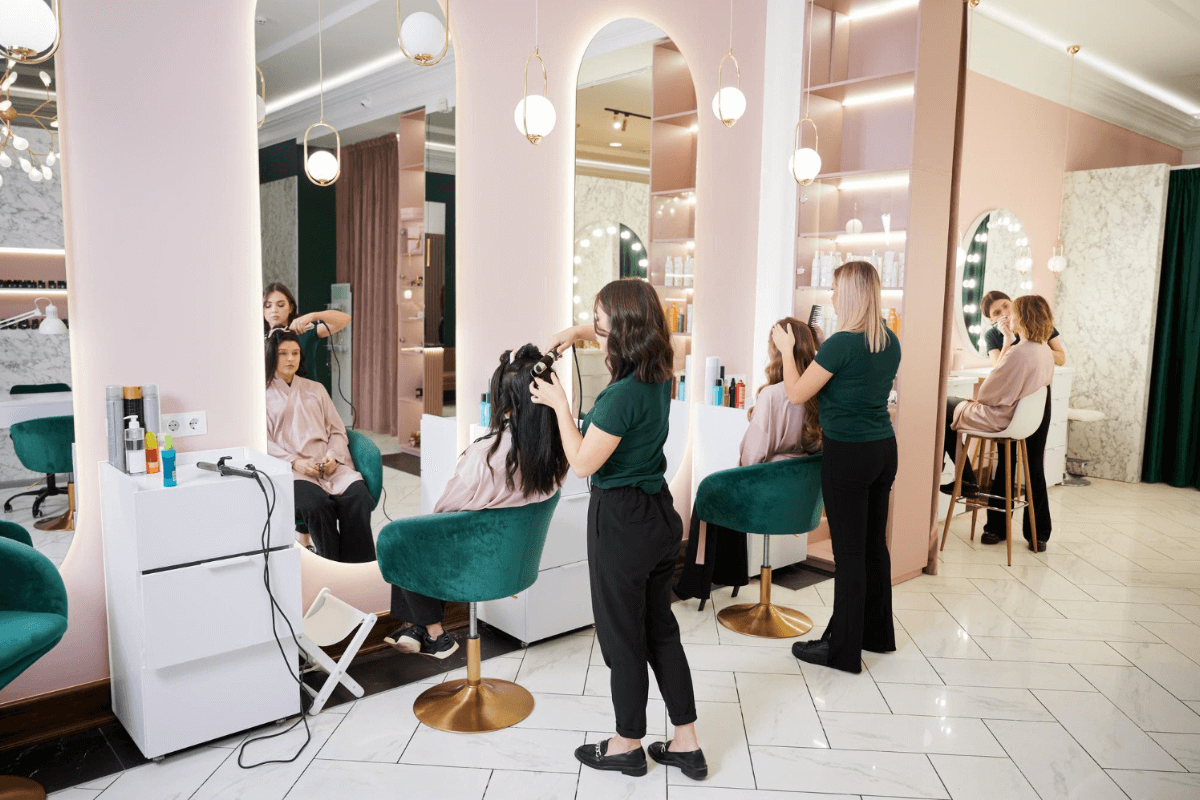
Utilization rate is how much of your available appointment time actually has paying clients in chairs. When your salon's open but seats are empty, you're paying rent and utilities for nothing.
Calculate it by dividing booked service hours by total available hours. Too low and you're wasting money on empty chairs. Too high and your team burns out with no breathing room for same-day requests.
This number helps you spot patterns you'd otherwise miss. Are Tuesday mornings always dead? Maybe that's team meeting time. Saturdays so packed you're turning people away? Consider staying open later. A booking app that manages staff schedules shows you these trends instantly.
Looking at utilization per stylist is eye-opening, too. Your newest hire might be amazing, but you have empty slots because clients don't know her yet. Send new client requests her way to build her book.

Every cancellation is money walking out the door. Every no-show is worse because you held that spot when someone else could have paid for it.
Track cancellations and no-shows separately. Are Mondays always terrible? Do the same few clients ghost you repeatedly?
Lots of salons fix this fast with basic systems: reminders 48 and 24 hours before appointments, cancellation policies that are actually clear, and deposits for bigger services. Research published in BMJ Open found that automated reminders cut no-shows by 25%, and sending multiple reminders works even better.
Check this by the stylist too. Learning how to track salon performance metrics per stylist means looking at every angle. Sometimes one person's clients cancel constantly because she's accidentally made it seem like no big deal. Or maybe another stylist has incredible loyalty because her clients genuinely don't want to let her down.

This one sneaks up on salon owners. You're busy, chairs are full, but somehow your margins keep shrinking. Then you realize someone's been pouring money down the drain. Literally.
Track how much product each stylist uses compared to the services they do. Two people can both charge $150 for color, but if one uses 30% more product because she mixes too much or applies too heavy, your actual profit on her services tanks.
Someone who consistently throws away unused color needs some technique coaching. When you're watching this number, you catch wasteful habits before they cost you thousands over a year.
How often do your appointments run late?
When one service goes long, everything snowballs. The next client waits and gets annoyed. Your stylist feels rushed and stressed. Then everyone's day is off. Track how long services actually take versus how long you scheduled them. Do it by stylist so you know who's consistently on time and who needs help.
This also tells you if your pricing makes sense. If balayage appointments always run 20 minutes over, either fix your scheduling template or raise your prices to match reality.
Knowing what to track means nothing if you can't actually do it consistently.
This is where most salon owners hit a wall. You know you should watch these numbers, but calculating everything by hand after a long day? Nobody has energy for that. You start strong for two weeks, then something happens, and it falls apart.
The fix is simple: use systems that track automatically while you run your business. Modern salon management software like Goldie captures most of these key performance metrics for salons without you lifting a finger. According to research published in Forbes, businesses that check their key metrics consistently are 31% better than those that do annual reviews.
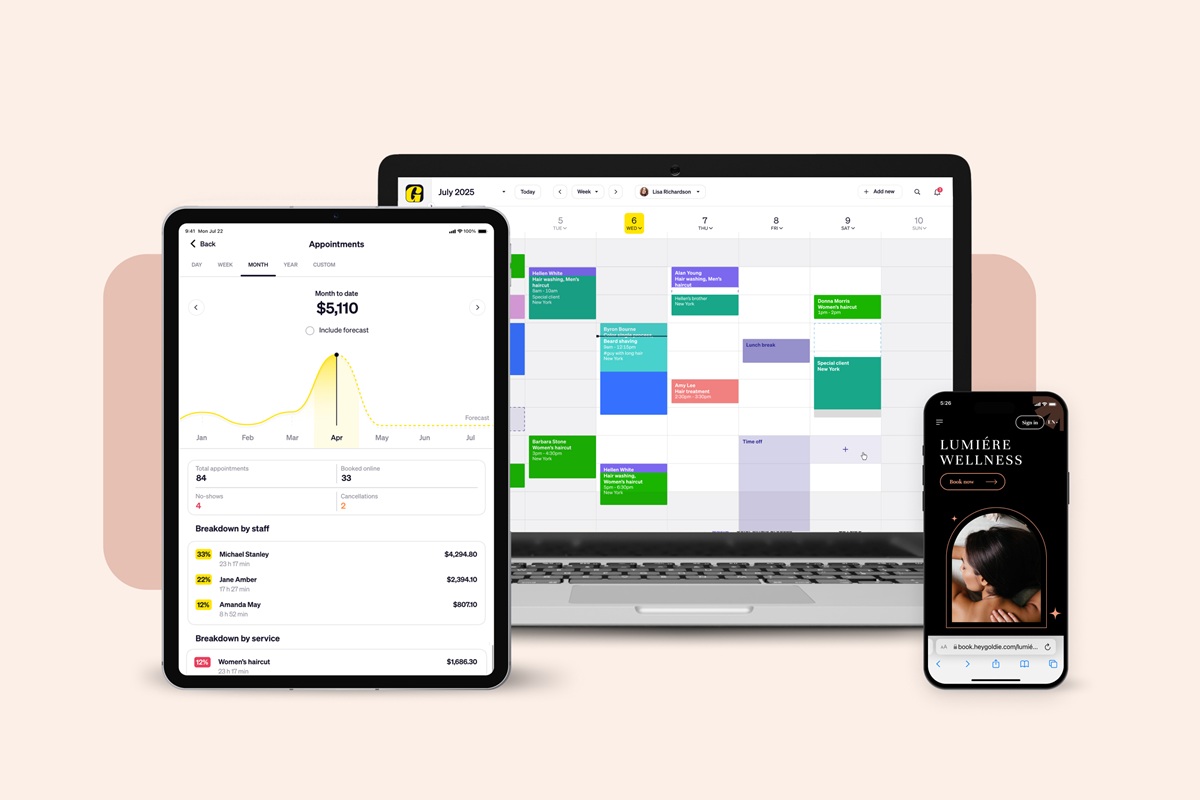
Pick a weekly time for your numbers. Block 30 minutes, look for patterns, celebrate what's working, and pick one thing to focus on that week. Monthly, go deeper and check individual stylist performance.
The difference between salon owners who grow and those who stay stuck? The growing ones actually use their numbers instead of just collecting them.
When someone's retention drops, talk to them. When one stylist has higher tickets than everyone else, get her to share what she's doing. Share numbers with your team. Celebrate wins. When your stylists see how better metrics benefit them personally, they'll care about this stuff too.
You're not becoming a data nerd. You're a salon owner making smarter choices. Start with one or two key performance metrics for salons that solve your biggest headache. Let Goldie handle the tracking automatically while you focus on the actual improvements.
Your salon's success isn't about luck or grinding yourself into the ground. It's about knowing what drives results and acting on it.

.webp)