You know the moment. A client sits down in your chair, starts digging through her bag, and then: "I think I left my card at home." Again. You smile, grab a new one, and start from zero. Meanwhile, she's been coming to you for two years. Paper loyalty cards have one job, and somehow they still manage to fail at it. Cards get lost, stamps get skipped, and you have no real way to know who's close to a reward or who quietly stopped coming back. Switching to a digital salon loyalty program fixes all of that, and the transition is a lot less complicated than it sounds.
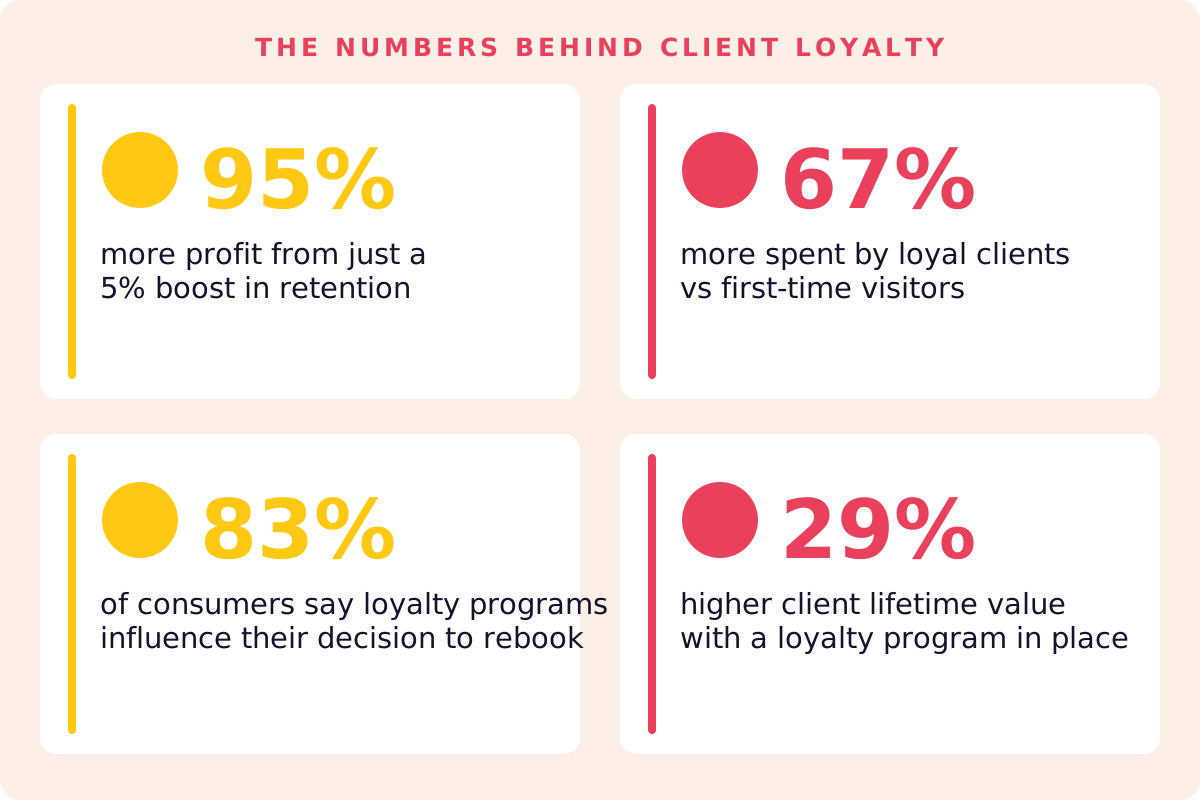
Before getting into the mechanics of the switch, it's worth understanding what's actually at stake when it comes to client retention.

Paper punch cards work fine when you have a handful of regulars. But the moment your client list grows, the cracks start to show.
➜ Cards get lost. Clients ask for a new one, their progress resets, and the goodwill you built disappears with it.
➜ Stamps get forgotten. Mid-service, when things are busy, it's easy to skip. The client notices even if you don't.
➜ There are no reminders. Paper can't tell a client they're one visit away from a reward, and it can't nudge them to come back if they've gone quiet.
➜ All the responsibility falls on the client. They have to carry the card, remember it, and ask you to stamp it. Most won't bother for long.
➜ You get zero data. A paper card tells you nothing about your clients as a group. A digital program tells you who your most loyal clients are, what they respond to, and who hasn't booked in a while.
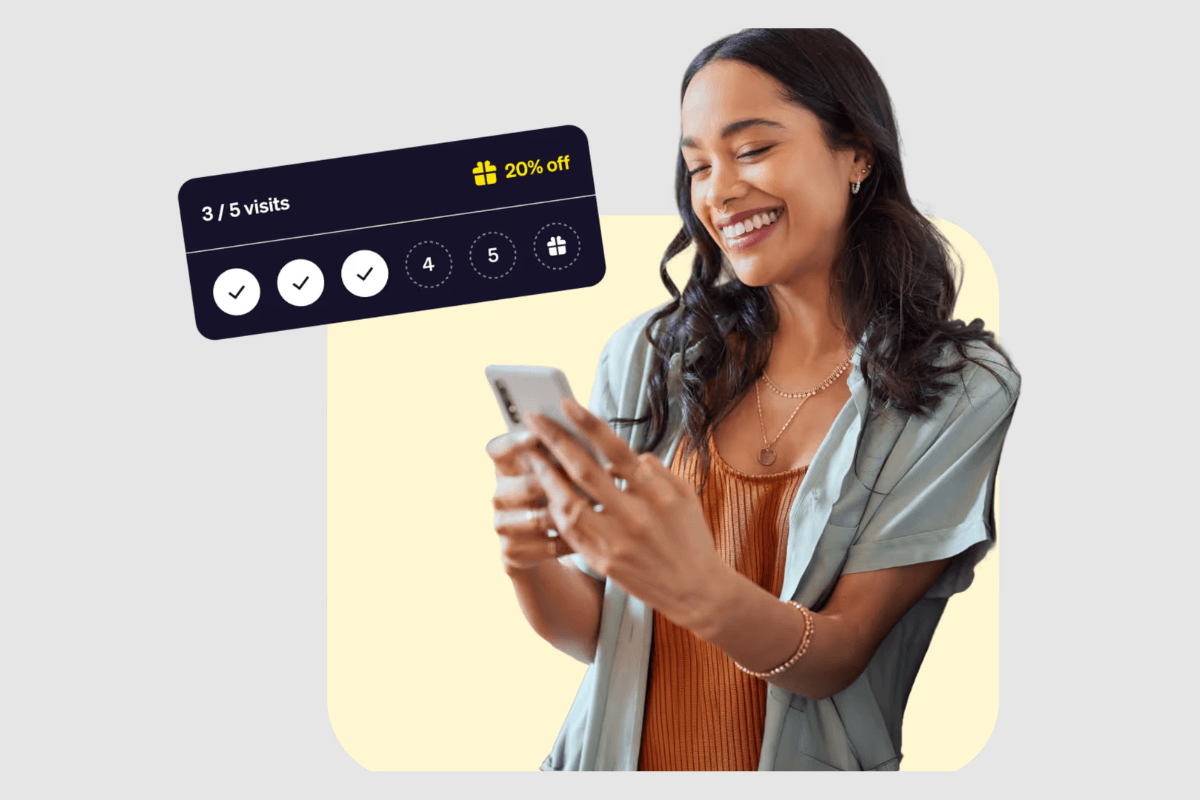
A Columbia University study found that the closer customers were to earning a reward, the more often they came back. It sounds simple, but the effect is significant: people don't just passively wait for a reward. They actively change their booking behavior to get there faster.
When a client can see they're three visits away from their next reward, that next booking stops being optional. It becomes a goal. And that's exactly what paper cards could never do. There's no visual, no number, no sense of how close or far the finish line is. A stamp in a wallet doesn't create anticipation. A progress bar does.
Here's a quick side-by-side of what you're really comparing when you think about a digital vs physical loyalty program beauty salon:
The shift isn't just about convenience. It's about having real information about your clients so you can make decisions based on what's actually happening in your business.

Moving from a paper to digital loyalty program salon doesn't have to be a big project. Here's a simple way to think about it:
Before you pick a tool, figure out the basics. How many visits should it take to earn a reward? And what does that reward look like in dollar terms? Research consistently shows that consumers want loyalty programs that are easy to use, offer great discounts, and are easy to understand. Keep it simple. Clients don't need a complicated points system. They need something that feels worth coming back for.
Don't just drop your current clients' progress. When you make the switch, ask clients how many stamps or visits they have on their current card and add that to their digital account. This shows respect for their loyalty and makes the transition feel smooth rather than like a reset.
The easiest moment to get a client signed up is right after a service. They're happy, they're already at your station or desk, and they're thinking about coming back. A quick "I'm switching to a salon digital loyalty card, can I add you?" takes about 30 seconds and sets everything up for next time.
If you have staff, walk them through the new system before you launch it with clients. Nothing erodes trust faster than an employee who can't answer a basic loyalty question. A short walkthrough is usually enough. What matters is that everyone can explain it confidently and apply rewards without hesitation.
Send a message to your client list letting them know about the upgrade. Keep it warm and practical: you're moving to a digital loyalty card, so their progress is always saved, and they'll never lose their rewards again. Most clients see this as a positive change. The ones who were already loyal tend to engage most because they care about where they stand.

When it comes to a digital vs physical loyalty program beauty salon owners quickly realize that not every loyalty app is built for their industry. A lot of generic tools are designed for retail or coffee shops and don't map well onto how salons actually work. Here's what matters when you're choosing:
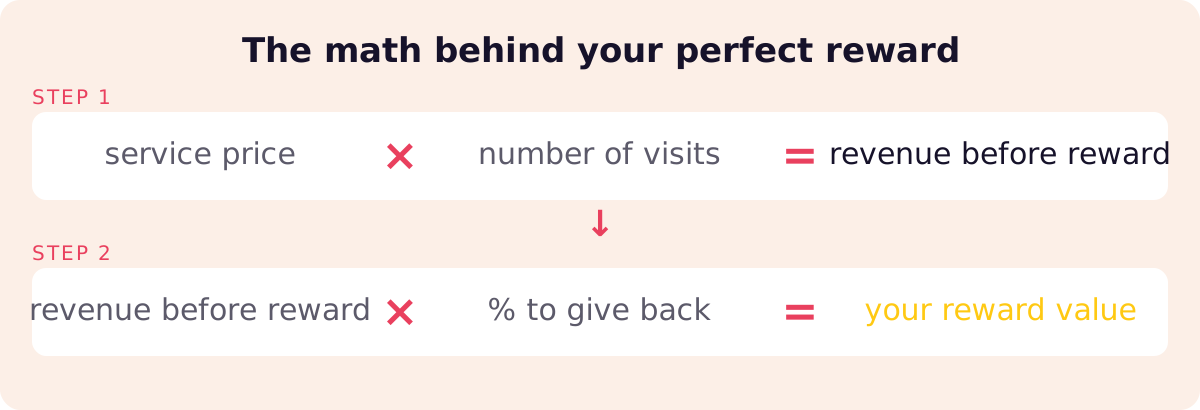
One of the first decisions you'll make when setting up your digital loyalty program is what the reward actually looks like. Two numbers matter: how many visits unlock a reward, and how much that reward is worth. The good news is you don't have to guess. A simple calculation tells you exactly what you can afford to give back.
Before setting anything, know your average appointment value. Add up your service prices and divide by the number of services you offer, or just think about what a typical client pays per visit. Let's say it's $60.
If you set the threshold at 8 visits, a client spends $60 x 8 = $480 with you before unlocking anything. That's the revenue you collect before the reward costs you a single dollar.
Now ask: what percentage of $480 am I comfortable giving back as a reward?
Most salons land comfortably between 4% and 6% of the total pre-reward revenue as the reward value. That translates to roughly 15% to 20% off a single appointment, which is the range clients actually notice and appreciate.
That means for every $480 a client spends, you invest $25 to keep them coming back. That's a retention cost of about 5 cents on every dollar, which is significantly cheaper than acquiring a new client from scratch.
Use your most common service price, not your highest. Setting a reward based on a $200 color treatment when most of your clients come in for $50 cuts will make the math feel off for everyone involved. Build the program around your typical client, not your best-case scenario.
The most important thing is that the reward feels worth earning without putting you in a position where you're losing money on loyal clients. Goldie's loyalty program lets you set both the visit threshold and the reward amount, so you can start with these numbers and adjust as you learn what works for your specific client base.
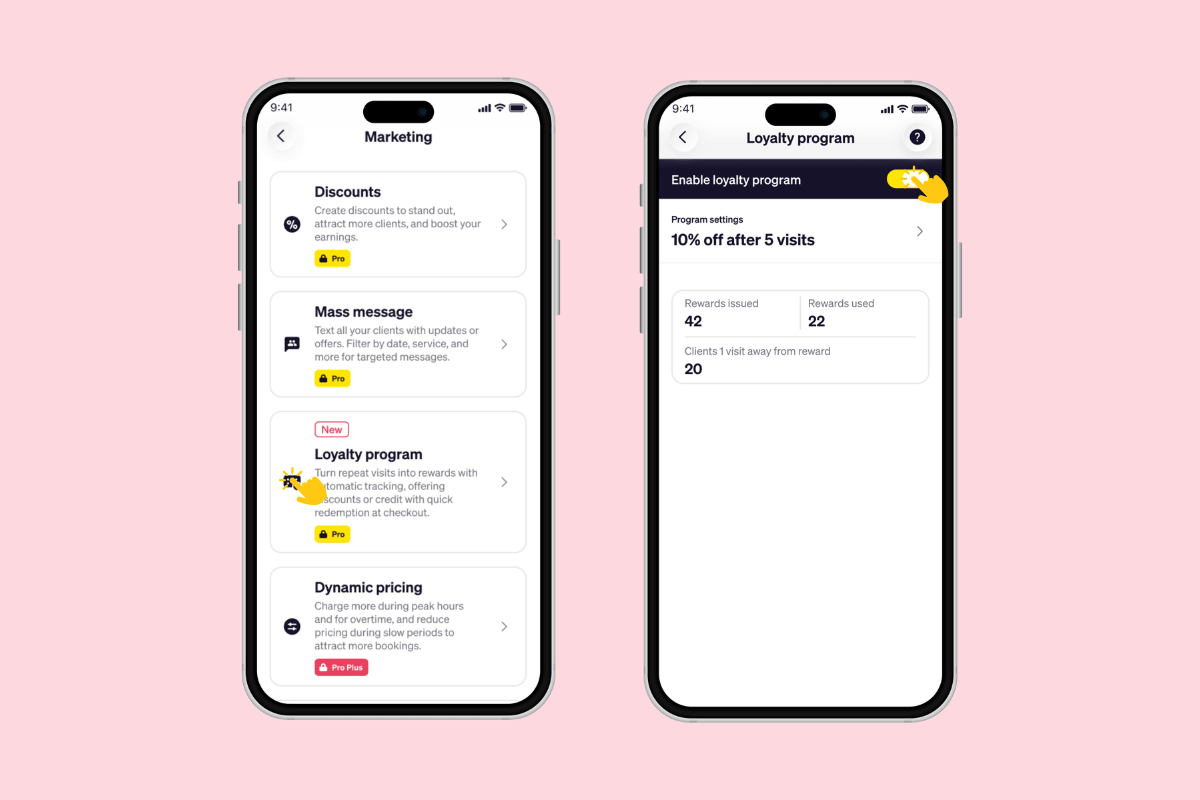
If you're already using Goldie to manage your bookings and client base, adding a loyalty program takes seconds. It runs on a visit-based model: every completed appointment earns a stamp automatically, no manual input needed. You set how many visits unlock a reward and what that reward is, and the system takes care of the rest.
There's no separate app for clients to download. They can see their progress directly in their Goldie account, which means they stay engaged without you having to remind them. The closer they get to a reward, the more motivated they are to book.
When a client hits their visit goal, the reward is applied automatically to their next appointment. One less thing to manage at checkout, and one more reason for your client to come back.
What if my clients are not comfortable with technology?
Totally valid concern, especially if your clientele skews older. The good news is they don't need to do anything. With a tool like Goldie, there's no app to download, no account to create. The loyalty tracking happens automatically in the background every time they book. They'll only notice it when their reward is ready.
How do I make sure I'm not just giving discounts to clients who would have come anyway?
This is where digital actually protects you better than paper. You can see exactly how many rewards have been issued, how many have been used, and how many clients are just one visit away. That data tells you whether the program is changing behavior or just rewarding it. Paper never gave you that.
Is it awkward to introduce the new system to existing clients?
Only if you frame it as a sign-up. Instead, try: "I've switched to a digital system so you never lose your progress again. I've already added your visits." It feels like you're doing them a favor. Because you are.
Making the move from a paper to digital loyalty program salon is one of those changes that feels bigger than it is. Once you're on the other side of it, most salon owners wonder why they waited so long. Your clients keep their progress, you keep your sanity, and everyone wins.
If you're ready to set up a loyalty program that actually works with your workflow, take a look at Goldie's loyalty feature and see how it fits into the way you already run your business.

.webp)