Missed appointments cost beauty pros more than just an hour of their time. They cost real money, and in a tight economy, that adds up fast.
So why are so many stylists making the switch right now? Digital booking for stylists, paired with a solid deposit policy, has made it simple to protect your schedule without awkward conversations or losing good clients. The tools to do that are finally easy to use.
This article breaks down what's driving the shift and how to make it work for you.

Phone bookings, paper appointment books, and reminder texts you send manually. That system worked when clients had fewer options and more patience. Today, neither of those things is true.
When a client can't reach you, the chances of them trying again are slim. Industry data shows that 62% of calls to small businesses go unanswered, and 85% of those callers never call back. For a stylist who's heads-down with a client all day, that's not a rare scenario. That's Tuesday.
Here's the number that really hits: 54% of salon bookings happen during opening hours, meaning up to 46% of bookings happen when the salon is closed. If you're only reachable during business hours, you're invisible during nearly half of all booking activity. That's not a minor gap. That's a significant and ongoing loss of potential appointments.
Client expectations have shifted quietly but significantly. Booking a service by calling during business hours, waiting on hold, or sending a DM and waiting for a reply feels like friction now. People expect to tap a button, pick a slot, and get a confirmation in seconds, the same way they book a restaurant, a flight, or a hotel room.
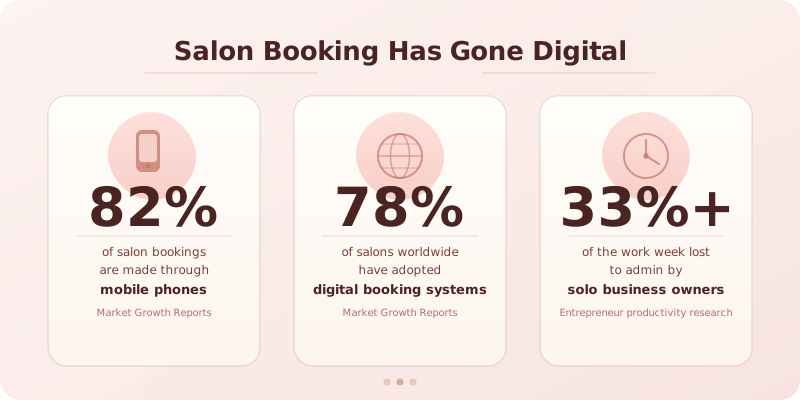
Research from Market Growth Reports shows that 82% of salon bookings are made through mobile phones, and 78% of salons worldwide have now adopted digital booking systems. That gap between what clients expect and what a paper appointment book can deliver is exactly where bookings get lost to a competitor who made it easier.
Younger clients, especially the Gen Z and millennial clients who are increasingly your core demographic, treat online booking for salons as a baseline requirement, not a bonus feature.
There's another side to this that rarely gets talked about: how much time manual booking actually takes. Research on entrepreneur productivity shows the average small business owner loses over a third of their working week to administrative tasks. For a stylist working alone, that's a significant chunk of time spent on logistics that digital booking for stylists handles automatically. Every hour behind the phone is an hour not behind the chair, not in a class, not resting, not growing.

This isn't about clients being careless. It's about reality. People are more overscheduled and more distracted than ever, and a hair appointment booked three weeks out doesn't always survive the chaos of daily life.
Research published by the National Institutes of Health confirms what most stylists already feel intuitively: the longer the gap between booking and appointment, the higher the no-show rate. Appointments made within two weeks had a no-show rate of around 9%. The further out the booking, the easier it is to forget, and the easier it is to skip.
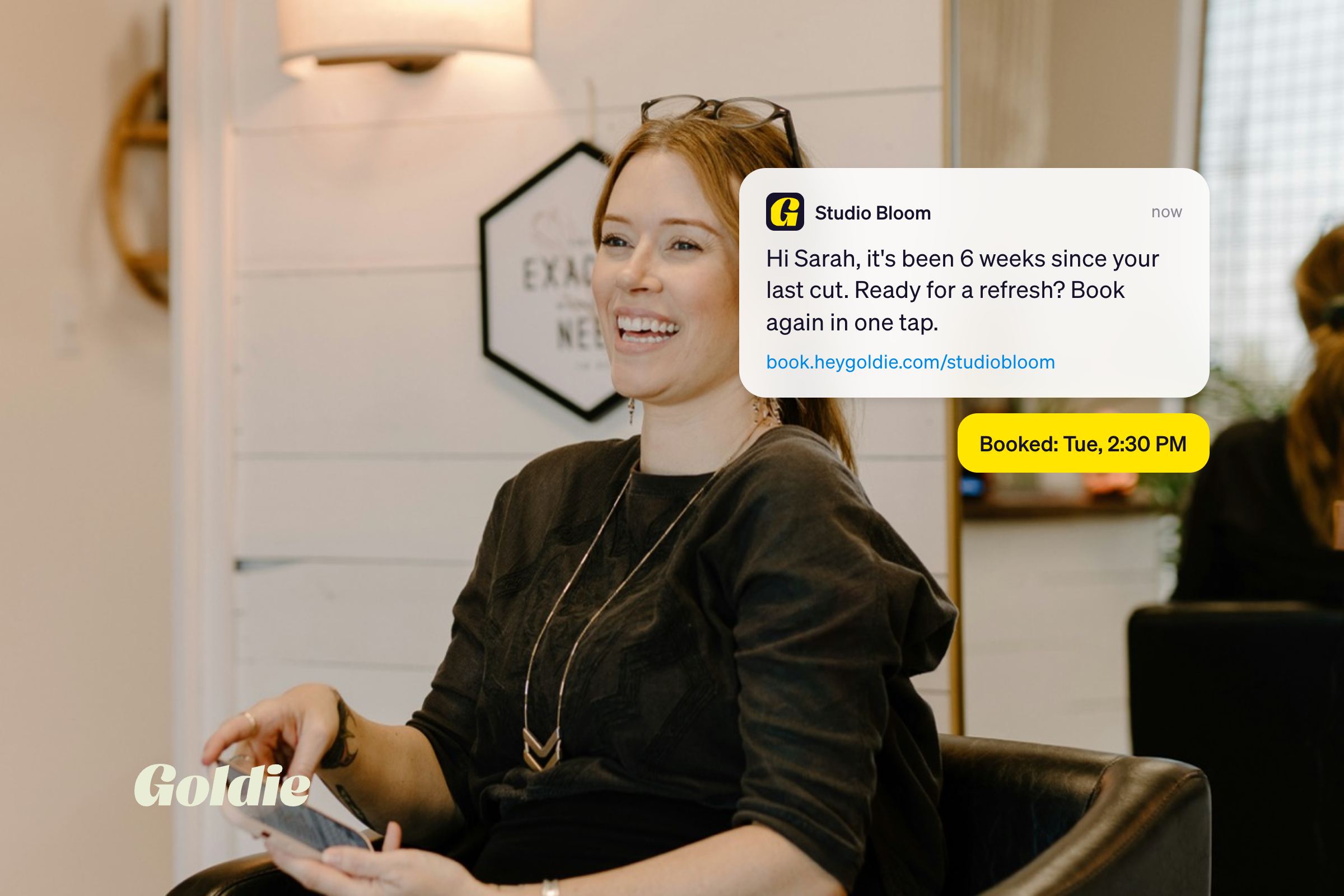
Clients book with good intentions, then a work deadline moves, a kid gets sick, or a calendar conflict appears, and the salon appointment just doesn't make the priority list in time to cancel properly. The fix isn't chasing clients down. It's making sure they never forget in the first place. When a client books online, they get:
That chain keeps the appointment front of mind in a way a handwritten note in an appointment book simply cannot match.

Let's put some numbers on this, because the impact is bigger than most people realize.
A solo stylist taking 20 appointments a week, charging an average of $75 per service, and dealing with a 15% no-show rate loses roughly $11,700 every year to empty chairs. That's not a bad month. That's a number that compounds quietly, week after week.
Data from the beauty industry puts the average salon no-show rate between 10% and 20%. Under 5% is excellent. Over 20% is a clear signal that something in your booking or communication process needs attention.
The factors that drive no-shows are pretty predictable:
Understanding these patterns matters because the right tools address them before the no-show happens, not after.
When budgets get tight, beauty appointments are often the first thing clients quietly drop. Not with a cancellation, not with a heads-up, just by not showing up. It's not malicious. It's just avoidance. Financial anxiety is at an all-time high right now, and when money feels tight, spending on a haircut is easy to postpone. Having that conversation with their stylist feels even harder.
This is exactly why a deposit changes the dynamic. When a client has already paid a salon appointment deposit, they're far more likely to either show up or reschedule in time, because the alternative means losing what they already paid. The deposit doesn't just protect your revenue. It gives the client a reason to communicate.

A salon appointment deposit is a partial payment collected at the time of booking to secure a client's slot and reduce the financial risk of no-shows. Deposits have been around forever, but something has shifted recently. More and more salons across the US are making them a standard part of the booking process, not just a policy for new clients or long appointments.
Running a salon is more expensive than it's ever been, and clients are more careful with their money, too. McKinsey's beauty industry research confirms what most salon owners already feel: consumer spending uncertainty is now the number one concern across the industry. When you're operating on thin margins, every no-show hurts more than it used to.
The data on deposits is hard to argue with. According to The Salon Magazine, salons that introduce deposits reduce their no-show rate by up to 55%. That's not a modest improvement. That's a structural change in how clients treat their bookings.
The reason is simple: a deposit turns an intention into a transaction. Once money has changed hands, the appointment has real weight. Clients think more carefully before booking, reschedule earlier when something comes up, and follow through far more reliably.
Yes, and it's fully standard practice. Businesses can legally charge appointment deposits and cancellation fees to offset losses from no-shows, as long as the policies comply with state laws and are clearly communicated before the client books.
The keyword is transparency. Your deposit policy needs to be visible before the client confirms their appointment, not buried in fine print after the fact. Online booking for salons makes this easy: the policy displays during checkout, and the client agrees to it before their slot is locked in.
A few things to avoid:
When your policy is clear, upfront, and consistent, most clients accept it without issue. It's a professional standard, and most people recognize it as one. Once you know it's legal and what to avoid, the next step is making it work in practice.

Digital booking for stylists is an online system that allows clients to schedule appointments anytime, make payments upfront, and receive automated reminders without any manual input from the salon. This is where everything connects. A salon appointment deposit policy only works smoothly when it's paired with the right digital setup. Trying to collect a deposit over the phone or in person creates friction and puts an awkward burden on your staff. Online booking makes it seamless.
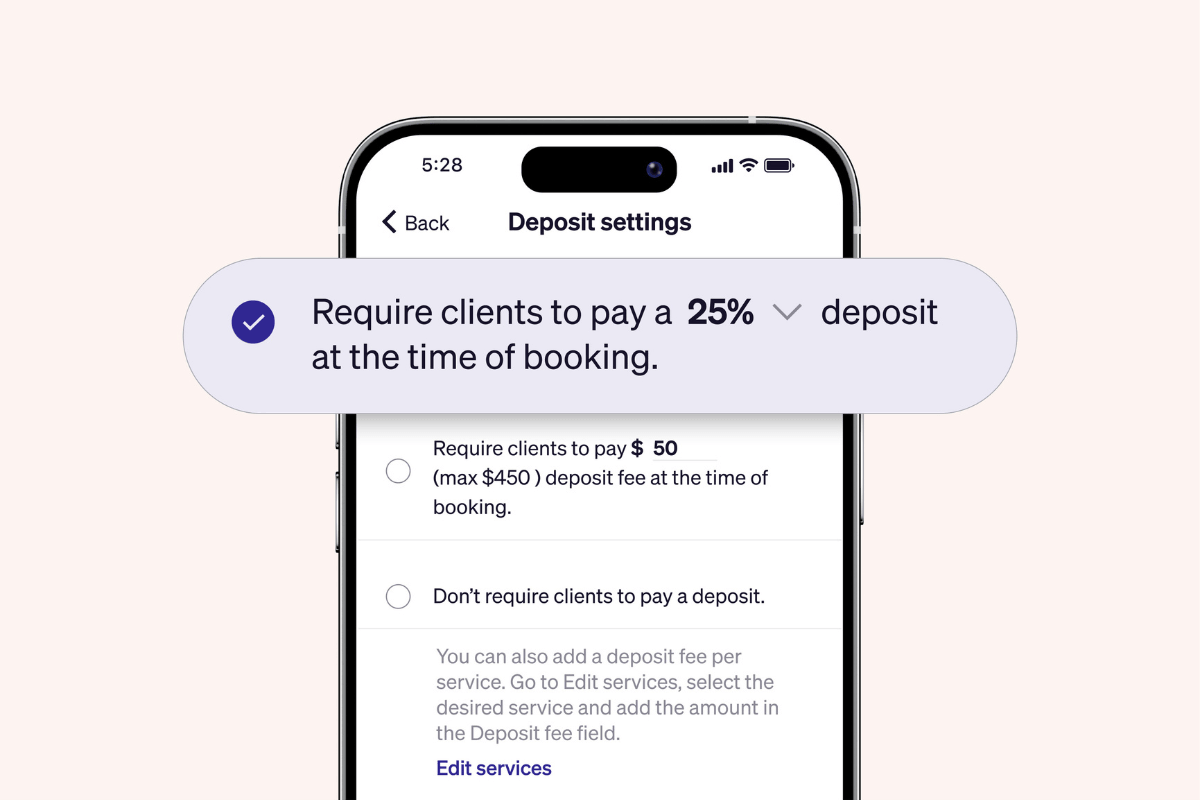
There's no universal number, but most salons land between 20 and 50% of the service cost. That range creates real commitment without feeling unreasonable.
A few practical guidelines:
For high-demand periods like prom season, wedding weekends, or the holidays, a stricter deposit policy is increasingly expected. Clients booking a peak-season slot understand that the spot has real value.

The most common hesitation about adding deposits is the fear of pushing clients away. In practice, serious clients don't mind at all. The ones who push back are usually the ones most likely to no-show anyway.
A few ways to introduce the policy smoothly:
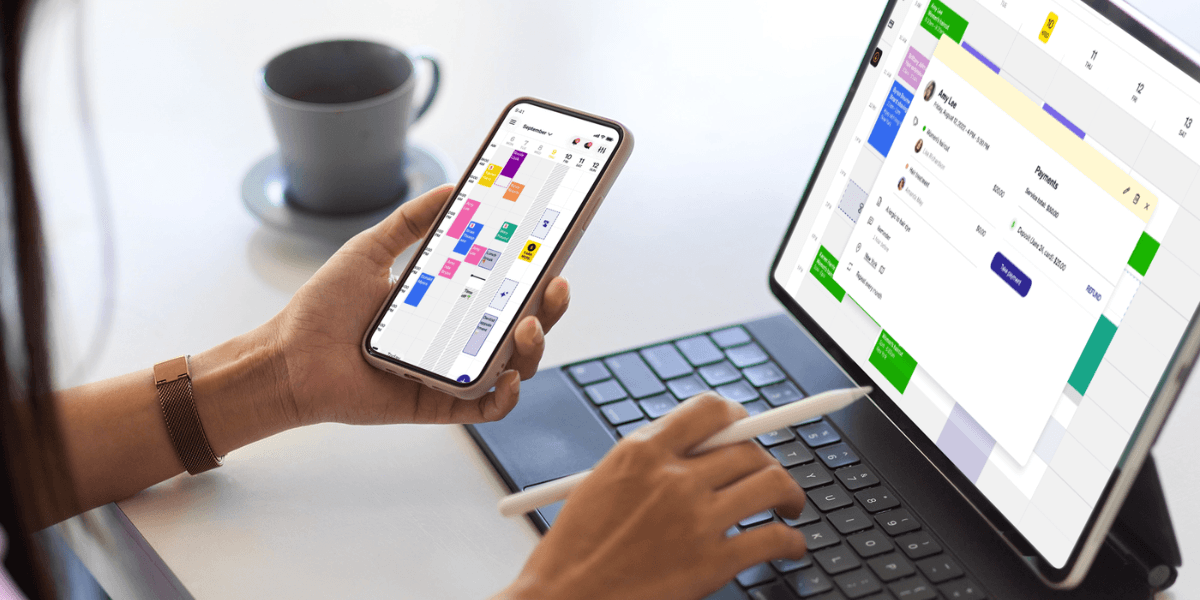
Digital booking for stylists brings a full toolkit that works alongside your deposit policy:
Each feature supports the others. Together, they create a booking experience that's professional, low-friction for clients, and financially protective for you.

Goldie is built specifically for independent beauty and grooming professionals, and it handles the full online booking for salons workflow without any complicated setup.
With Goldie, you can:
If you're still managing bookings by phone or paper, you're spending hours on admin that could be automated, and you're leaving yourself exposed to the no-shows and late cancellations that quietly drain your revenue every week.
Try Goldie free and see how much cleaner your schedule looks when every appointment comes with a real commitment behind it.
The move toward digital booking and appointment deposits isn't a passing trend. It's how the US beauty industry is operating now, and the professionals who set up these systems early are the ones with fuller schedules, fewer headaches, and a business that actually reflects the value of their work.
Your time is worth protecting. The right online booking for salons is one of the most practical ways to do exactly that.

.webp)