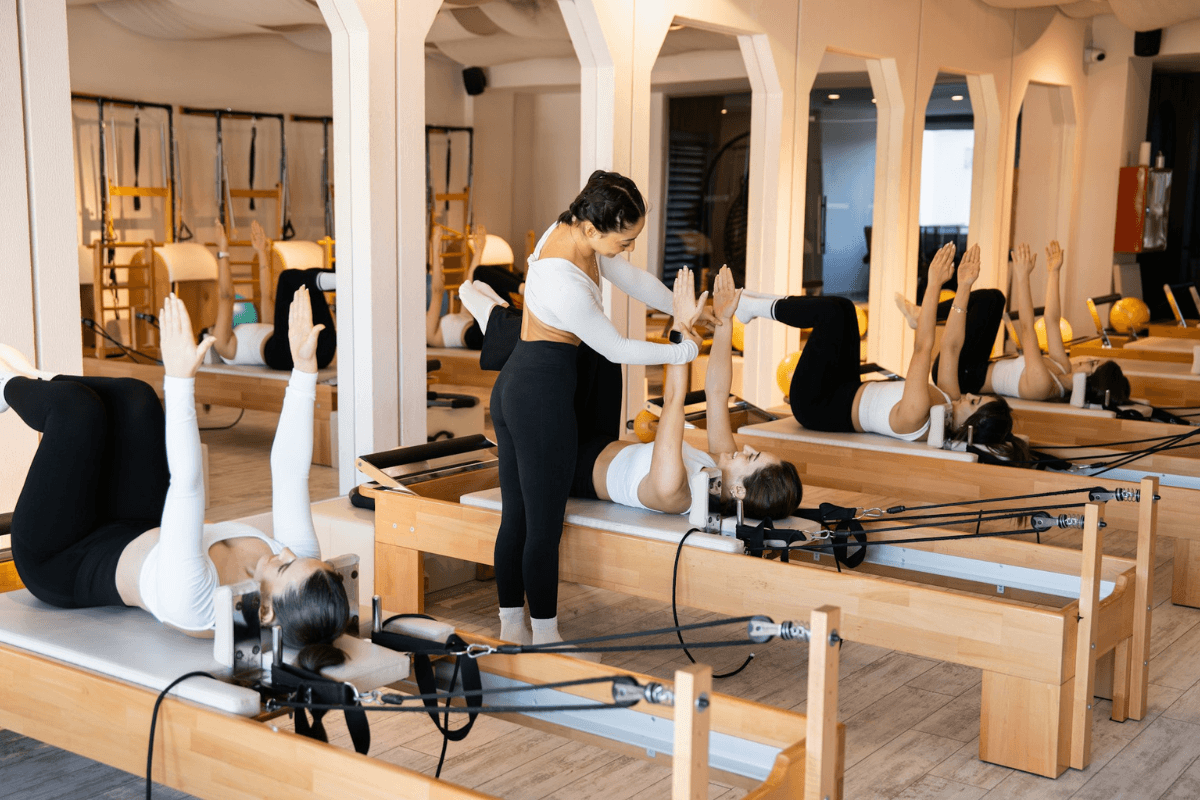
Pricing your Pilates studio can feel like a balancing act. If you charge too little, you may struggle to cover your costs, but if you charge too much, potential clients may go elsewhere.
When you set up your pricing you need to think about what works best for you based on your costs, your location, your class sizes, your instructors, and the kind of experience you offer.
This guide covers how to price Pilates classes, set up class packs and memberships, price private sessions, and raise your rates without pushing away loyal members.

Setting up your pilates classes correctly starts by working out your minimum sustainable price. This refers to the amount you need to charge to cover your costs and leave room for profit. In this amount you can include anything from instructor pay, studio rent, equipment and maintenance, insurance, online booking software, utilities, and more.
The next step is to look at what similar studios in your area charge. Market rates can help you position your studio. You shouldn’t copy their pricing if you don’t know or understand their business model. They may have lower rent, larger classes, more instructors, or a very different target audience.
Once you take all these into consideration, your final price should sit at the intersection of cost, market demand, and perceived value.
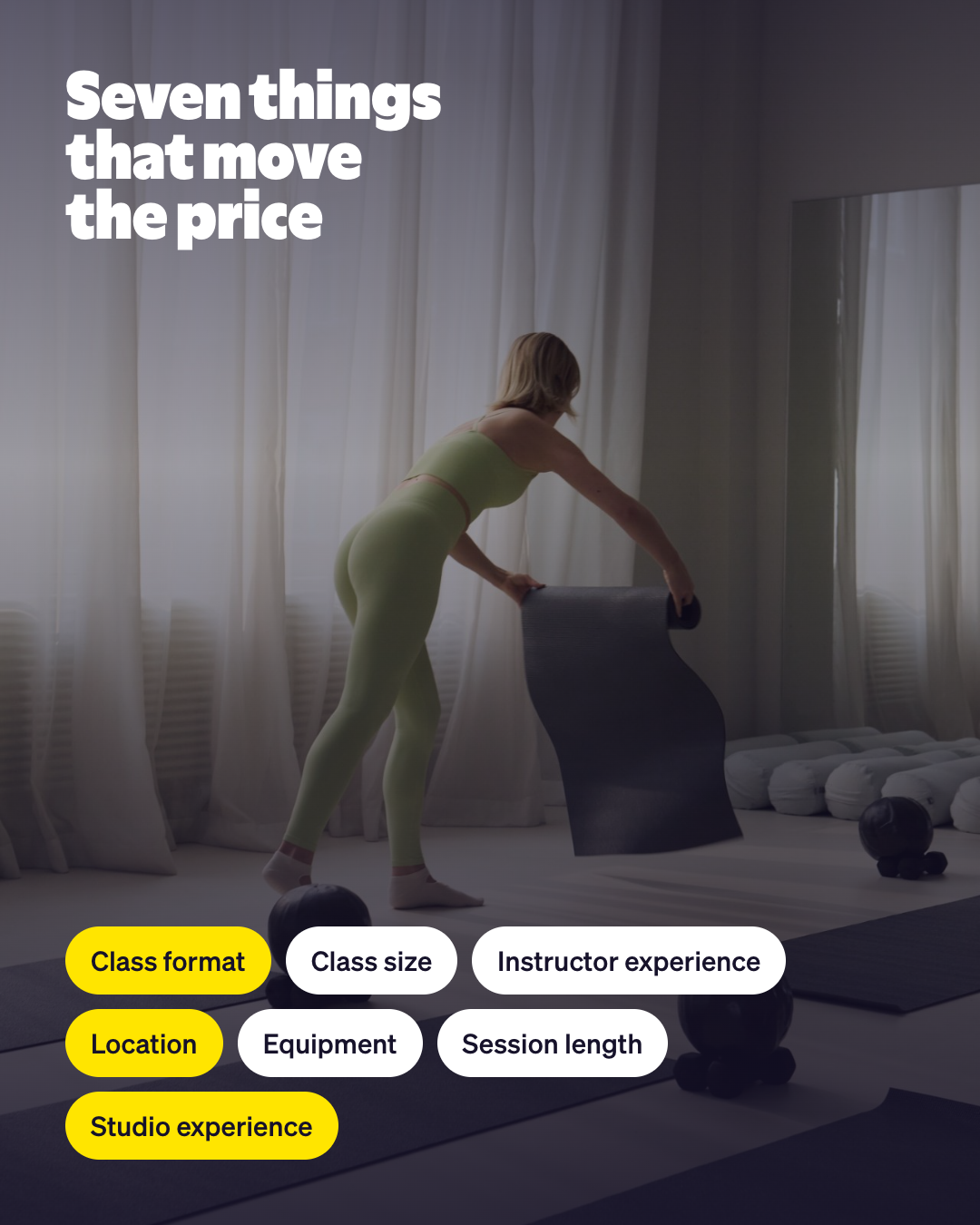
Two studios can offer what looks like the same Pilates class and charge very different prices. That's because the details matter.
Here are some of the biggest factors:
Pricing benchmarks give you a useful starting point when you're setting your rates. Use them alongside your own costs, local market, and the type of experience you offer.
Here's what Airtasker's 2026 US pricing data shows across the main class formats:
Other 2026 pricing data falls within similar ranges. Pilates of Charleston puts group reformer classes at $35–$60, semi-private sessions at $40–$85 per person, and private sessions at $90–$150 per hour. When setting your prices you should ask yourself: What price makes sense for my studio and my clients?
Start with your costs and desired margin, compare them with these benchmarks and similar studios in your area, and use that information to build a pricing menu.
You can use these figures as reference points rather than targets. Your final price should be shaped by your location, costs, class capacity, instructor expertise, and client demand.
Your drop-in price will usually be the highest per-class price because clients aren't committing to anything. It also gives you a useful reference point for your other offers. Club Pilates, the largest reformer Pilates franchise in the US, publishes pricing for single drop-ins and packs. Prices vary by studio and city, but its tiers generally run:
The exact numbers will depend on your market, but offering a structure gives clients a clear reason to commit.
💡Keep in mind: Don't make the difference so big that your drop-in price starts to feel artificially inflated. People can tell when a pricing structure is trying too hard to push them toward a membership.
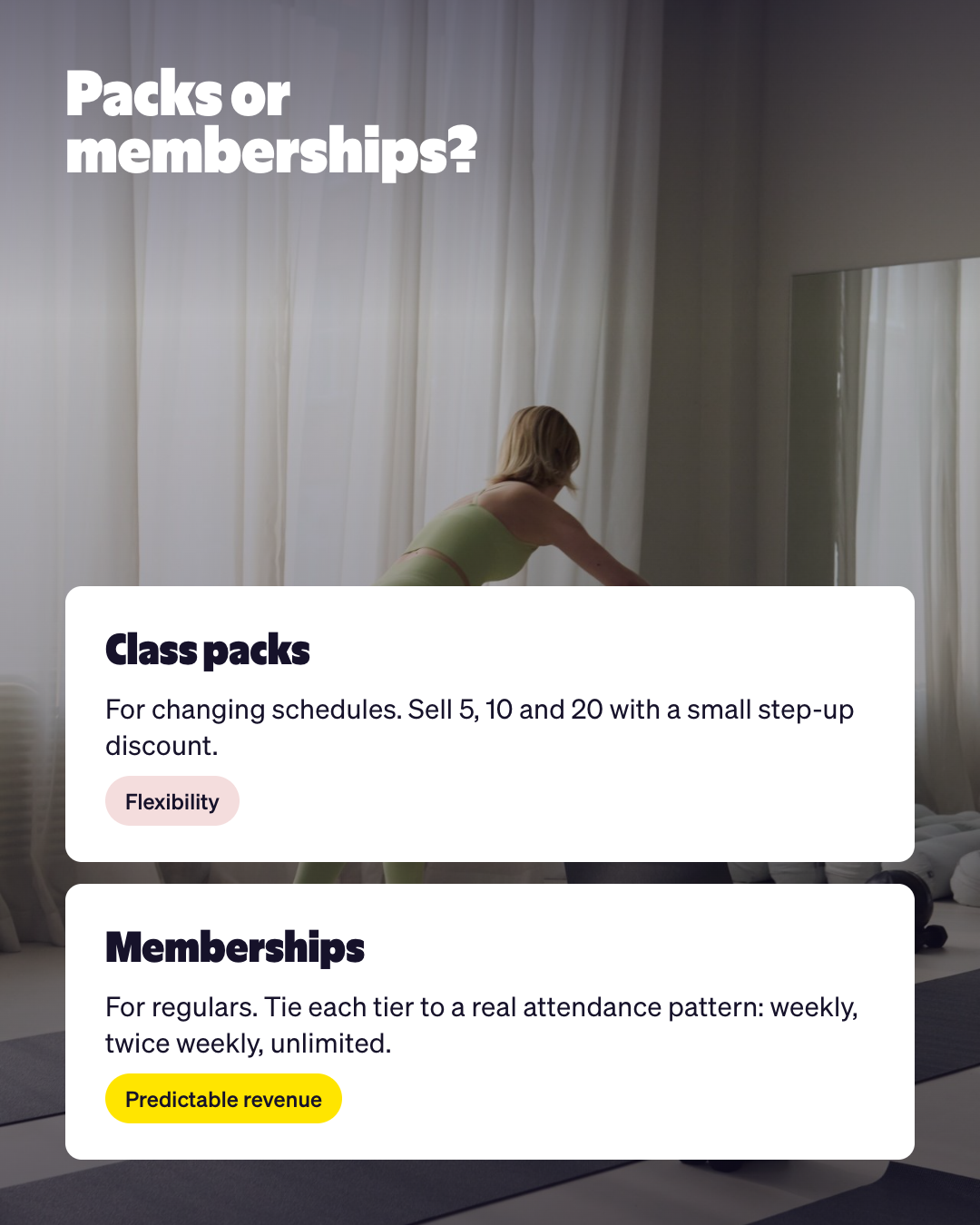
Class packs and memberships serve different types of clients.
Class packs work well for people who want flexibility. They may travel often, have changing schedules, or simply don’t want a recurring payment. You could offer 5, 10, and 20 classes, with slightly better discounts on larger packs.
Memberships work best for clients who attend regularly. Club Pilates' own tier structure is a useful example: its 4-Pack suits roughly weekly attendance, the 8-Pack targets twice-weekly attendance, and Unlimited is aimed at clients training three or more times a week.
Use a similar approach in your own pricing. Tie each tier to a realistic attendance pattern and keep the options easy to compare.
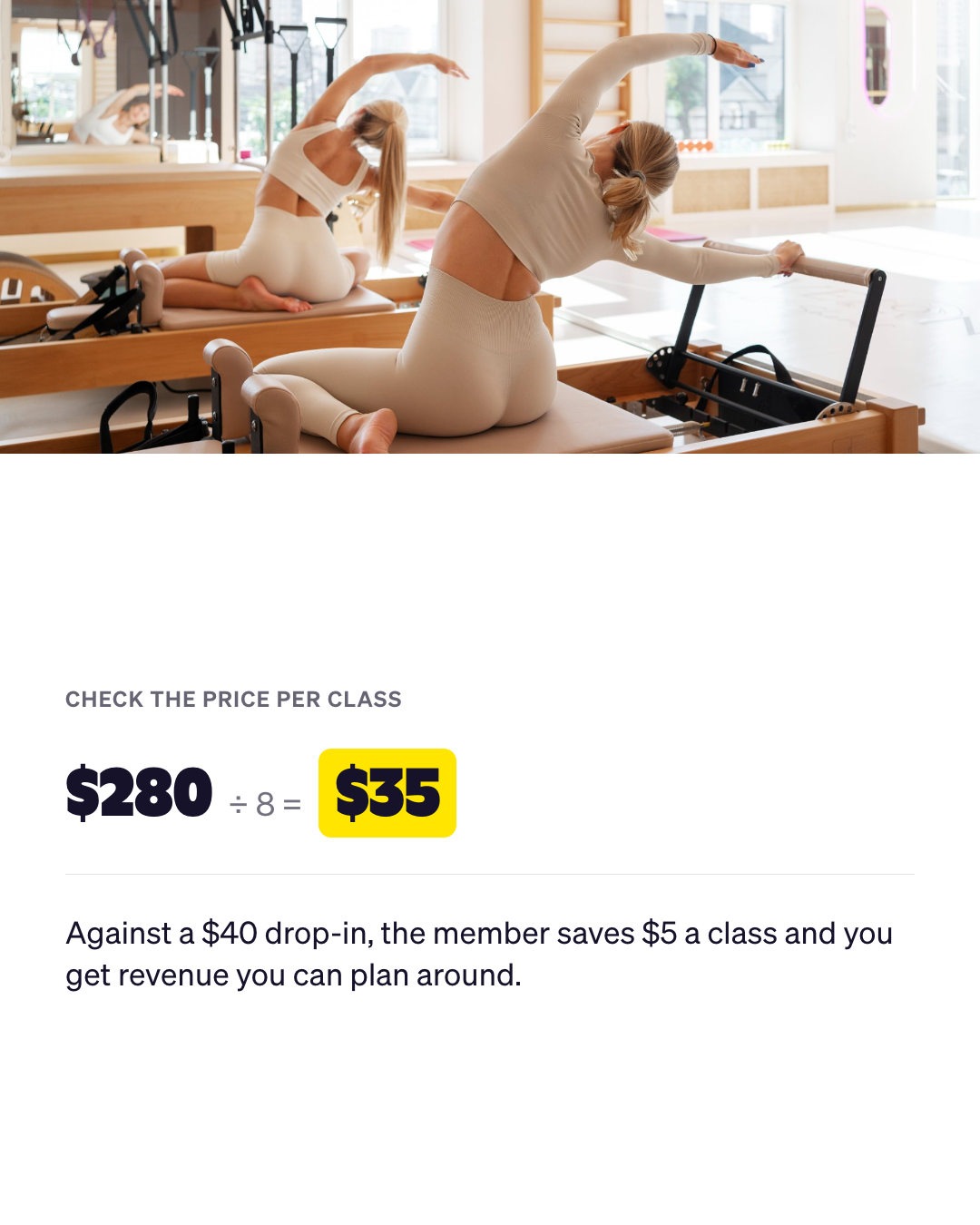
When you're working out membership pricing, look at the effective price per class. If your drop-in price is $40, an eight-class membership at $280 works out to $35 per class.
The client gets a discount for committing to regular sessions, while you get more predictable revenue. But decide upfront what happens when a member doesn't use all their classes, freezes their membership, cancels, or misses a class. For clients who attend regularly, recurring appointments can also make it easier to manage weekly private sessions or regular training schedules.

Private Pilates sessions require a different approach to pricing. Here you are charging the studio, but also for the instructor's time, expertise, attention, and ability to tailor the session to one client. In the US, private Pilates sessions commonly fall somewhere between $75 and $150 per hour, with prices reaching $175 or more in high-cost-of-living cities.
Private-session packages can also give regular clients an incentive to commit. Using $100 per session as a starting point, roughly the middle of the real-world range above, a structure might look like:
Keep the discount relatively small. Your costs stay largely the same whether a client books one session or commits to eight.
Once you have your private-session pricing in place, you'll also need an easy way to manage those appointments. With Goldie, you can create individual services with their own prices and durations, so clients can choose an available time without having to message you back and forth. If you have several Pilates instructors offering private sessions, you can also manage their availability and calendars in one place.
Reformer Pilates usually cost more than mat classes. The reformers themselves are a big investment. Your reformer Pilates pricing therefore needs to account for equipment costs and maintenance, studio space, instructor pay, class capacity, and your desired profit margin.
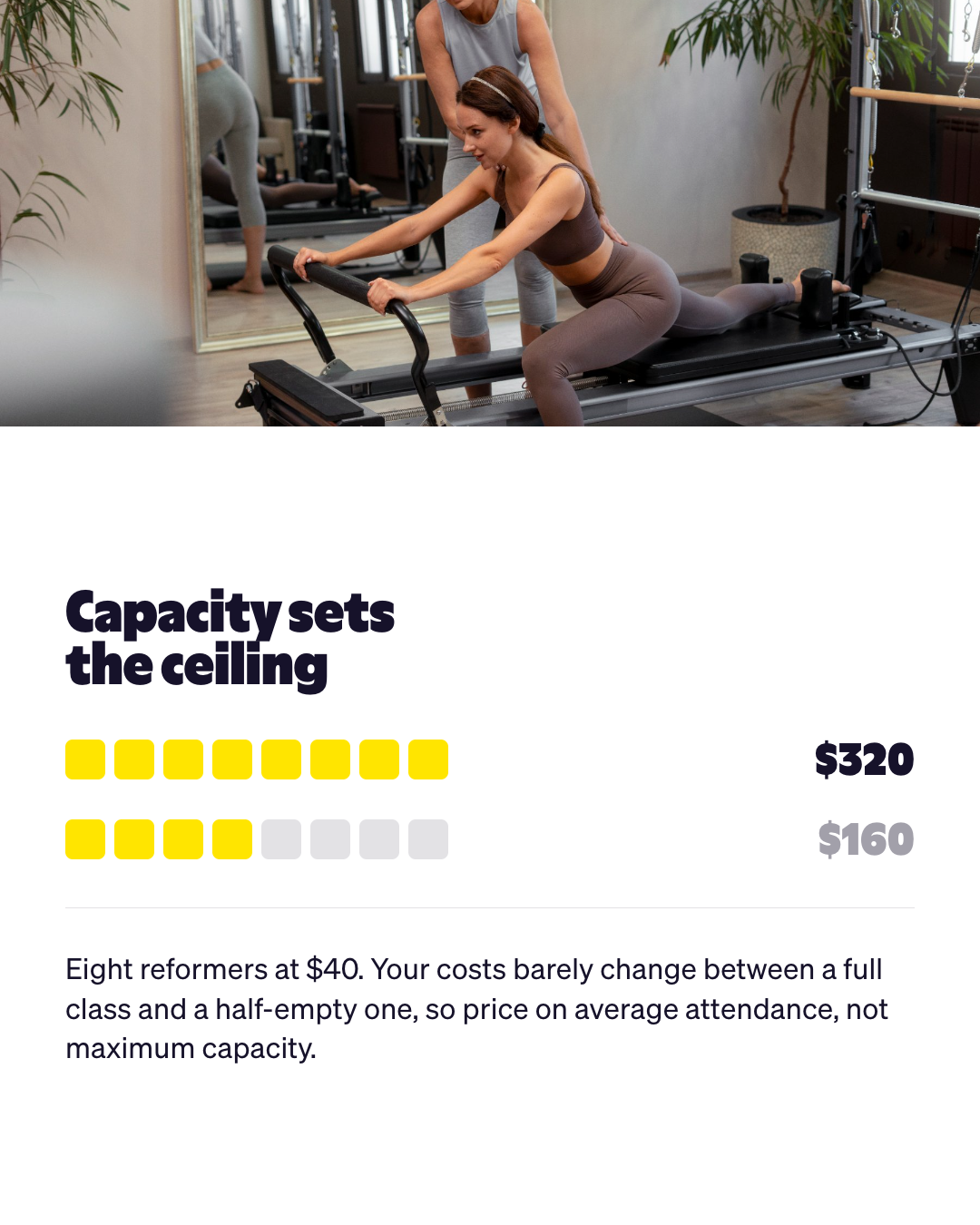
When it comes to Reformer Pilates, capacity is important. If you have eight reformers, you can't suddenly squeeze more people into the class when demand is high. Real studios vary quite a bit here: Royal Fitness caps its reformer classes at 12 people, while Bodytone in Sydney caps at 8. Most boutique studios land somewhere in that range.
Say you charge $40 for eight spots. A full class brings in $320, while four people bring in just $160, even though most of your costs stay the same. That's why average attendance matters more than maximum capacity when setting your prices.
A studio can bring in more money while still struggling with profitability. That’s why you should also look at:
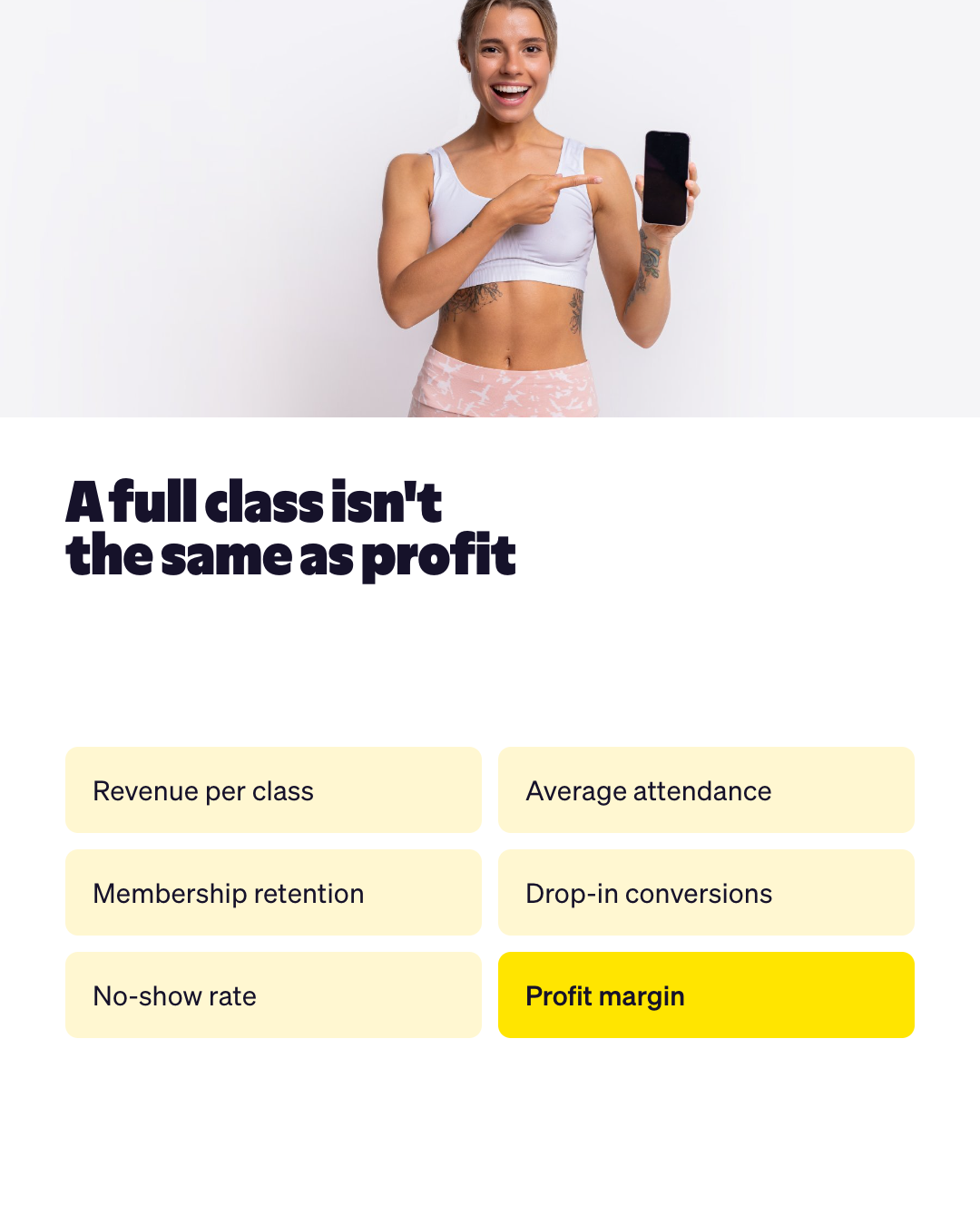
For example, a full class sounds great. But if you're charging too little, that full class may not be earning enough to cover your costs. The same goes for price increases. More revenue per client is useful, but not if you're losing a large number of members at the same time.
For private appointments, you can also look at which services and packages are actually selling. Most booking systems offer performance reports where you see your earnings and which services bring in the most revenue.
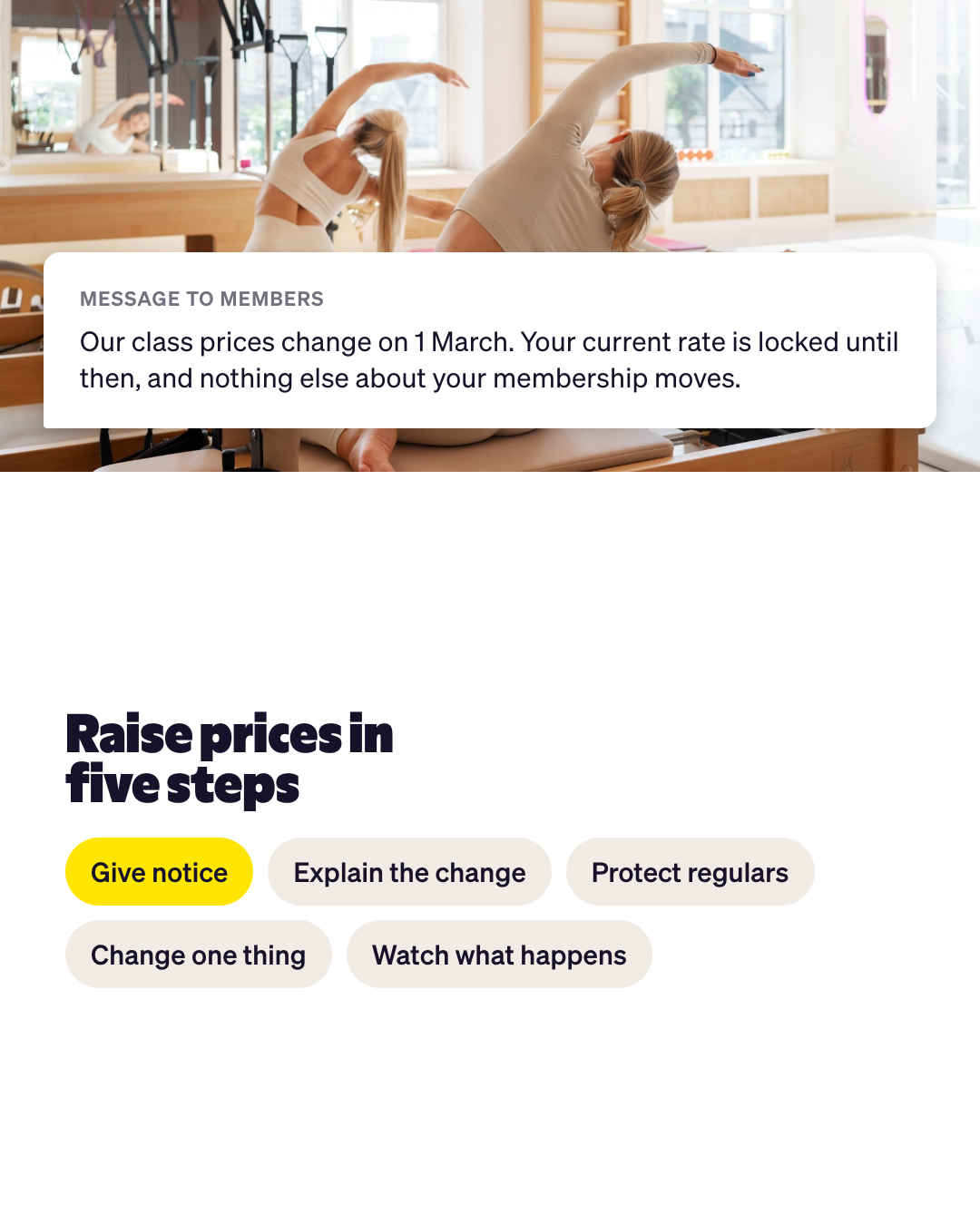
At some point, you'll probably need to increase your prices. Rent goes up, equipment needs replacing, instructor pay changes, and your own costs change. The hard part is doing it without making your regulars feel blindsided.
1. Give clients notice
Don't let a member discover the new price when their card gets charged. Tell them ahead of time and give them a clear date.
2. Explain the change
You don't need to send a breakdown of your expenses, but you should explain that prices are changing due to increased operating costs, instructor investment, equipment, or other changes to the studio.
3. Consider protecting existing members
You could give loyal members their current rate for a few months before moving them to the new price. This gives them time to adjust and can make the increase feel less abrupt.
4. Don't change everything at once
If you're raising prices, you probably don't need to redesign your entire pricing menu at the same time. Keep the change simple and make it clear which prices are changing and when.
5. Watch what happens after the increase
Look at cancellations, attendance, membership changes, and revenue after the increase. That will tell you much more than worrying about whether people will be unhappy beforehand.

Creating the right pricing strategy for your Pilates offerings can take time. You need to consider your regular expenses, unexpected costs, profit margins, local market, and what your clients are willing to pay.
Over time, you'll learn which services work best for your studio, whether that's private sessions, reformer training, or group classes. You'll also get a better sense of where you can adjust your prices, introduce new packages, or reward loyal clients. Pricing is not a fixed strategy, it’s something you keep refining as your studio, costs, and clients change.

.webp)