You've done your teacher training. You've built a following. Now you're staring at a spreadsheet trying to figure out whether to invest in reformers or roll out mats, and the numbers are making your head spin.
The reformer path looks glamorous and premium. The mat path looks lean and scalable. But which one actually puts more money in your pocket at the end of the month?
The answer isn't as obvious as the Pilates industry would have you believe. This is a full unit economics breakdown, startup costs, class revenue, capacity math, and profit margins, for both models, written for studio owners who want real numbers, not vague inspiration.

Before we get into dollars, it helps to understand the structural difference between these two models.
Reformer Pilates is a high-ticket, equipment-dependent model. You're charging premium prices because students are using expensive machines with dedicated floor space. Class sizes are small, typically 6 to 12 people, and every square foot of your studio is monetized through the equipment sitting on it.
Mat Pilates is a high-volume, low-barrier model. Classes can hold 15 to 30+ students, overhead is minimal, and you can operate almost anywhere: a rented yoga studio, a community center, your living room on Zoom. The trade-off: pricing pressure is real, and the market perceives mat classes as less premium.
Same methodology. Completely different business architectures.
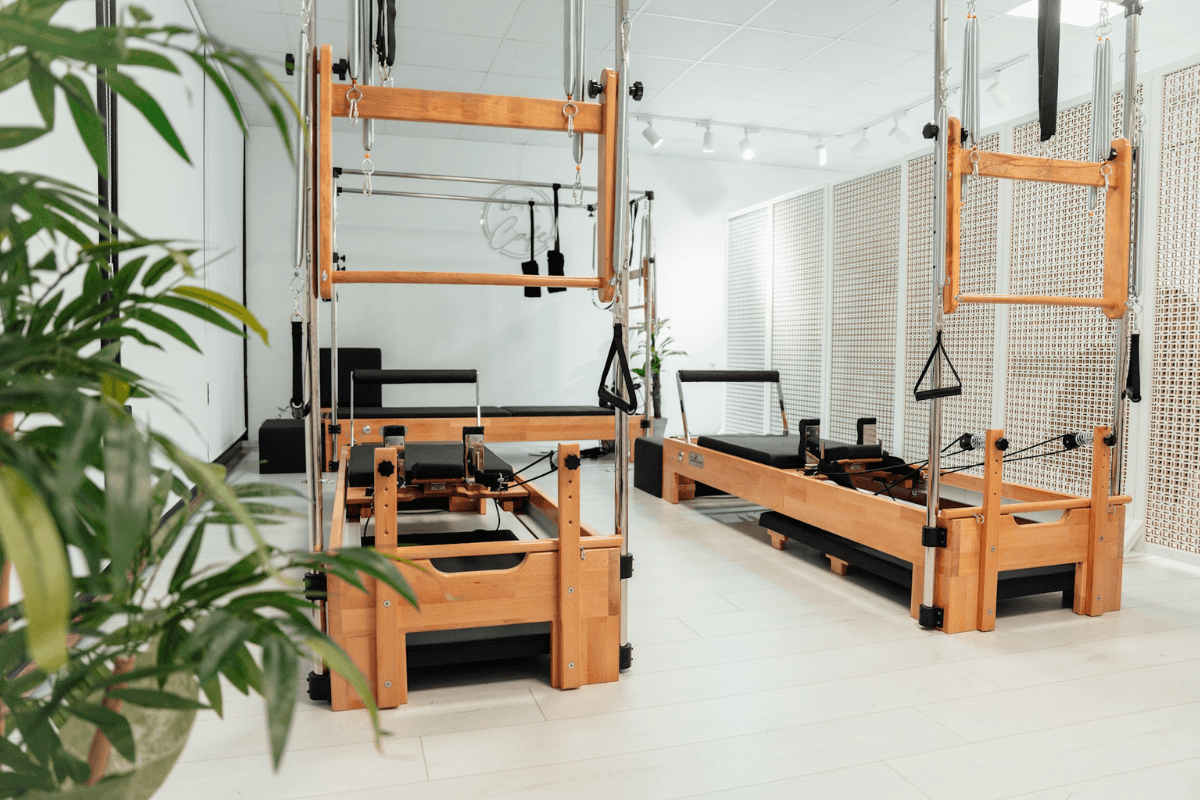
A single commercial-grade reformer runs between $3,000 and $10,000, depending on the brand. Balanced Body and Stott are the industry standards, expect to pay $3,500–$5,500 per unit for reliable commercial equipment. Peak Pilates and Gratz (the gold standard) push toward $7,000–$10,000+.
For a boutique studio with 10 reformers, equipment alone costs $35,000–$55,000 before you've signed a lease or bought a Bluetooth speaker.
Add to that:
Total realistic startup range for a 10-reformer studio: $80,000–$180,000.
Some owners bootstrap smaller, a 4–6 reformer studio in a lower-cost market can open for $40,000–$70,000, but you're also capping your revenue ceiling from day one.
Here's where the reformer model starts to justify its cost.
Reformer classes typically price at $30–$55 per drop-in session, with memberships bringing the per-class cost down to $20–$35. Private reformer sessions run $80–$150.
With a 10-reformer studio running classes at capacity:
Most established reformer studios with solid membership bases land somewhere in the $40,000–$70,000/month revenue range at 70–85% capacity utilization.
Revenue is the vanity metric. Margin is what matters.
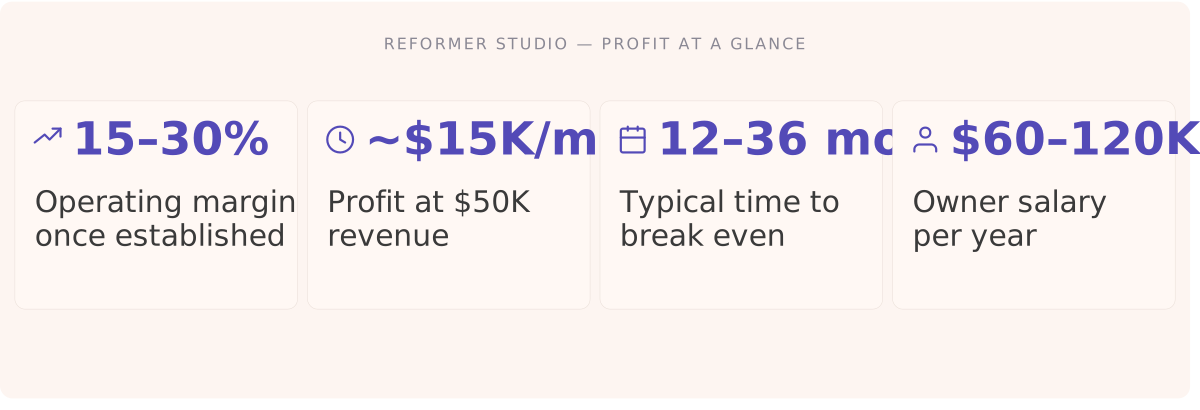
Reformer studios typically run operating margins of 15–30% once established, though first-year margins are often razor-thin or negative while building membership.
Monthly cost structure for a mid-size reformer studio:
Total monthly overhead: $21,000–$50,000
At $50,000/month in revenue with $35,000 in overhead, you're looking at $15,000/month in operating profit, a 30% margin. That's a healthy small business. But it took $100,000+ to get there, and it assumed you built strong membership in months, not years.

This is the mat model's superpower.
A serious mat Pilates setup requires:
Total startup cost: $2,000–$8,000 for a lean operator. Even a polished mat studio with a dedicated lease rarely exceeds $30,000–$50,000 to open.
That's not a rounding error compared to reformer costs: it's a fundamentally different capital requirement and risk profile.
Here's where mat math gets complicated.
Mat classes typically price at $15–$30 per drop-in, with memberships at $10–$22 per class. The perceived value ceiling is lower, which creates pricing pressure even for experienced instructors.
With a 20-person mat class:
The optimistic mat scenario actually rivals the reformer model in gross revenue, but it requires consistently full large classes, which is harder to achieve in a market where reformer Pilates is seen as the premium option.
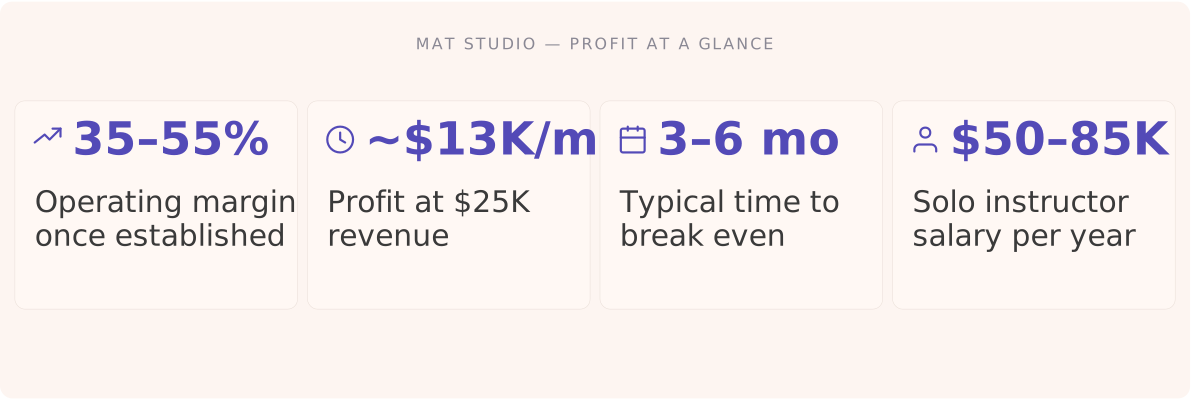
Because overhead is so much lower, mat Pilates can hit profit margins of 35–55%, significantly higher than reformer on a percentage basis.
Monthly cost structure for a mat studio or independent instructor:
Total monthly overhead: $6,500–$18,000
At $25,000/month in revenue with $12,000 in overhead, you're looking at $13,000/month profit, a 52% margin. With a fraction of the startup investment.

The honest answer: reformer studios generate more gross profit in absolute dollars, but mat businesses generate better returns on invested capital.
If you raise $150,000, build a reformer studio in a strong urban market, and hit 75% capacity within 18 months, you're probably netting $12,000–$18,000/month. That's a strong small business.
But if you invest $20,000 into a mat-based model, starting with in-person classes, building an online library, adding corporate wellness clients, and hit your stride in six months, you could be netting $10,000–$15,000/month on a fraction of the risk and capital.
The reformer model wins on revenue ceiling. The mat model wins on ROI and speed to profitability.
Many owners are increasingly asking whether a hybrid model, a few reformers in a mat-focused studio, threads the needle. The short answer: sometimes, but carefully.
Adding 4–6 reformers to a mat studio ($15,000–$30,000 investment) lets you offer small-group reformer sessions at premium pricing without the full capital commitment of a dedicated reformer studio. It can meaningfully increase revenue per square foot.
The risk is operational complexity, reformer maintenance, scheduling conflicts between class formats, and the need for dual-certified instructors. If you go hybrid, keep your mat classes as the volume engine and use reformers for premium small-group and private sessions only.
This is one of the most underestimated questions in the industry, and the answer differs dramatically between the two models.
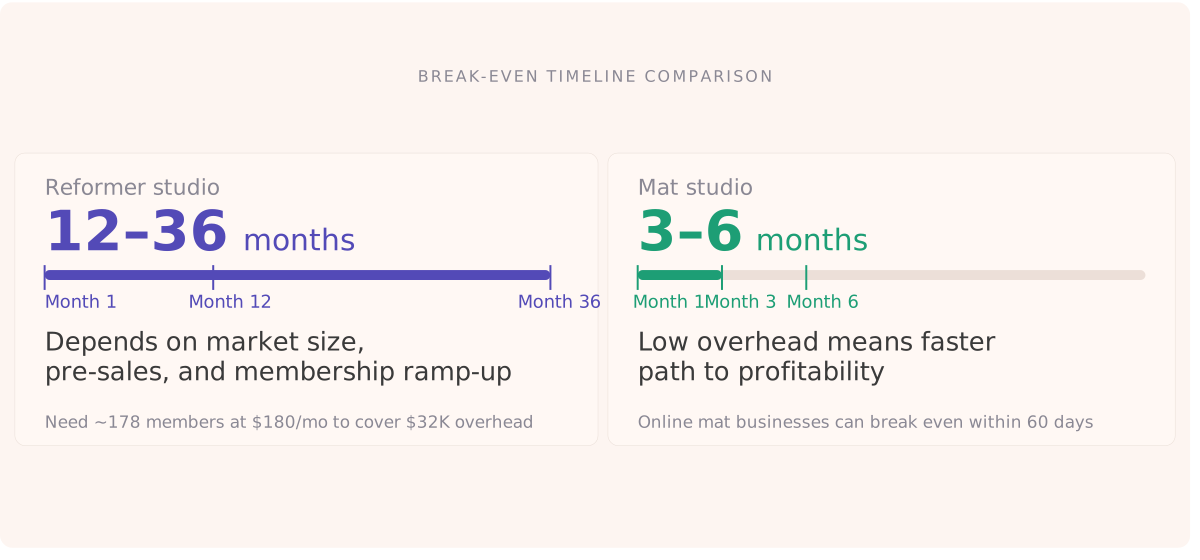
For a reformer studio, break-even typically lands somewhere between 12 and 36 months. The wide range reflects variables like local market size, pre-launch membership sales, and whether the owner is paying themselves a salary from day one. Studios in major metros with strong demand and smart pre-sales campaigns can hit break-even inside a year. Studios in mid-size markets that underestimate the membership ramp-up period often don't break even until month 18–24, or later.
The math works like this: if your monthly overhead is $32,000 and your average revenue per member is $180/month, you need roughly 178 active members just to cover costs. Building that base takes time, especially when reformer Pilates requires hands-on demonstration, trust-building, and often a trial period before students commit to membership.
Mat studios break even much faster, often within 3 to 6 months for a lean operator. Because fixed overhead is low, a mat instructor teaching 15 classes per week at an average of 10 students per class can cover costs and begin drawing profit relatively quickly. Online mat businesses can hit break-even even faster, sometimes within the first 60 days if they launch to an existing audience.
The break-even gap matters enormously when you're thinking about cash flow, personal runway, and how much financial stress you can absorb before the business turns a profit.

Gross revenue and profit margins are useful benchmarks, but what does this translate to in terms of owner income?
Reformer studio owners in established businesses typically take home $60,000–$120,000 per year in owner salary or draw, once the studio is past the break-even stage. High-performing multi-location operators can earn significantly more, but they've also taken on proportionally more risk and management overhead.
In the early years, many reformer studio owners pay themselves little or nothing, reinvesting revenue into marketing, equipment maintenance, and staff. It's not uncommon for a first-year reformer studio owner to draw $30,000 or less while working 50+ hours per week.
Mat Pilates instructors and studio owners have a wider earnings range depending on whether they stay solo or build a team. A solo mat instructor teaching 20 classes per week across multiple venues, including online, can realistically earn $50,000–$85,000 per year with relatively low overhead. Those who build a mat-based studio with multiple instructors and an online membership component can push past $100,000, while maintaining margins that reformer owners would envy.
The key insight: reformer studio owners often earn more in absolute terms once established, but they also work more, manage more, and carry more financial risk to get there. Mat operators frequently report higher satisfaction-to-income ratios, particularly solo instructors who prioritize lifestyle alongside revenue.

Unit economics only go so far. A few qualitative factors that matter just as much:
Market positioning. In major metro areas (New York, LA, London, Sydney), reformer Pilates has a clear premium perception advantage. In smaller markets, the $45 reformer class price point can be a hard sell, mat may win on accessibility and volume.
Your teaching identity. If you built your audience around mat Pilates, pivoting to reformer isn't just a financial decision: it's a rebranding exercise. Your existing students may not follow.
Online scalability. Mat Pilates has a massive digital distribution advantage. An online mat membership at $30–$60/month can scale to hundreds of students with near-zero marginal cost. Reformer can't be fully replicated online.
Exit value. Reformer studios with strong membership bases command higher acquisition multiples (typically 2–4x EBITDA) because they're harder to replicate. A mat business, especially a solo instructor model, has lower transferable value. It often is the instructor.
If you have significant capital, a strong urban market, and the appetite for a longer runway to profitability, reformer is the higher-ceiling bet. Done well, it builds an asset with real enterprise value.
If you want to start fast, stay lean, and compound growth without betting $100K+ on a single location: mat is the smarter play. The margins are better, the risk is lower, and the digital scalability is unmatched.
The best Pilates businesses we're seeing right now aren't purely one or the other. They're mat-first operators who added selective reformer capacity once their membership base proved out demand, or reformer studios that built online mat content as a retention and acquisition flywheel.
Know your capital, know your market, and don't let the Instagram aesthetics of a reformer-lined studio make a financial decision for you. The most profitable Pilates business is the one built on a model that matches your resources and your market, not the one that looks best in a shoot.
Startup cost ranges in this article reflect U.S. market data. Equipment pricing varies by brand, supplier, and whether units are purchased new or refurbished. Consult a financial advisor before making capital investment decisions for your business.

.webp)