
Free bookings are easy to break. Paid ones aren't. A deposit is the single most effective way to protect your calendar, and this guide shows you how to take deposits for appointments without scaring off a single client worth keeping.
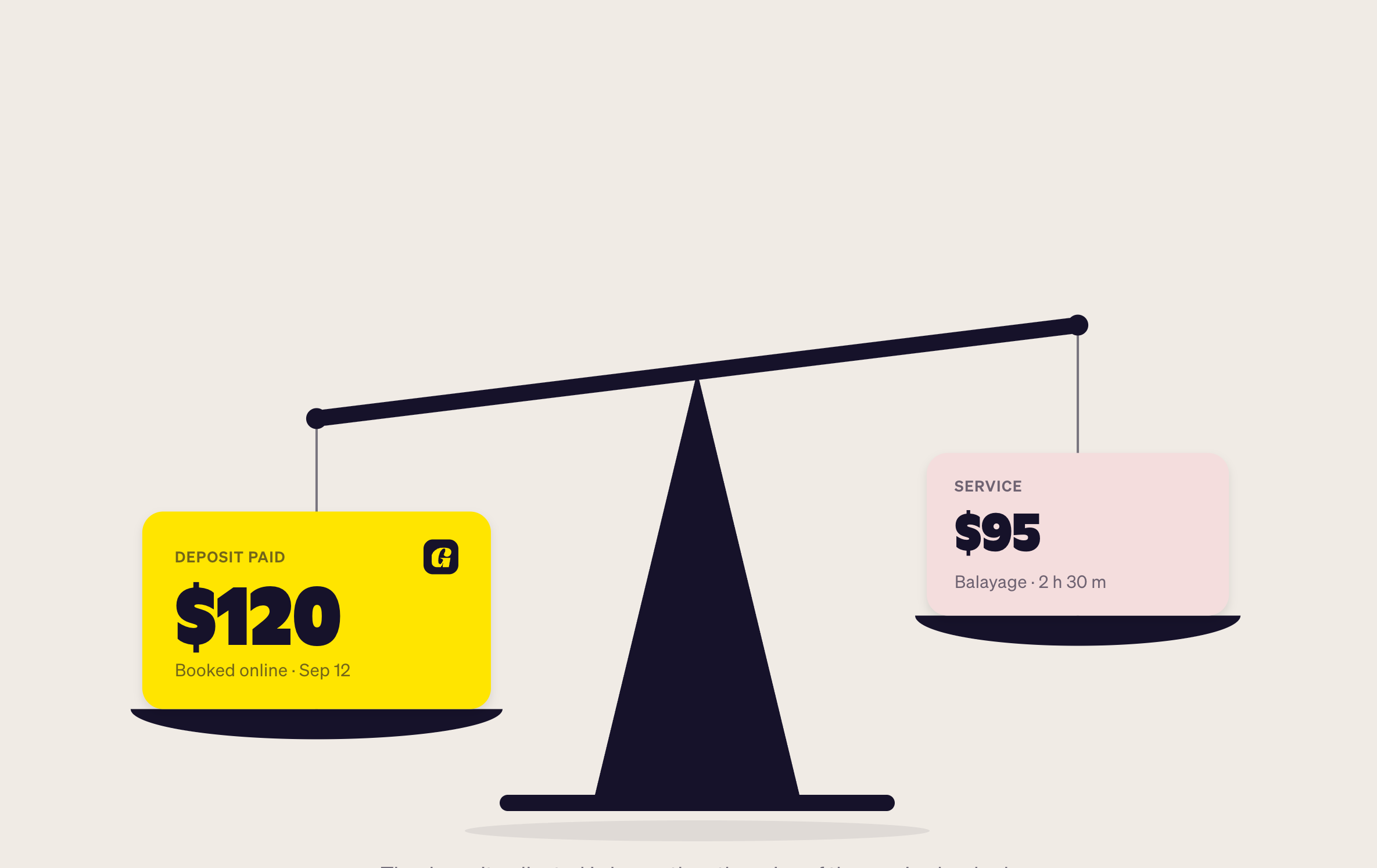
You should take a deposit because it turns a free, no-risk booking into a small commitment, and that commitment is what gets clients to actually show up. A booking with nothing on the line is easy to forget or blow off. A booking with $30 attached is not.
No-shows are not a rounding error. For beauty pros, no-show rates typically run between 10% and 20% of all appointments. US research backs up how predictable the problem is: a study of more than 25 million appointments found that no-show rates climb the longer the gap between booking and the appointment, and that younger clients are among the most likely to skip, often the same clients who book most often.
Put it in your own numbers. If you see 25 clients a week at an average of $80, a 15% no-show rate is about $1,300 a month, more than $15,000 a year, walking out the door, on top of the products you prepped and the clients you turned away to hold those slots. Deposits are the most direct way to stop that leak. The pattern is consistent: when clients have money on the line, no-shows drop sharply. Goldie reports that collecting booking deposits can reduce no-shows by over 90%.
Deposits aren't the only lever. They work best alongside the other ways to reduce salon no-shows, especially automated reminders. But of all of them, a deposit is the one that changes a client's behavior before they ever reach your chair.
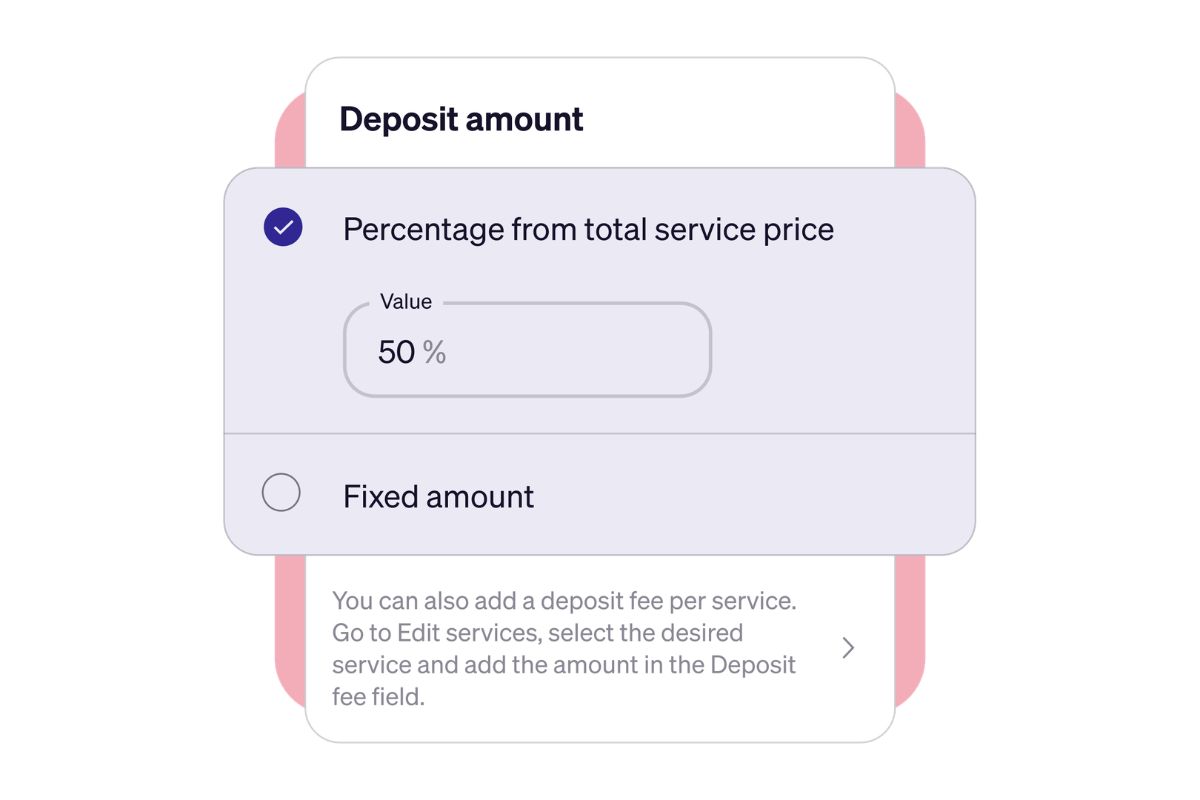
Charge enough that skipping the appointment costs the client something real, but not so much that booking feels like a financial risk. For most beauty services, that means a flat fee of $20 to $50, or a percentage of the service price, usually somewhere between 20% and 50%.
There are two ways to set it, and each fits a different kind of menu:
Then weight the deposit by service type. A quick, low-cost service like a single fill or a brow wax can take a light deposit or none at all. Your long, high-value, hard-to-rebook services (full color, extensions, a keratin treatment, a large tattoo) are exactly the ones a no-show hurts most, so those earn your firmest deposit, up to half the price.
A simple example: a stylist offers a $35 express service with no deposit, a $120 cut-and-color with a $40 deposit, and a $280 balayage with a 50% deposit. The clients booking the biggest blocks of time have the most skin in the game, and the quick services stay frictionless. You can also require deposits from new clients only, and let trusted regulars book without one. If you're not sure where to start, a flat $25, or a 50% deposit on any service over $100, is a safe first setting you can adjust once you see how clients respond.
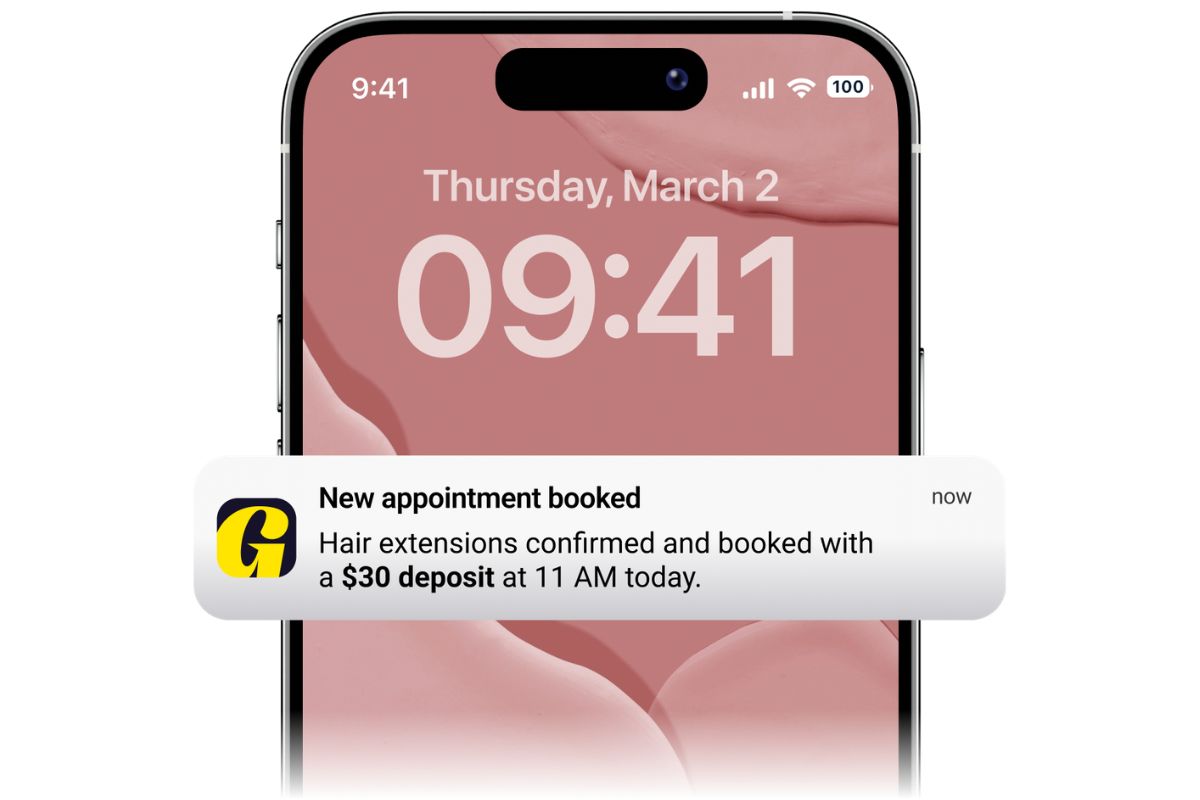
You communicate it plainly, once, in the places clients already look, and you frame it as how you protect everyone's time rather than as a punishment. Clients rarely leave because you asked for a deposit. They leave because the request felt like an accusation.
Most no-shows aren't malicious, they're forgetful. That's why a deposit works best paired with a reminder: the deposit creates the commitment, the reminder jogs the memory. In US clinical trials, text message reminders alone cut no-show rates substantially. A deposit is a commitment tool, not a trust test, and saying so in plain language keeps the tone warm.
Keep the wording short, specific, and in your own voice. A few examples you can adapt:
Say it where they'll see it: on the booking page, in the confirmation, and in the reminder. Don't bury it, and don't over-explain or apologize for it. Pair your deposit policy with a clear cancellation policy so the two reinforce each other and a client never gets a surprise. If you're deciding between the two, here's how deposits stack up against cancellation fees.

What happens to the deposit depends on rules you set in advance. The standard setup: the deposit is applied to the final service cost if the client shows, rolls over to the new appointment if they reschedule within your notice window, and is forfeited if they cancel late or no-show.
Those three rules are what make a deposit fair instead of feeling like a money grab. A client who gives you proper notice loses nothing, the deposit simply follows them to the rescheduled slot. A client who books, ghosts, and costs you the day forfeits the deposit, which is the entire point. Decide your notice window (24 hours is the common default) and your refund stance before you turn deposits on, so the policy is consistent for everyone. You can still make a goodwill exception for a loyal client with a real emergency; a policy sets your default, it doesn't lock you into being rigid.
Spell out the rollover clearly, because it's the part that reassures nervous clients: “Reschedule before your cancellation window and your deposit moves with you. After that, it's non-refundable.” That one sentence removes most of the fear that keeps clients from booking.

With Goldie, taking deposits is a setting you switch on, not a process you run for every booking. You decide the rules, and your online booking page collects the deposit and enforces them for you. Here's what you can set up:
Deposits are part of Goldie's built-in payments, so the same setup lets you take the rest of the balance in person or online too. Pair them with automated reminders and you close both gaps at once: the deposit handles commitment, the reminder handles the forgetting that causes most no-shows.
Start small this week: turn on deposits for just your single highest-value service. You can do it in Goldie under Settings, then Payments, in about five minutes. Watch what happens to your no-show rate on that service, then roll it out across the rest of your menu once you've seen it work.

.webp)