Clients may think of tipping as a polite extra, but for beauty professionals tipping is part of earning a livable income. No matter your beauty specialty, you know how much tipping habits can influence your day-to-day work, your paycheck, and even your motivation. Yet despite its importance, client tipping behavior often feels unpredictable. Some tip 20% without thinking twice, others tip inconsistently, while others have no idea what the right amount should be in the first place.
According to a study made by Bankrate about 54% of Americans regularly tip at salons, such as to hair stylists and barbers. The study also states that nearly 1 in 3 Americans feel pressured or uncomfortable about the amount they tip because tipping in the beauty industry can be confusing as there isn’t a right amount to pay. While most clients want to show appreciation for the professionals who made them look and feel their best, the standards around tipping can vary wildly by service, but also by city. That’s why we looked into the latest Goldie report to see where the most generous tippers in the US live, and which beauty professionals are tipped the most.

So whether you're curious about how clients tip in your city, evaluating the best ways for clients to send tips, or simply trying to better anticipate your monthly income, we’ve gathered everything you need to know about tipping in the beauty industry across the U.S.
Same as in other industries, when it comes to beauty services in the U.S., a good rule of thumb is to tip between 15% and 20% of the total service cost. However, tipping can vary depending on the type of service, the time involved, and the level of personalization so it’s not always a one-size-fits-all situation.
For example, nail services such as manicures or pedicures typically 20% tip, though this can increase if the appointment runs long or involves intricate nail art. Tattoo artists deserve special consideration since their work often involves hours of pre-planning from in-shop or email consultations and sketches to revisions before the actual session. In this case, your tip should reflect the total time and effort invested, not just the tattooing session itself. For makeup artists, tips range from 20% to 35%, depending on the complexity of the look or the occasion. Estheticians, who provide facials and skincare treatments, are generally tipped 18% to 20%, even when the services are discounted.
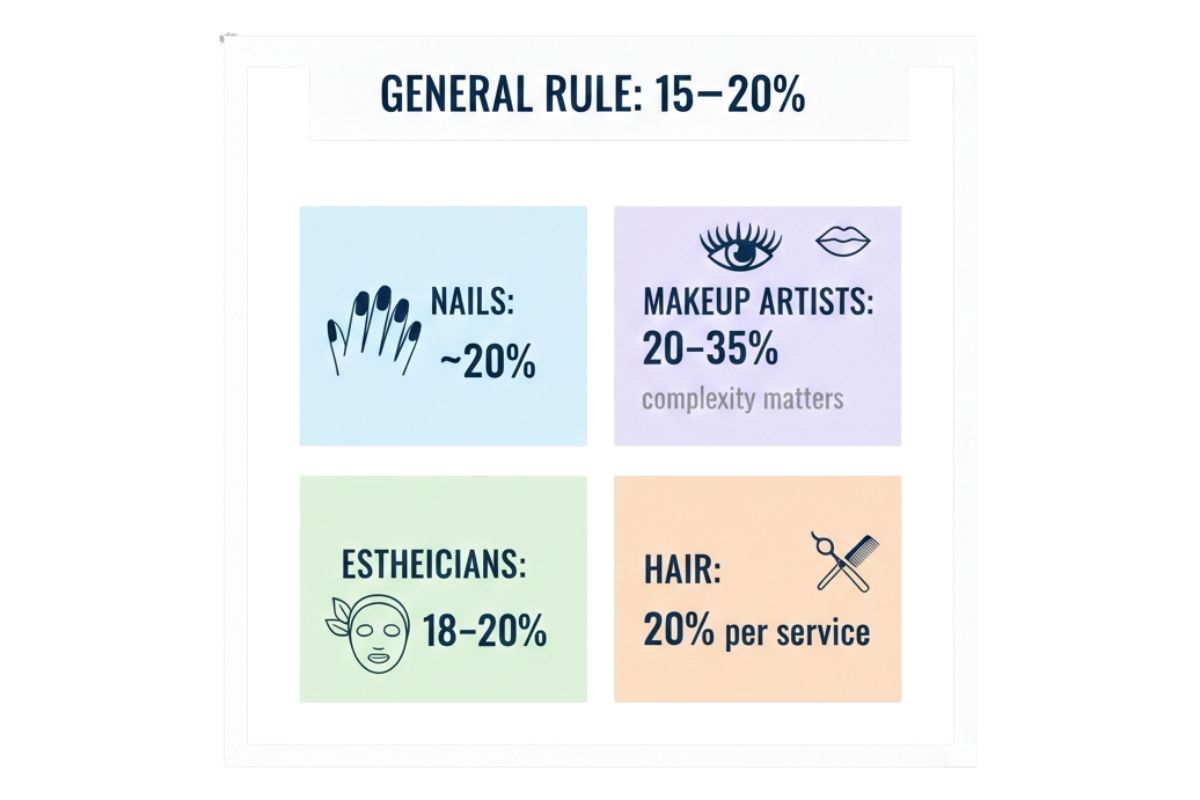
The hair industry, however, can be the trickiest. A single salon visit might involve multiple professionals if you’re getting your hair washed, cut, colored, and styled. In these cases, etiquette experts, including Jessica Barsamian, CEO of The Belgrade Group, recommend tipping 20% for each service individually. Assistants or shampooers should also receive a separate tip of $5 to $10 as a thank-you for their help. Some stylists share tips with their assistants, but it’s not always guaranteed. And that’s because most service providers only earn a portion of what the salon charges which is often less than 50% which makes tipping a vital part of their income.
Lastly, demanding clients, clients who arrive late, or ask to be squeezed in at the last minute, should considerate to tip a bit more than 20 percent to show appreciation for the extra effort and flexibility no matter the service provided.
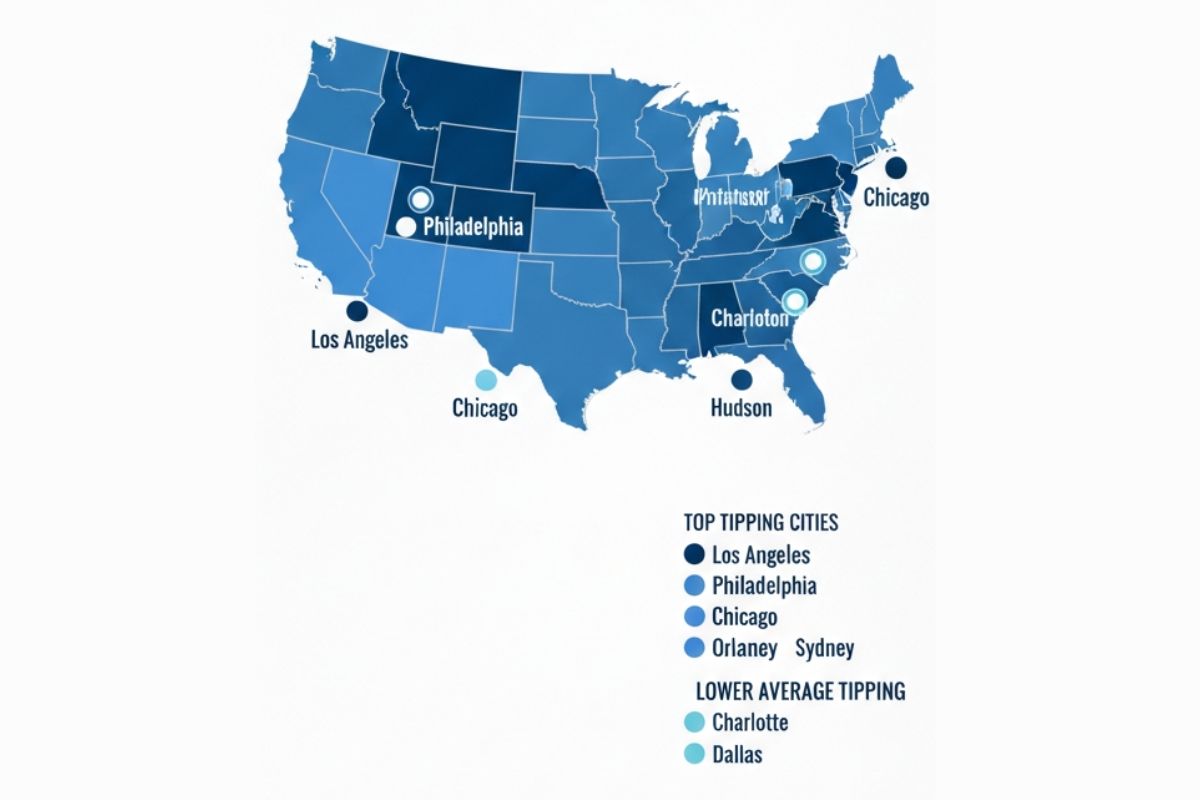
According to data from Goldie, some U.S. cities stand out for their generosity when it comes to tipping beauty professionals. The survey revealed that Los Angeles tops the list as the city with the most generous tippers in the beauty industry. Following close behind are Philadelphia, Manchester, Chicago, and Hudson, with Birmingham, Atlanta, and Miami.
So why does Los Angeles lead the way? From the city’s high cost of living, Hollywood culture, and celebrity-driven beauty standards, they all contribute to a strong tipping tradition. At Skinbiotic Med Spa in Los Angeles, lead injector Kami Hanaie, PA-C, says patients tip between 15% and 20%, similar to tipping at a beauty salon. We might add that beauty professionals established in Los Angeles strive for excellence since the market is highly competitive and may actually attract higher tips and clients with a stronger appreciation for quality work.
At the other end of the list, the cities with the lowest average tips include Orlando, Sydney, San Antonio, Charlotte, North Hills, and Dallas. Since the cost of living and average service prices are lower compared to major metropolitan areas like Los Angeles the tipping percentages tend to be smaller because overall service costs are more affordable. Also, since they are smaller cities, usually clients see the same stylist for years, so tips can be a little lighter but balanced by loyalty and friendship.

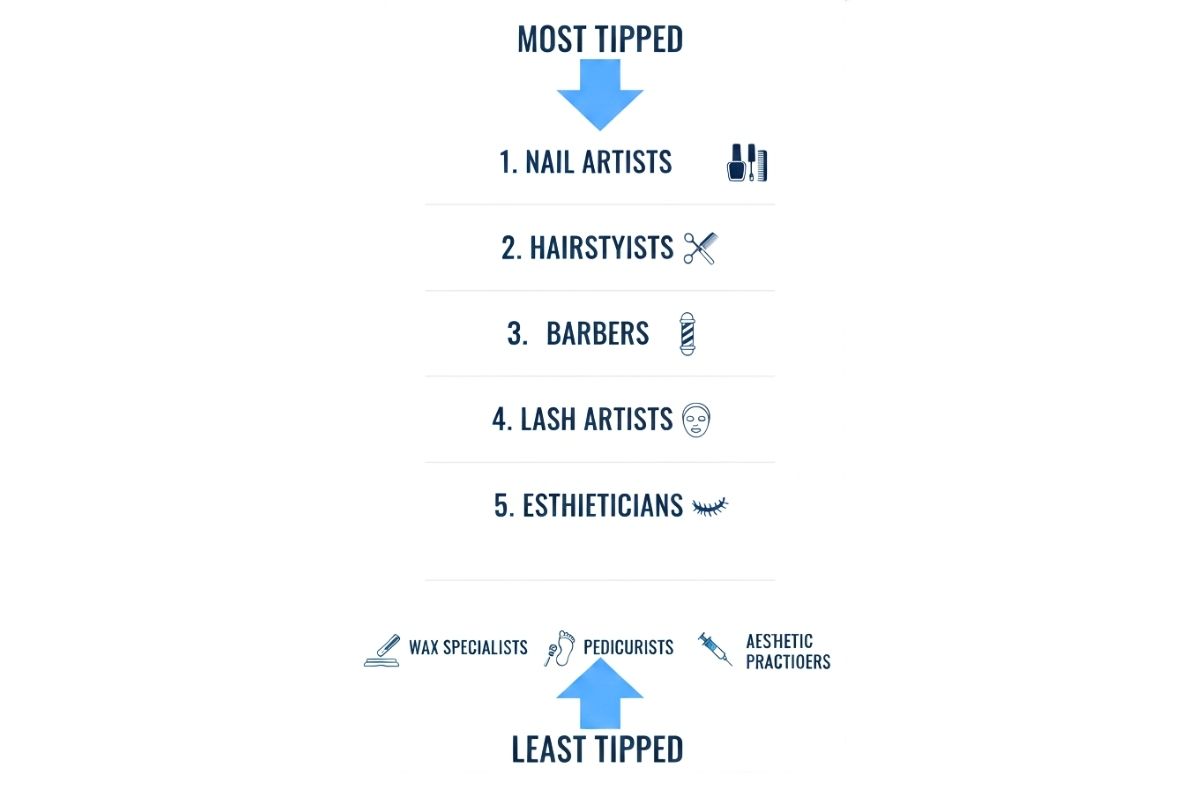
According to Goldie’s data, nail artists lead the list as the most generously tipped beauty professionals in the U.S., followed by hairstylists, barbers, lash artists, and estheticians or beauty therapists. This may be because these services require high levels of creativity, personalization, and the results are instantly visible. Clients appreciate the artistry and attention to detail that goes into each nail appointment or the time needed to revive their hair.
On the lower end of the list are wax specialists, nail technicians, pedicurists, and aesthetic practitioners. Even though many of these are essential, they are perceived as routine or maintenance-based rather than creative or expressive. They don’t feel like a gift done for you like intricate nail art or a new hairstyle. Sessions also tend to be shorter and more frequent, which make clients less likely to tip as much each time.
When it comes to tipping, most clients stick to whatever feels easiest and immediate, that's why it's important to offer multiple payment options. Of course, each method has its pros and cons, and as a beauty professional you can tell your clients how you would like them to pay for your services.
Cash is still the gold standard for many beauty professionals. It’s personal, and ensures that your tip goes directly to the person who performed your service without being reduced by processing fees or delayed by payroll systems. Many clients still carry a small amount of cash specifically for tipping and especially in salons where multiple people assist them like stylists, colorists, or assistants.
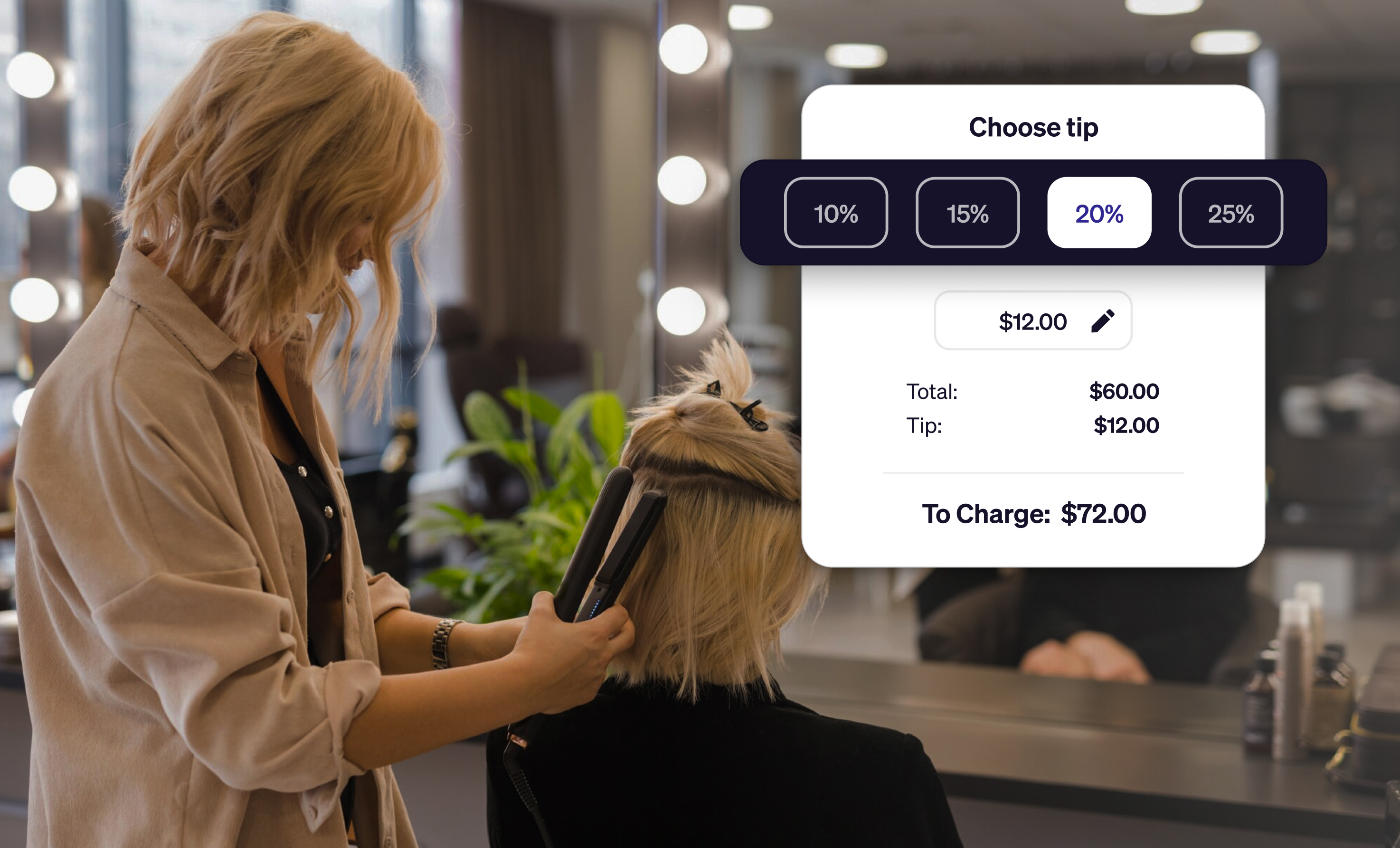
Tipping by card during checkout is also acceptable and often the most convenient option for clients. They’re already paying with a card, and adding a percentage on the checkout screen takes only a second. Most modern salon systems make it easy to add a gratuity directly to your payment total, allowing you to tip quickly while finalizing your transaction. Most of the time these tips are subject to processing fees or take longer to reach the service provider, depending on the salon’s policies.

There are also tipping apps like ThankU or eTip that make cashless tipping effortless through QR codes, payment integrations, and personalized links that send tips directly to the service provider. Beauty professionals tend to prefer these platforms because they offer instant payouts, eliminate awkward checkout moments, and ensure tips go to the correct stylist, assistant, or technician.
Every beauty professional will eventually have a client who can't or won't leave a tip. While tipping in US salons is a standard practice, not every client understands the expectation or is in a financial position to add gratuity on top of the service price. In these moments, communication can go a long way.
Some clients genuinely struggle with affordability, and may choose lower-cost services, stretch out the time between appointments, or visit when they have more room in their budget to tip properly. Others simply don’t understand that most beauty pros rely on tipping as part of their income. When clients are honest about their financial situation, many professionals appreciate the transparency and value the long-term relationship over a single missed tip. Loyalty matters more than one appointment.
For beauty pros, the key is to be professional while still protecting your boundaries. A missed or small tip doesn’t automatically mean a client doesn’t value your work, but they may have a tight budget. Most clients will make up for it when they can, and many will tip more generously in the future. If not, most likely they will not return to your salon.

Sometimes it happens even to the best beauty professionals, but client complaints are an opportunity to turn a negative experience into a positive one. Start by listening carefully and understanding the concern, and after offering solutions immediately. Depending on the situation it can be adjusting the service or providing a follow-up appointment.
If you maintain a calm approach and offer solutions, clients will leave a tip despite the minor issues. For small mistakes it’s normal for clients to leave the standard tip, as effort and skill were still involved. Only if there were serious errors like hair, nail, or skin damage, clients will not leave tips or reduce the amount. Finding a solution for the errors right away and communicating calmingly will protect your client relationship, your income, and you may transform friction into trust and loyalty.
Tip: Here's a practical article on how to deal with angry clients that might help you turn criticism into constructive feedback.
Tipping reflects how much clients value your work and the experience you create. While the standard tip is around 20%, the amount can vary depending on your service type and the city where you work. But if your clients leave the chair feeling confident, polished, and refreshed, you can be sure your work will be rewarded.
.webp)