Every barber knows the drill: a client sits down and says, “just give me a two, like last time.” But what happens when you're new, or when it's not your regular client sitting in the chair?
One in five men say they feel nervous asking their barber or stylist for a new hairstyle, according to a survey of 2,000 U.S. men by Talker Research. And 23% say they've been afraid to ask for a specific haircut in the past.
For barbers, clear communication can make that conversation much easier. Understanding clipper numbers gives both sides a simple language for talking about length, fades, and the result a client has in mind.
This guide breaks down the haircut number system in practical terms for working barbers. You'll get a full clipper size chart, guidance on choosing the right guard for different clients, and strategies for keeping your numbers consistent across an entire team.
A haircut number is the guard size on a clipper that determines how much hair is left after a cut. Each number is stamped on the guard and corresponds to a specific, repeatable length. The haircut number system is simply a standardized way of describing hair length through these clipper guard sizes.
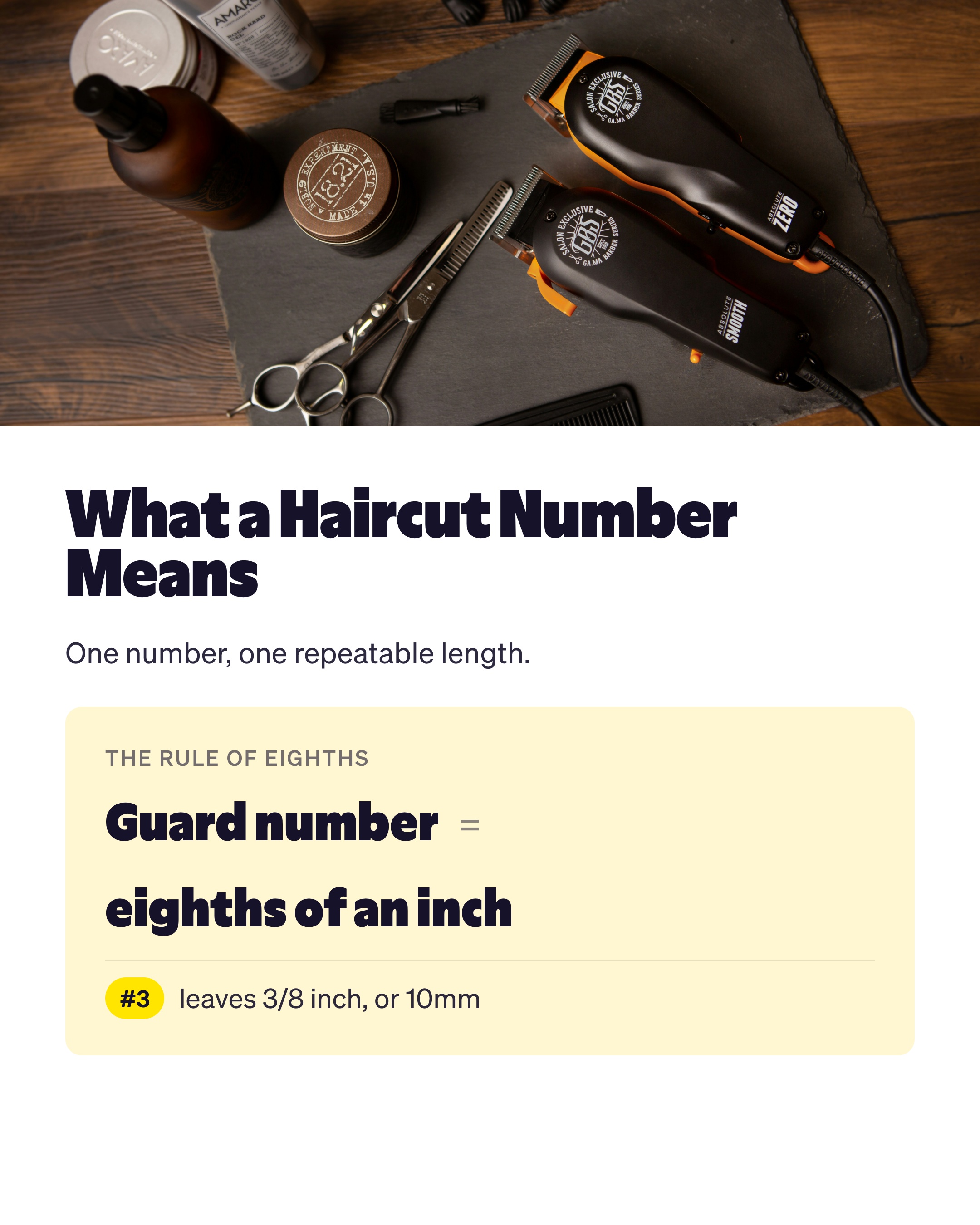
Most clipper brands follow roughly the same numerical scale, running from 0 to 8. The guard number generally corresponds to the length in eighths of an inch, which makes the system easier to memorize once you understand the pattern.
Here's a quick reference for the most common clipper guard sizes:
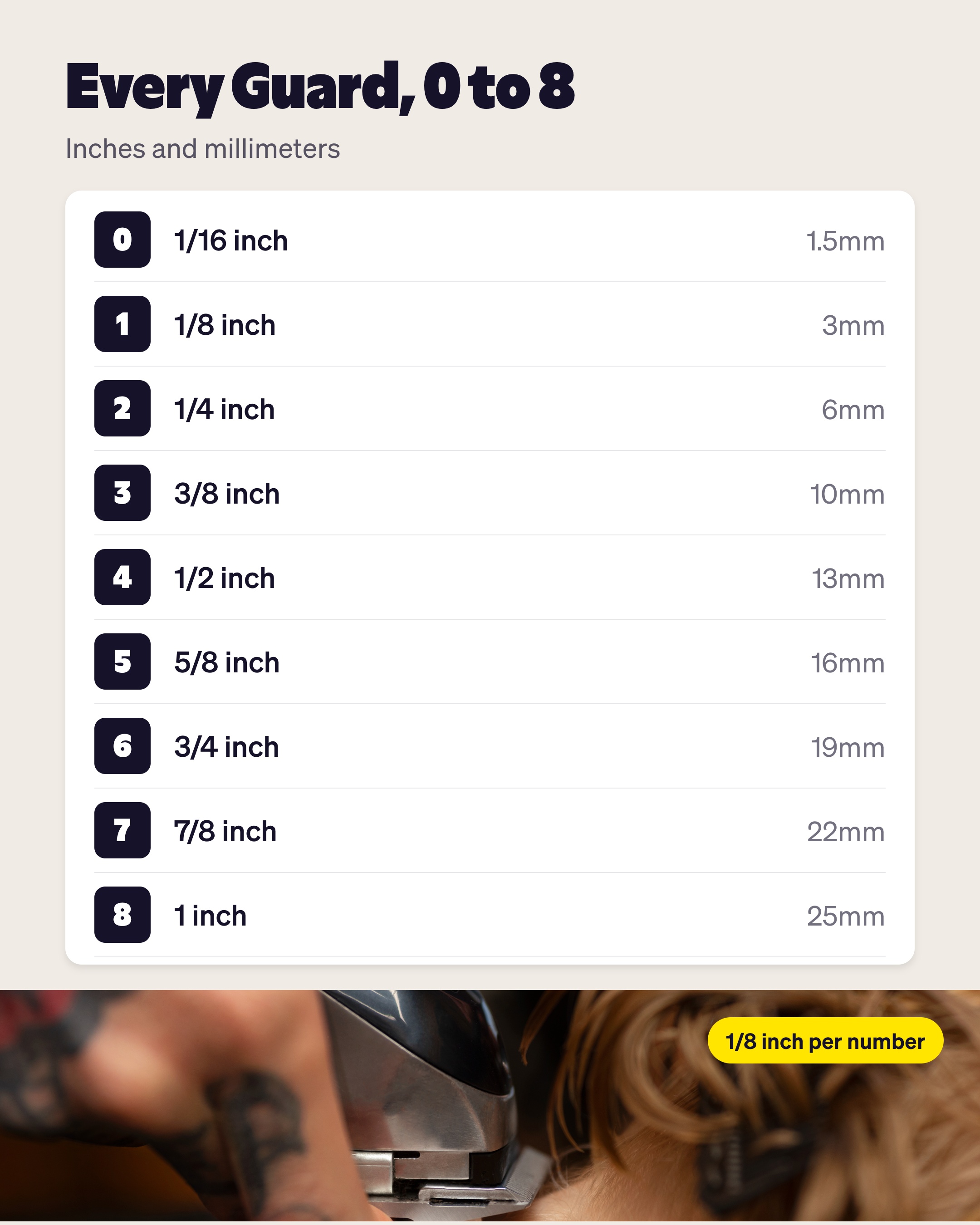
The shortest guard in the haircut number system, number 0 cuts to about 1/16 inch, or 1.5 mm. Barbers commonly use it for very short fades and close blending. A #0 still leaves a faint layer of stubble. It's therefore different from a true skin fade, where the hair is taken down to the skin using a bare blade or other skin-close technique.
A number 1 cuts hair to about 1/8 inch, or 3mm, making it one of the shortest true clipper cuts. It's commonly used for short sides, buzz cuts, and as the first guarded step in a fade. Used all over, a number 1 gives clients a very short, low-maintenance style with minimal length to manage.
A number 2 cuts to about 1/4 inch, or 6mm. It's long enough to leave more coverage than a number 1 while still creating a short, easy-to-maintain look. Barbers often use it for buzz cuts, short sides, and as a middle step when blending a fade between shorter and longer guards.
At roughly 3/8 inch, or 10mm, a number 3 gives the hair more texture and body while keeping the overall style short. It's a common choice for longer fade transitions, tapered sides, and buzz cuts. On top, this length can also give clients enough hair to create a little more shape and texture.
A number 4 cuts to about 1/2 inch, or 13mm, giving clients noticeably more length to work with. It's popular for longer buzz cuts, crew cuts, and textured styles where some styling products can be used to add shape or definition. It also works well as a longer length when blending the sides into the top.
At about 5/8 inch, or 16mm, a number 5 is useful when clients want a longer clipper cut without moving fully into scissor work. Barbers may use it for longer crew cuts, tapered styles, or thicker hair that needs extra length to sit naturally. It can also work as a transition between clipper-cut sides and longer hair on top.
A number 6 leaves about 3/4 inch, or 19mm, making it one of the longer standard clipper sizes. The extra length gives hair more volume and makes it suitable for brush cuts, longer textured styles, and even-length cuts. It's also useful for clients who are growing their hair out but still want a neat, uniform shape.
At roughly 7/8 inch, or 22mm, a number 7 is close to an inch of hair. It's useful for longer clipper cuts and textured styles where the client wants to keep plenty of length. Barbers can also use it as a transition before switching to scissors when blending clipper work into longer hair.
The longest standard guard, number 8 leaves about 1 inch, or 25mm, of hair. At this length, there's enough hair to create more visible texture and shape, although many barbers switch to scissors when a client wants to keep more length. Number 8 is often used for even-length clipper cuts or to level longer hair before finishing the style.
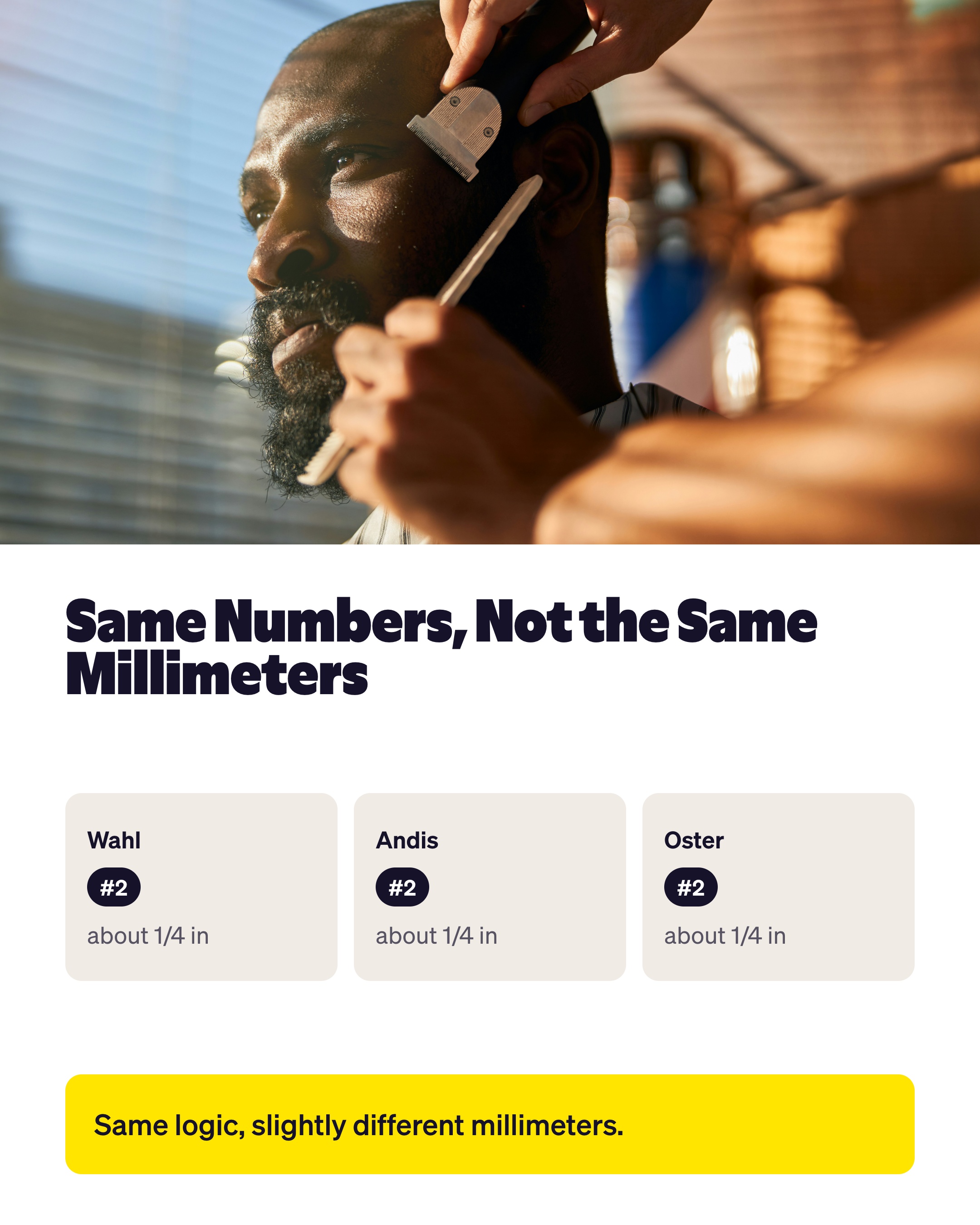
Not exactly. Most brands, such as Wahl, Andis, and Oster follow the same general numbering logic (roughly 1/8-inch increments per number), but the actual length behind each guard can vary slightly from one brand to the next. A #2 on a Wahl clipper won't always match a #2 on an Andis or Oster to the fraction of a millimeter.
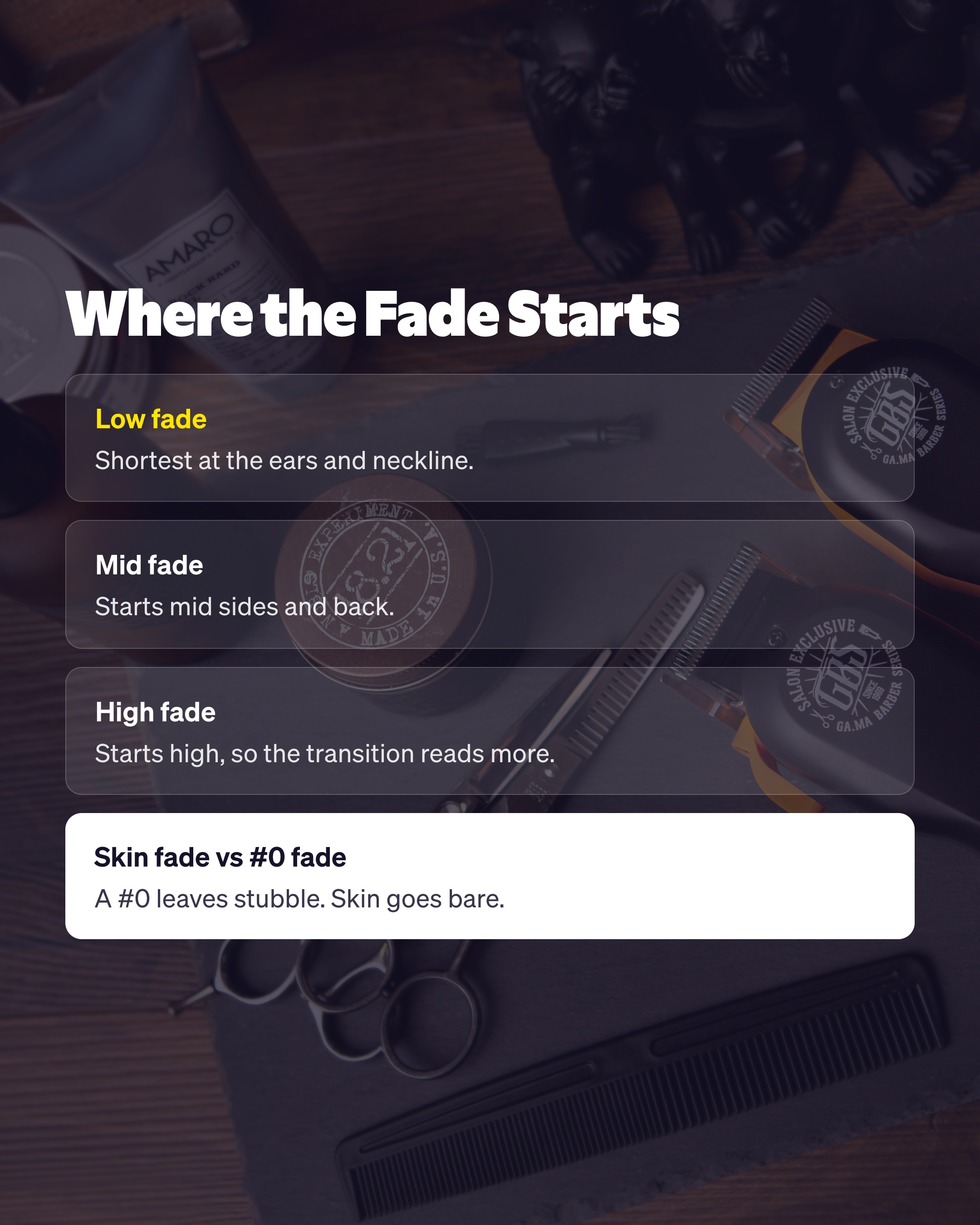
A fade uses several clipper guard sizes to create a gradual transition from shorter to longer hair. The exact guard sequence depends on the type of fade, the client's desired result, and the barber's technique.
Keeping a record of the exact guard combination used for each client also makes it easier to recreate their fade at the next appointment or when they see a different barber.
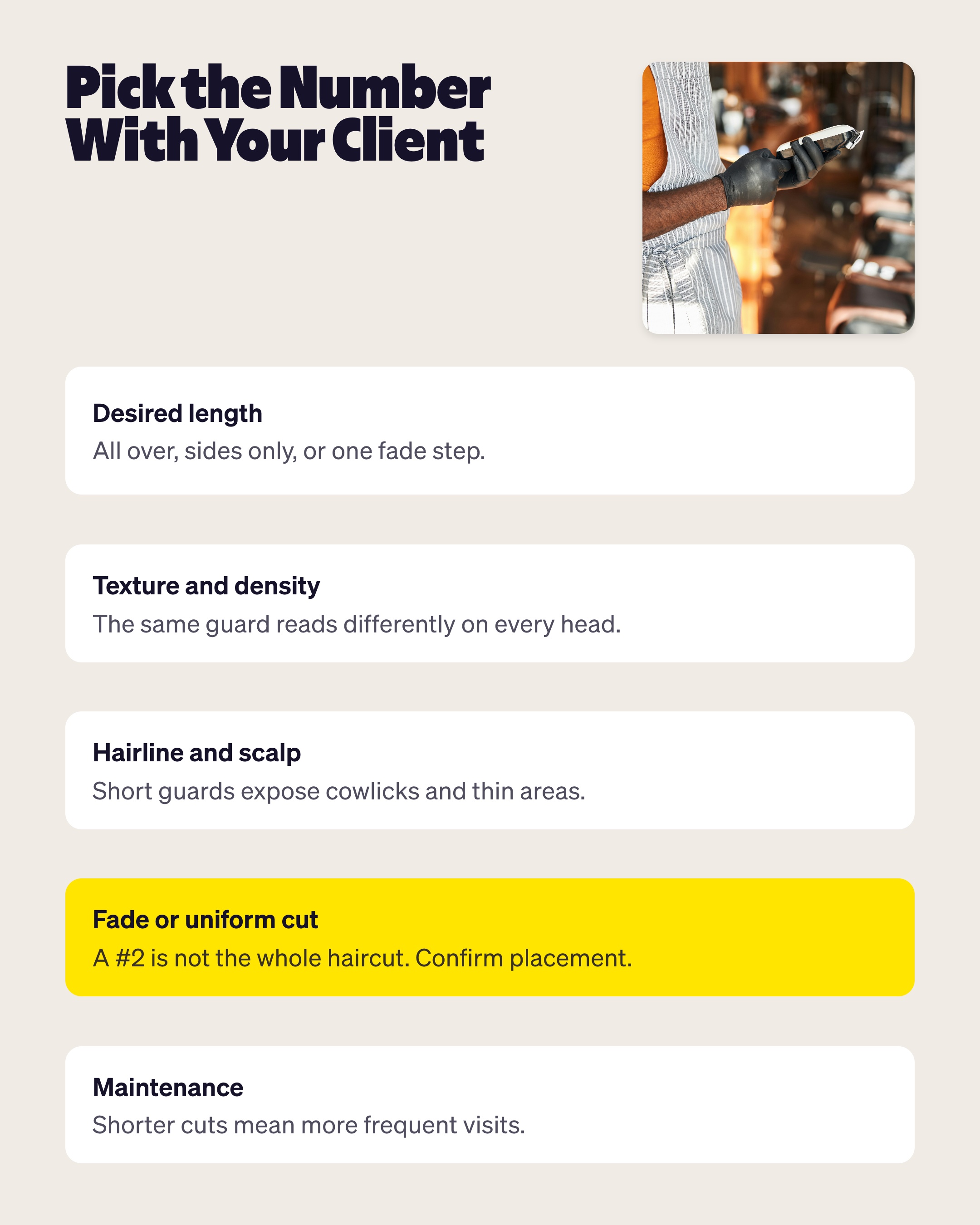
The right clipper number depends on the client's desired length, hair type, hairstyle, and maintenance routine. Here are the key factors to consider:

Most clients don’t know their number. Asking “What number do you want?” can put someone on the spot if they've never learned the system. A few approaches work better in the chair:
Over time, clients may start using clipper numbers themselves, making future consultations faster. More importantly, they can give another barber a useful starting point if their regular barber isn't available.
A client says "my usual" and expects you to remember exactly what that phrase means for their specific cut. If you're new to the shop, or if it's been several months since their last visit, that memory gap can quickly lead to a redo, an uncomfortable conversation, or a client who quietly switches to another barber.
Standardizing your numbers across the shop, and documenting them for each individual client, removes most of that guesswork entirely.
One of the simplest places to start standardizing is your booking page itself.
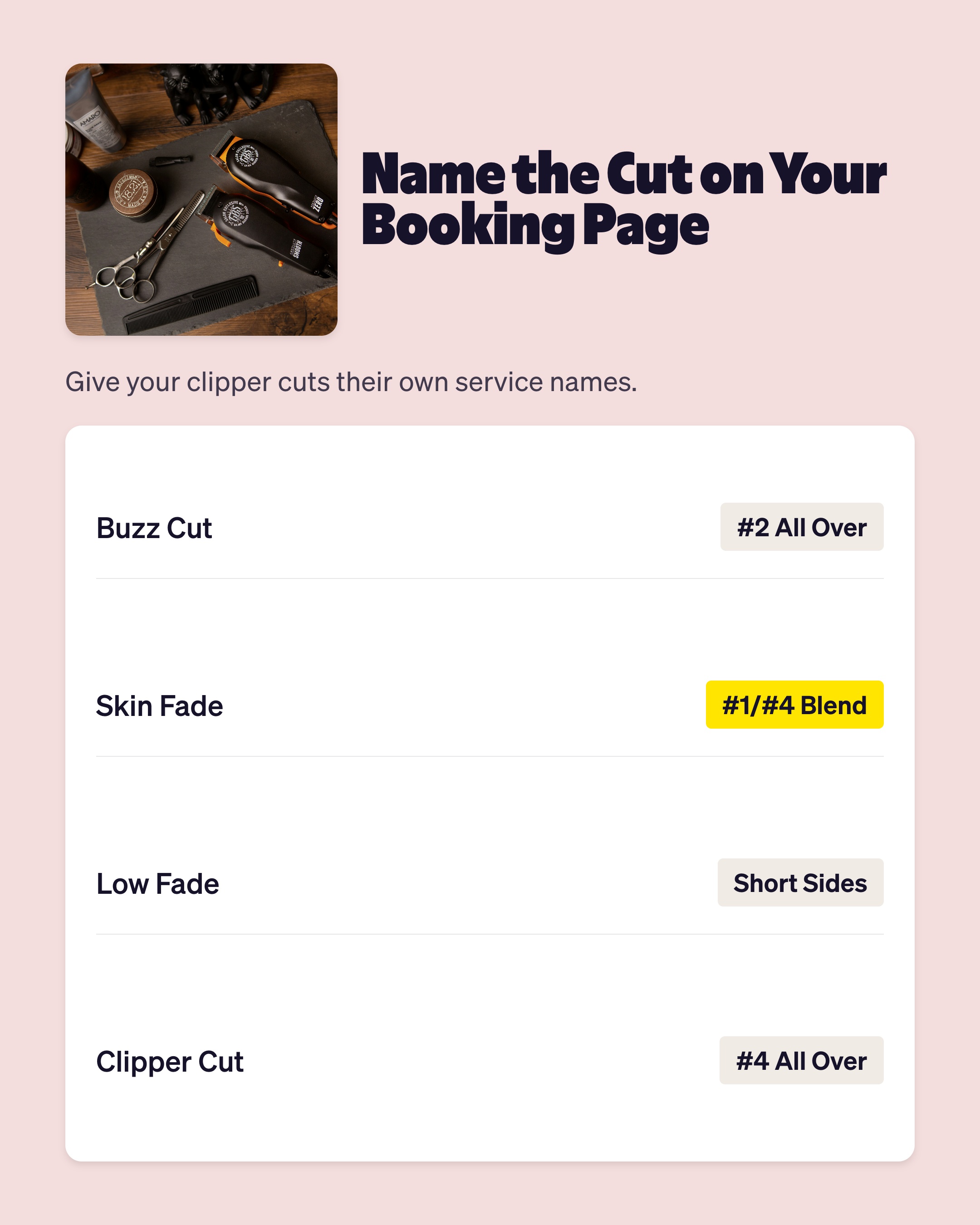
A vague haircut option on your booking page can leave room for confusion. If you regularly offer specific clipper-based cuts, consider giving them their own service names so clients will book exactly what they want.
For example:
A good online booking system will also let you send appointment reminders helping keep the booked service and appointment details fresh in the client's mind before they arrive.
The service a client books, tells you what they're coming in for. But the client notes can tell you how they like it done. With Goldie you can save a note on each client's profile where you can add a note about their preferred hairstyle.
For barbershops with multiple team members, this can be especially useful. A client's preferences are documented in one place, making it easier for another barber to deliver a familiar experience.
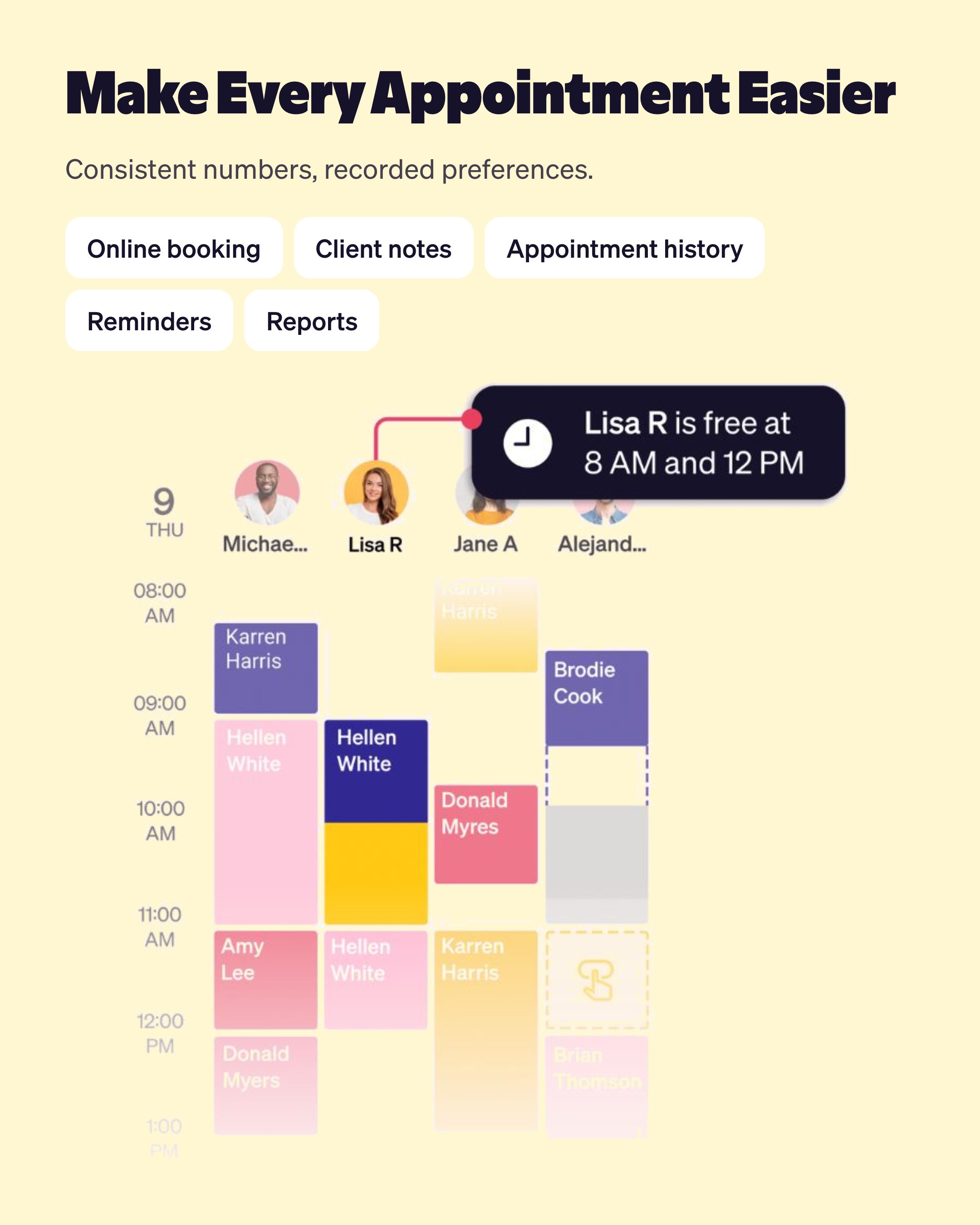
A good haircut starts before the clippers come out. When your team uses consistent guard terminology and records client preferences, it's easier to deliver the same result even when clients switch barbers.
Goldie brings this into your everyday workflow with online booking, client notes, appointment history, reminders, and reports on what services your clients book most often. All these help you make smarter decisions about pricing, promotions, and marketing.

.webp)