Your chair earns money for a fixed number of hours a week, and rent is due whether someone's sitting in it or not. The 30 minutes between a fade and a beard trim, the Tuesday no-show, the regular who drifted off six weeks ago and never rebooked: that's revenue your week was capable of producing and didn't. AI won't cut hair. What it does is fill the chair, answer the messages, and handle the parts of the business you never trained for.
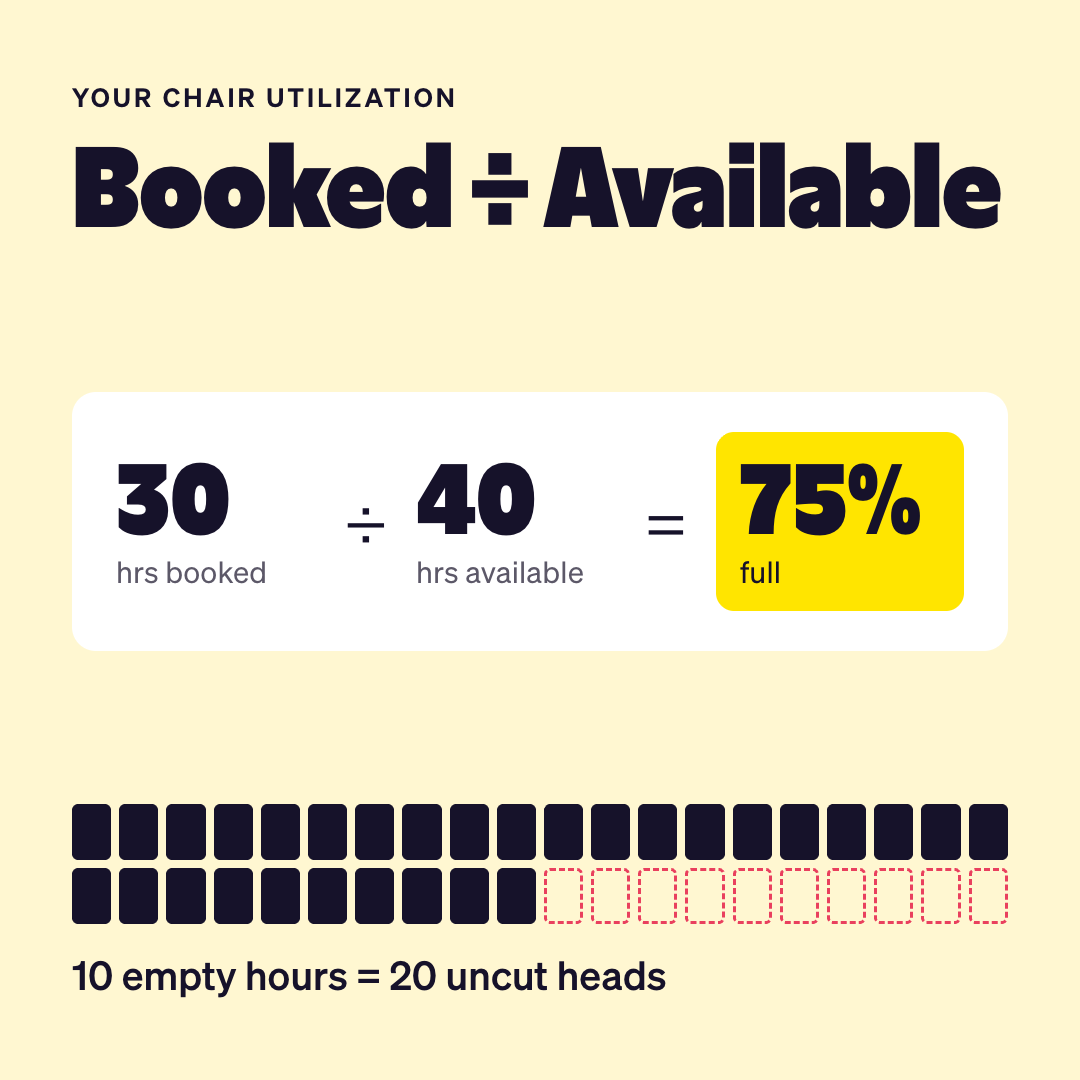
More than you think, because a gap doesn't announce itself. A no-show is obvious. An unbooked 2pm just looks like a break.
Run the number yourself. Take your available chair hours in a week (8 hours a day, 5 days, so 40). Count your actual booked service hours. Divide the second by the first. That's your utilization rate, and almost no barber has ever calculated it.
Now price it with your own menu. If you're booking 30 hours out of 40 and a standard cut takes 30 minutes, those 10 empty hours are 20 uncut heads. Multiply by whatever you charge and that's your weekly leak, before booth rent, which runs roughly $150 to $400 a week depending on your market and comes due either way.
This lands harder on barbers than most trades because you carry the whole risk yourself. The Bureau of Labor Statistics reports that 76% of barbers are self-employed, with a median hourly wage of $18.73 and top earners clearing $37.71. That spread isn't purely skill. A large share of it is how full the chair stays.
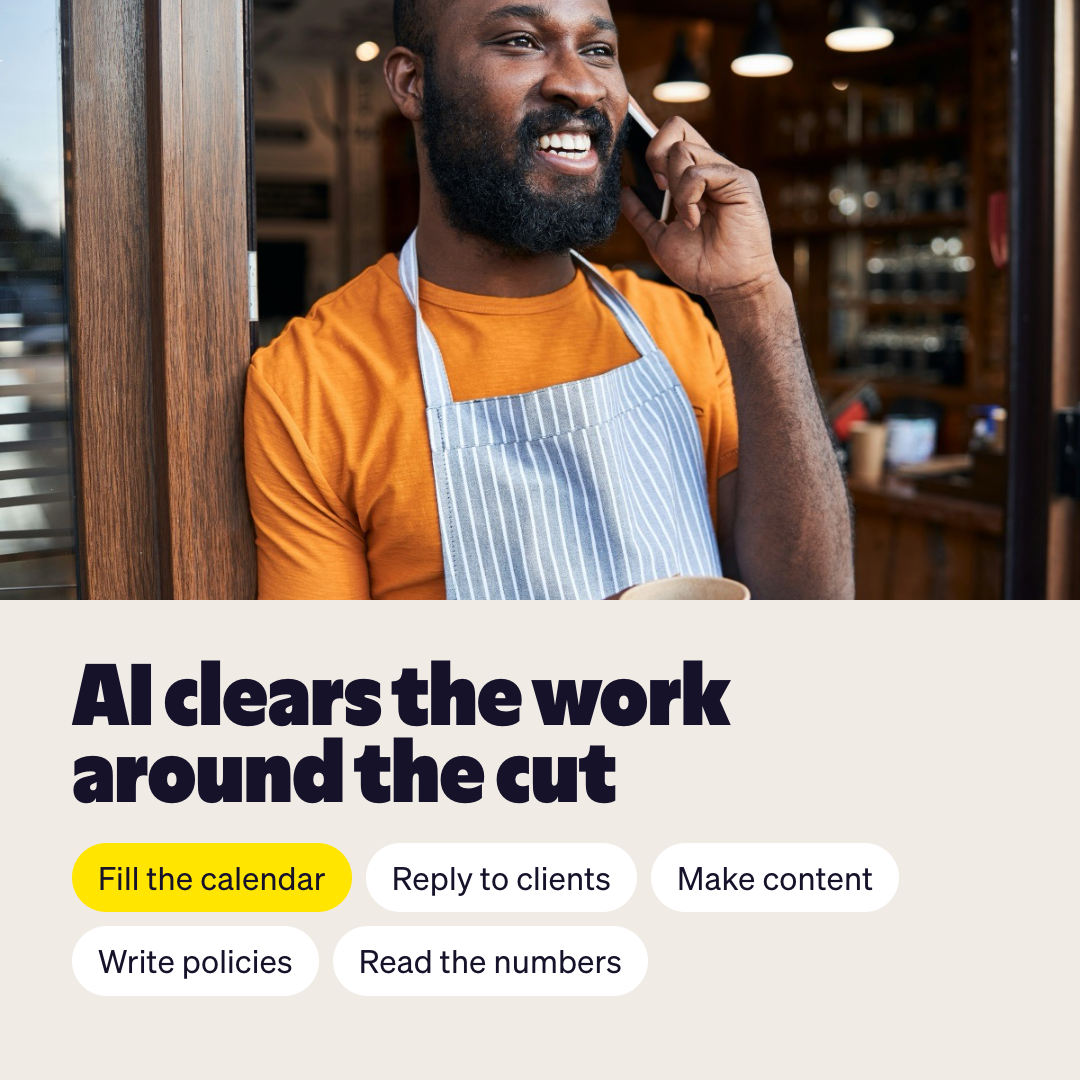
AI handles the parts of the business that have nothing to do with cutting: filling your calendar, replying to clients, making content, writing your policies, and telling you what your numbers mean. It doesn't touch the craft. It clears the work around it.
Adoption data shows this is exactly where small operators use it. The NFIB's 2025 Small Business and Technology Survey found that 24% of small employers use AI tools such as ChatGPT, Copilot, Grammarly and Canva in their business activity, while 76% do not. Barbershops sit firmly in that second group, which means the ones moving now aren't following a crowd. They're getting ahead of one.
Here's the breakdown.
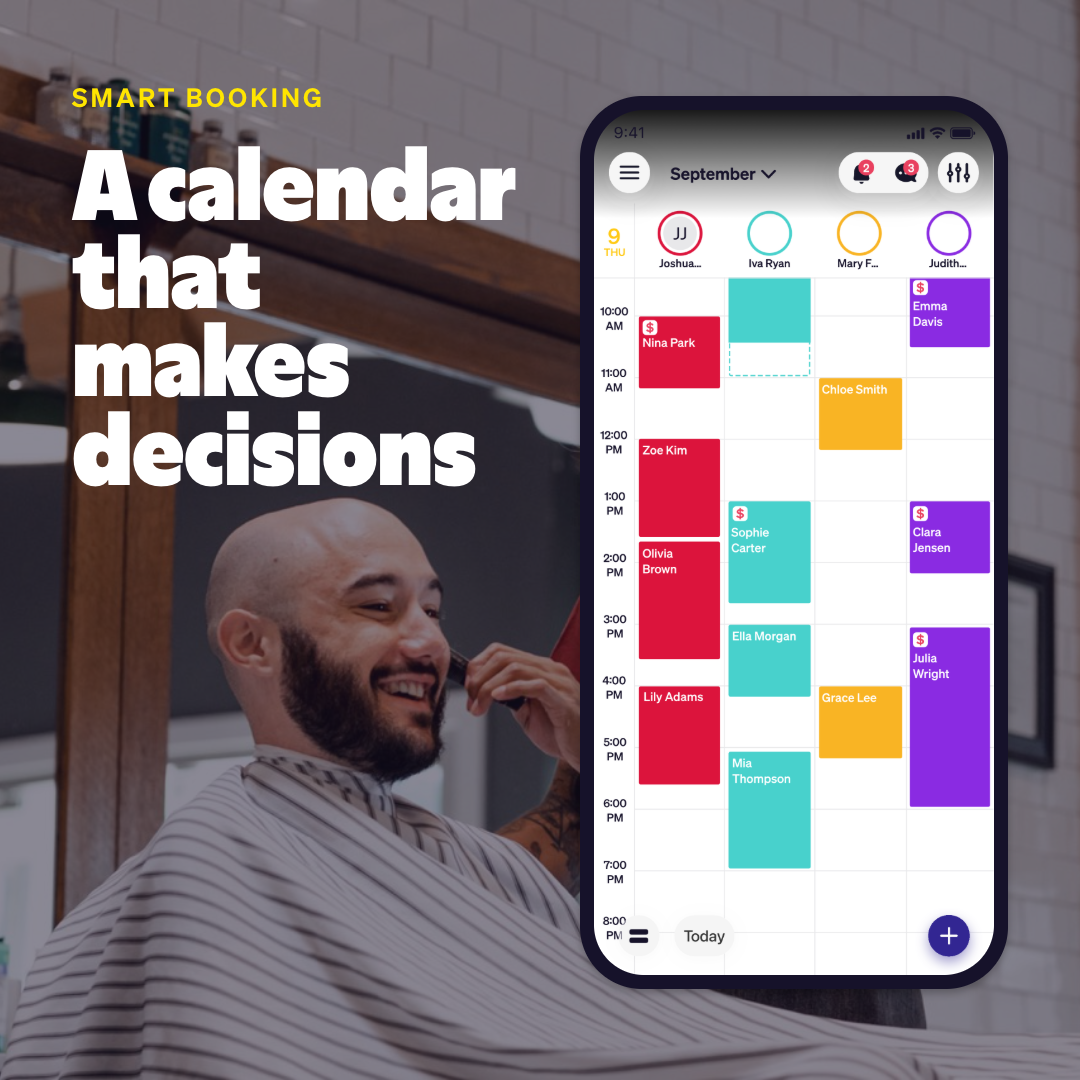
Smart booking for a barber shop means the calendar makes decisions instead of just displaying them.
Bad availability settings manufacture their own dead space. A client books a 30-minute cut at 2pm, another books 3:30, and the 30 minutes in between is too short to sell and too long to ignore. Do that three times a day and you've given back most of a shift by Friday. That's not a client problem. That's the booking tool letting people drop appointments wherever they feel like it.
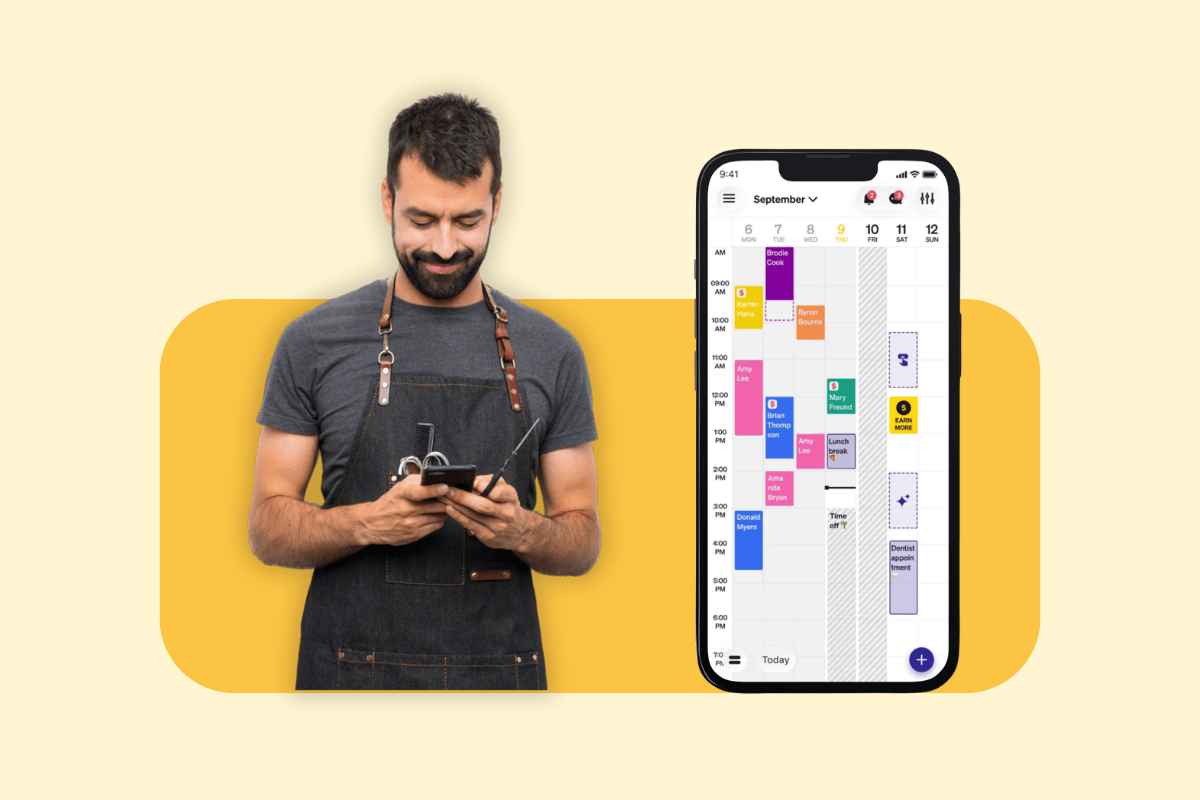
An optimized schedule closes that door. Instead of showing every open hour, it offers slots that sit flush against what's already booked, so clients can't leave holes in your day. Goldie's online booking works this way, setting real durations per service and buffers between them, with the link living where your clients already are, which for most barbers is the Instagram bio.
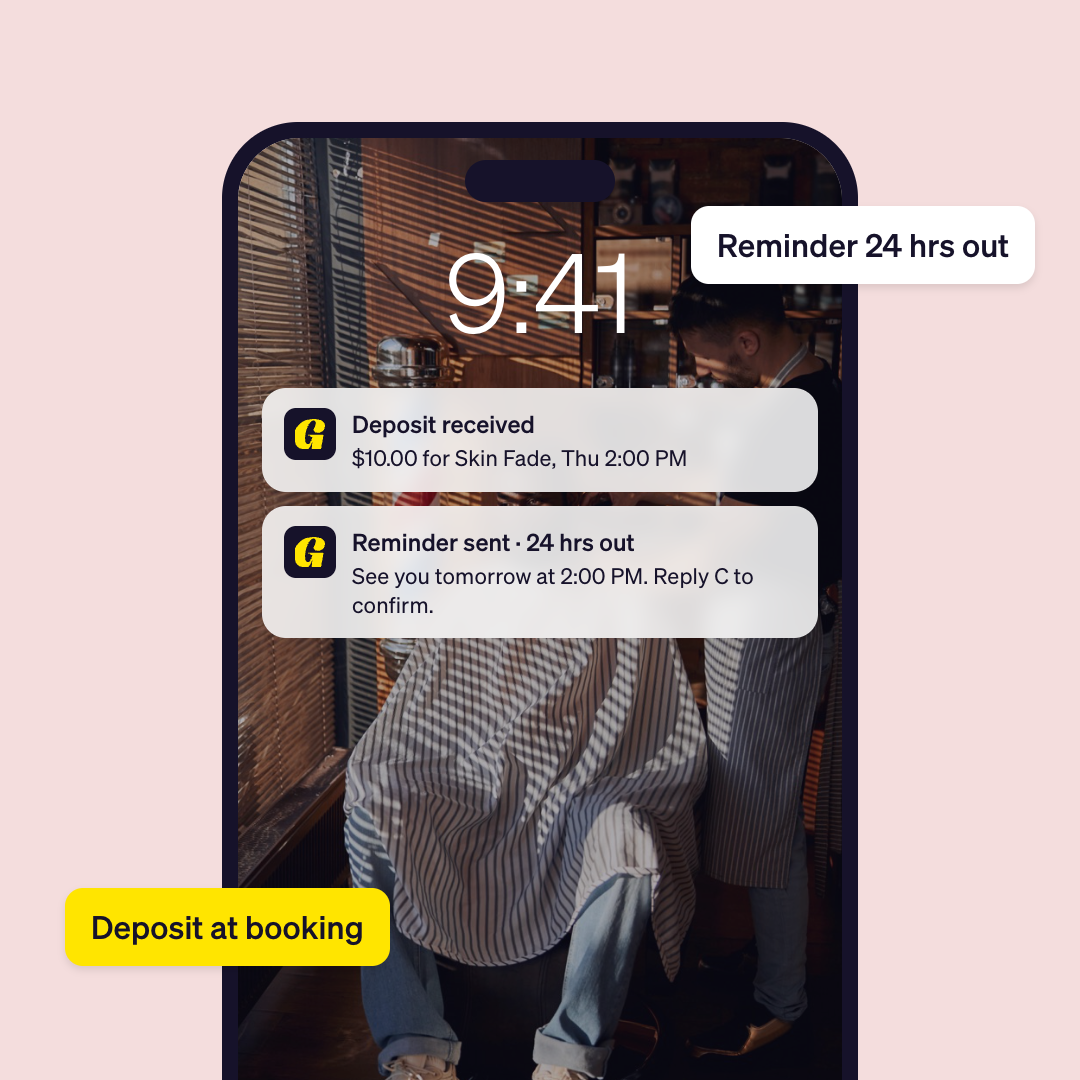
Yes, and this is the best-evidenced part of the entire stack. Missed appointments are the most heavily studied scheduling problem there is, and both prepayment and reminders show measurable effects. A meta-analysis of 28 studies found SMS reminders significantly improved attendance, with deposits and charges separately documented as a standard deterrent. That's healthcare research, not barbering, but the behavior it measures is the same behavior sitting in your chair: people forget, people flake, and people commit harder when money is down.
Two settings do most of the work. A deposit required at booking and an automated reminder 24 hours out. Taking deposits and charging no-show fees means the policy enforces itself before anyone walks in, and automated reminders go out without you remembering to send them.
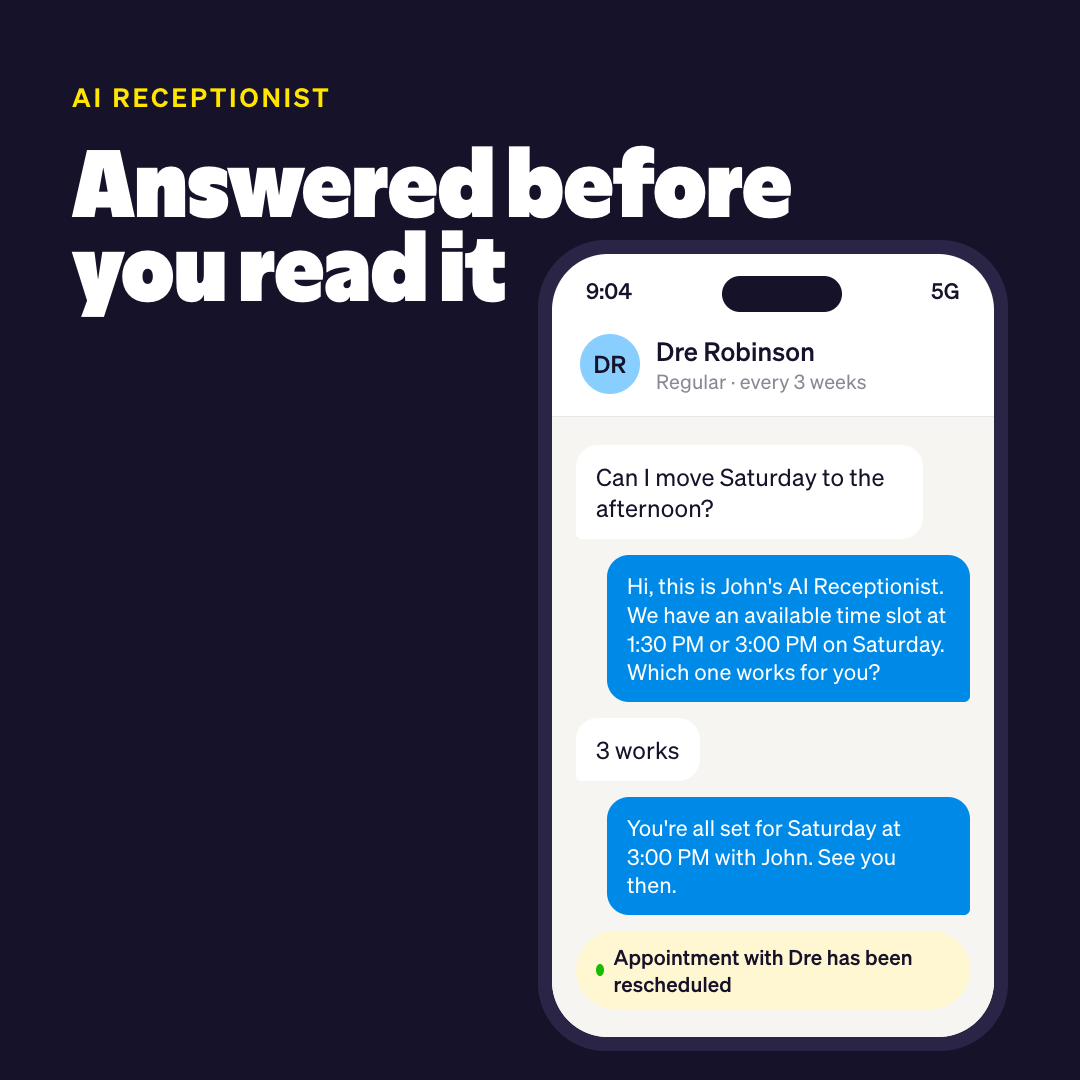
Message handling is the second biggest leak, and it's the one that eats your evenings rather than your calendar.
The messages are overwhelmingly the same five questions: what's your price, you got anything today, where are you, can I move Thursday, do you take walk-ins. Answering them costs either client attention or personal time.
Two approaches here, and they aren't the same thing. A general AI tool like ChatGPT can draft your replies if you feed it 5 examples of how you actually text, but you're still the one pasting and sending. An AI receptionist connected to your calendar answers on its own. Goldie's AI Receptionist responds to client messages and handles rescheduling, cancellations, and confirmations directly, so the guy texting at 9pm to move Saturday gets sorted before you've read it, and the slot he vacated goes back on the board while it's still fillable.
Speed matters more here than most pros realize. A new client messaging 3 barbers on Instagram books whoever answers first. Frequently that's the only difference between you and the shop down the street.
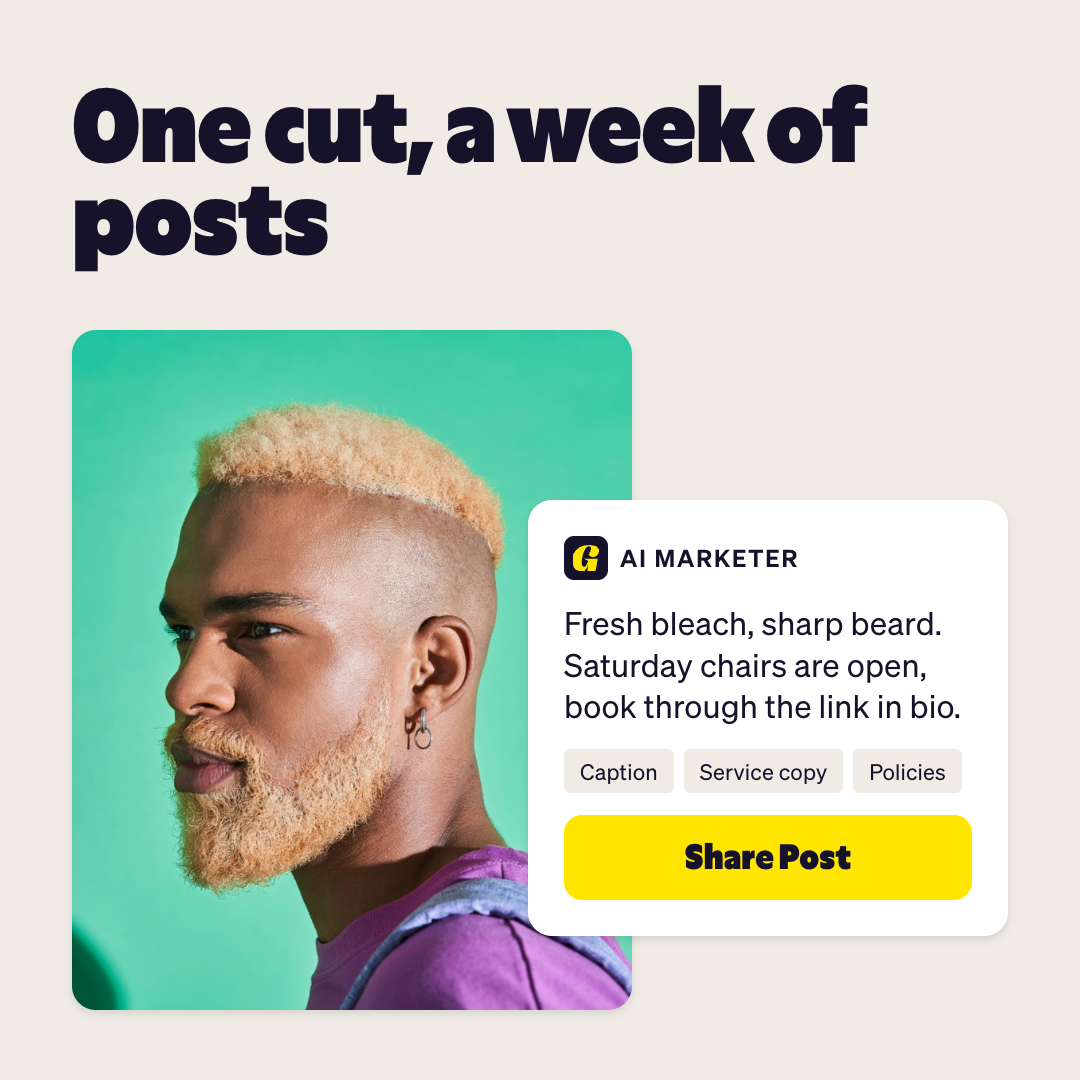
Content AI turns one appointment into a week of posts, which matters because your Instagram is your storefront and posting consistently is where most barbers fall down.
The general tools are cheap and good:
Film one client, edit between cuts, and you've got four posts from work you already did.
The gap with general tools is that none of them know your services or your prices, so you spend the time you saved re-prompting. Beauty-specific options close that gap: Goldie's AI Marketer generates social posts with a button to share them straight out, writes the service descriptions that appear on your booking page, drafts your policy and terms text, and can generate a logo if you don't have one.
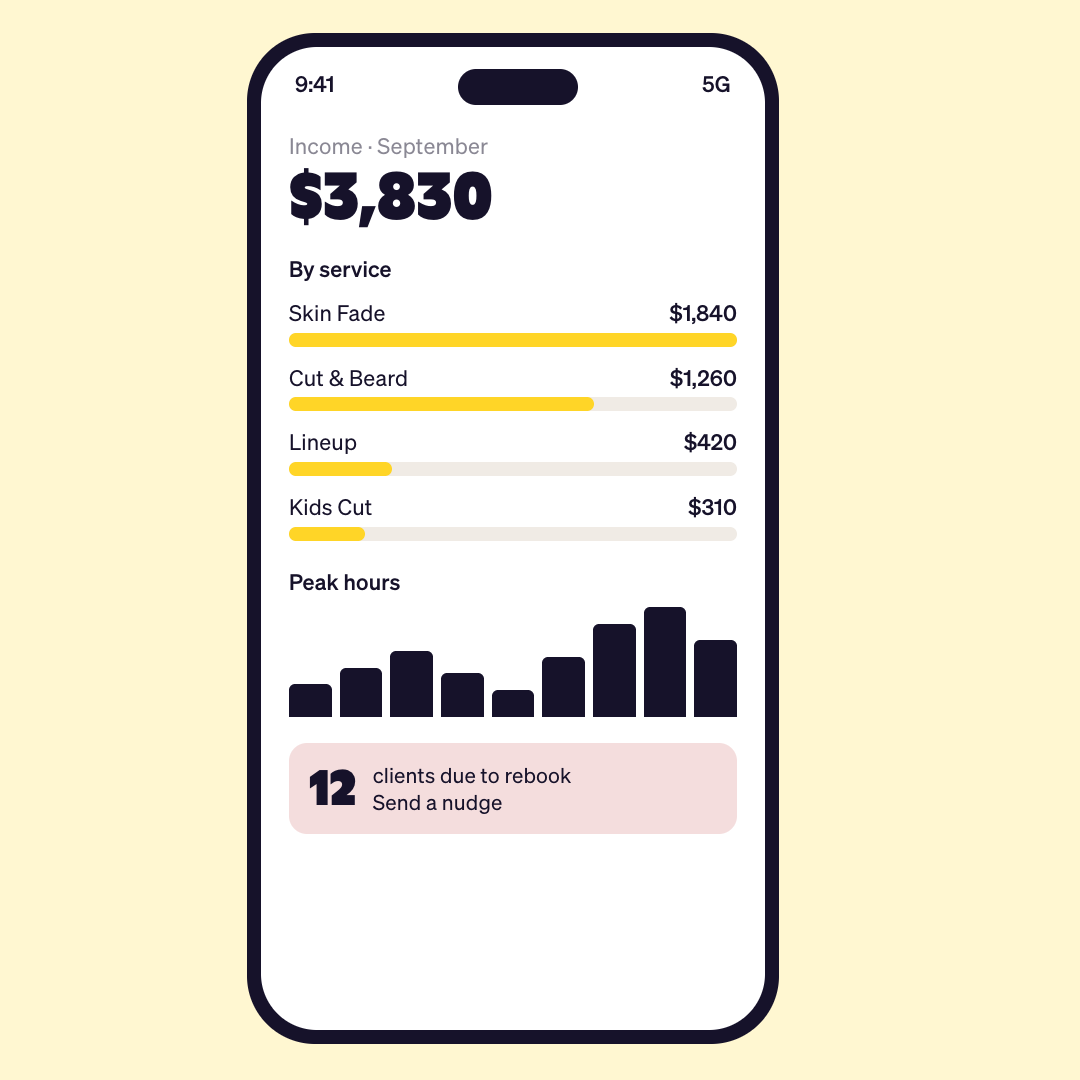
The last category is the one barbers skip: knowing which services and which hours actually make money.
You want to see which cuts rebook best, which days run empty, and which clients haven't been in for 3 months. Goldie's reporting surfaces income by service, peak hours, and client trends so you can move availability toward what earns.
This is also where retention shows up. Men get haircuts roughly every 8 weeks, so each regular is worth about 6 bookings a year. Losing one isn't a one-cut problem, it's a year-long one. Automated rebooking prompts are the cheapest way to hold that line, and they run without you.
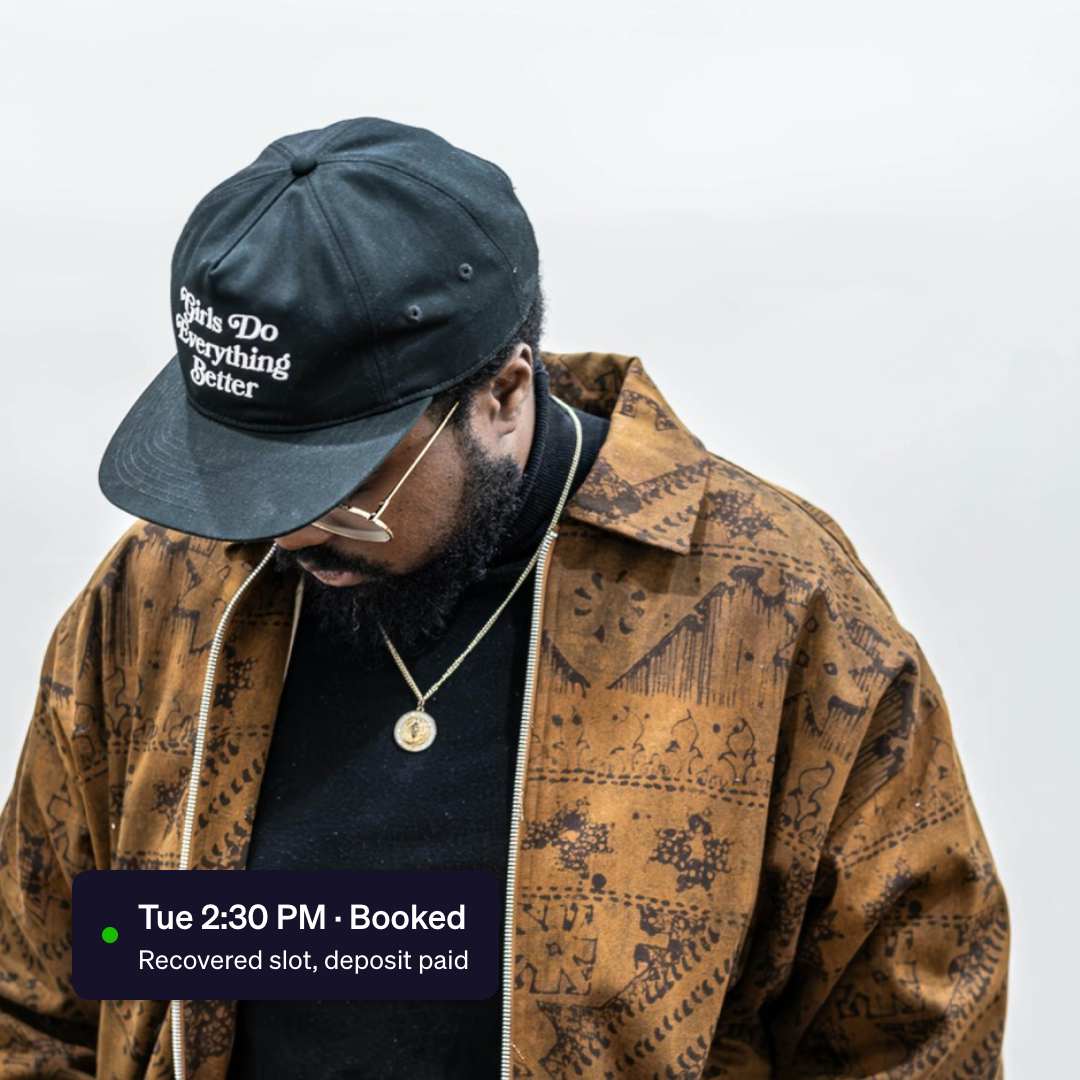
Yes, and the smaller your operation, the faster it pays back, because there's nobody else absorbing the admin.
The break-even is low. Recover one 30-minute slot a week and, at most barbers' prices, that alone covers the software several times over before you count prevented no-shows or the new client who booked because you answered first.
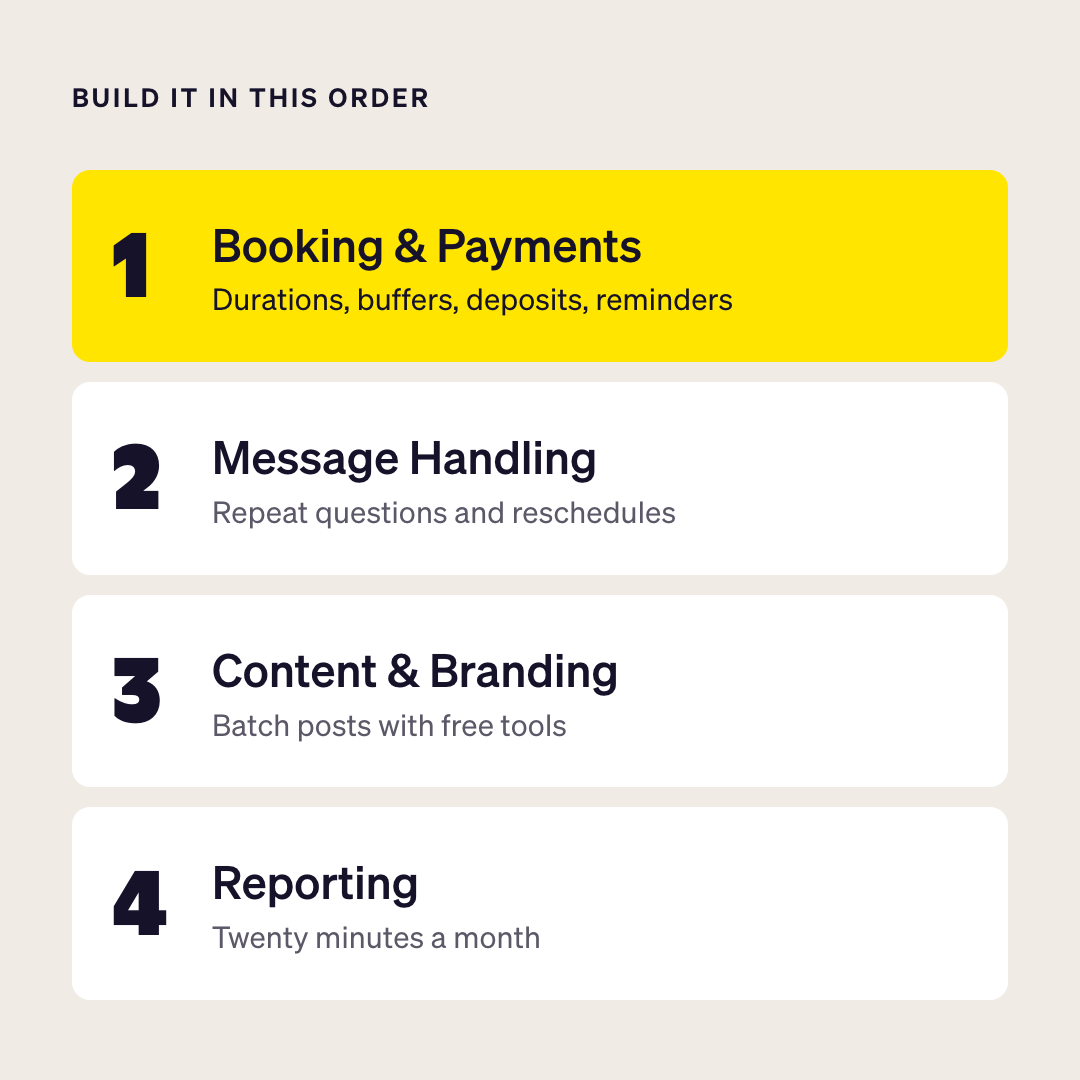
Build it in this order:
Skip single-trick tools. Four logins for four jobs is how barbers end up back in the Notes app by spring.
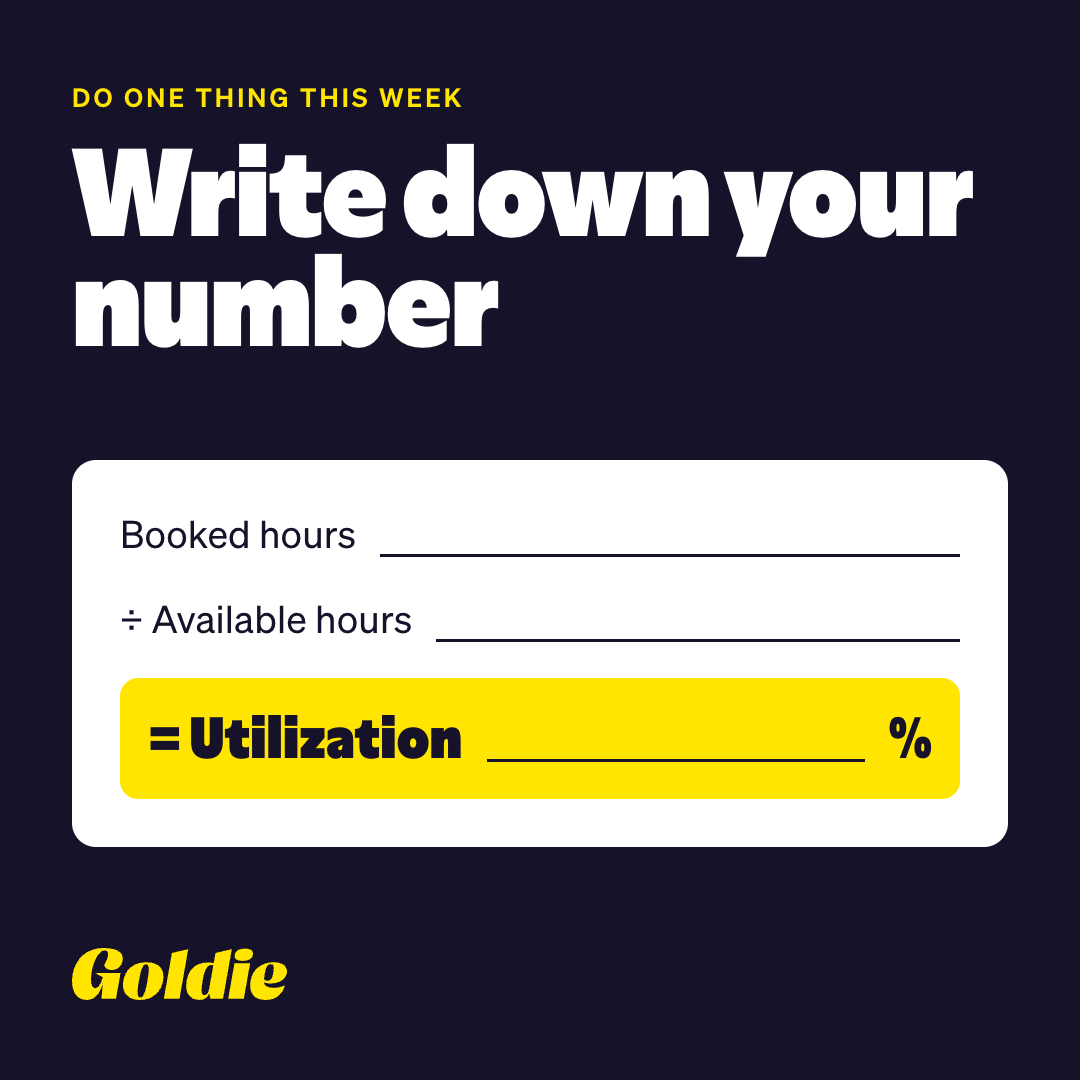
Do one thing this week: count last week's booked hours against your available hours and write the percentage down. That single number tells you whether you have a pricing problem or a scheduling problem, and for most barbers running it for the first time, it's the second one.

.webp)