Pricing is one of the most important decisions a barber makes because it affects how clients perceive your work and whether your business is actually sustainable. Underpricing keeps your chair full, but it often leads to burnout and financial stress while overpricing without a good strategy does the opposite, leaving gaps in your schedule. But when your prices align with your costs, your time, and your value, your barbershop becomes more profitable and easier to grow.
In this post, we’ll cover what influences barbershop pricing, how to calculate your true costs, and the most common pricing mistakes barbers make so you can build a price list that supports both your clients and your business.
Barbershop pricing is shaped by a combination of business realities, client expectations, and market conditions. Understanding these factors helps you set prices that cover your costs and reflect your value, attract the right clients, and keep your business profitable long-term. When you know exactly what influences your pricing, you gain the confidence to charge what your work is truly worth.
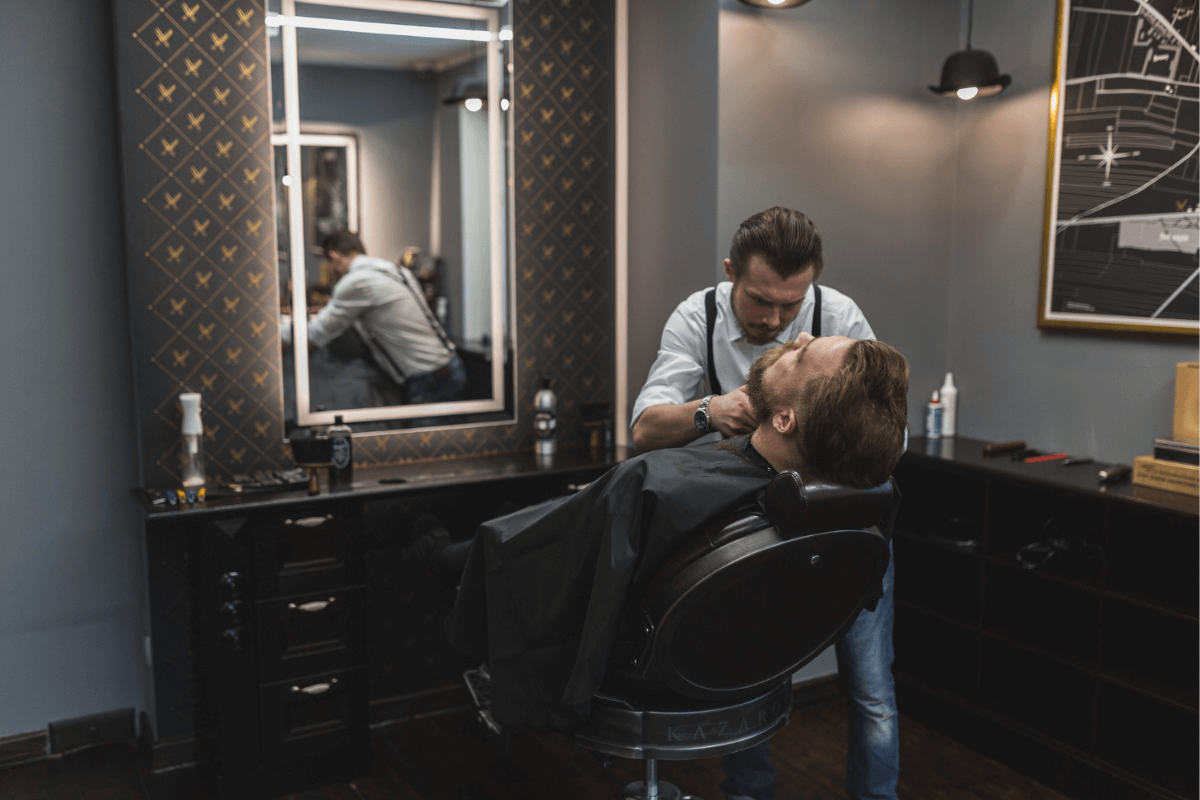
It’s among the first factors that contribute to price setting because the cost of living and average income in your area directly impact what clients can and are willing to pay. A barbershop in a busy downtown district or an upscale neighborhood will naturally charge more than one in a small rural town.`
It has to do with how you want clients to perceive your shop. If you’re aiming for a premium, curated experience, your pricing will reflect that. If your brand focuses on fast, simple, walk-in cuts, your pricing will be lower. DojoBusiness shows that the business model choice has a big impact on your profit margins.
Another thing that influences barbershop price services is the economic situation in your city or region. During tough times, people may cut back on grooming frequency, while in booming areas, clients often spend more freely on self-care.
Shop overhead includes rent, utilities, licenses, insurance, cleaning supplies, and every other expense required to keep a barbershop running. If your overhead is high, your pricing must match it otherwise, you’re basically working for free. Then there’s product cost, which includes the shampoos, conditioners, pomades, disinfectants, and other products you use daily. Even a small change in product brands or usage adds up when multiplied across dozens of clients each week.
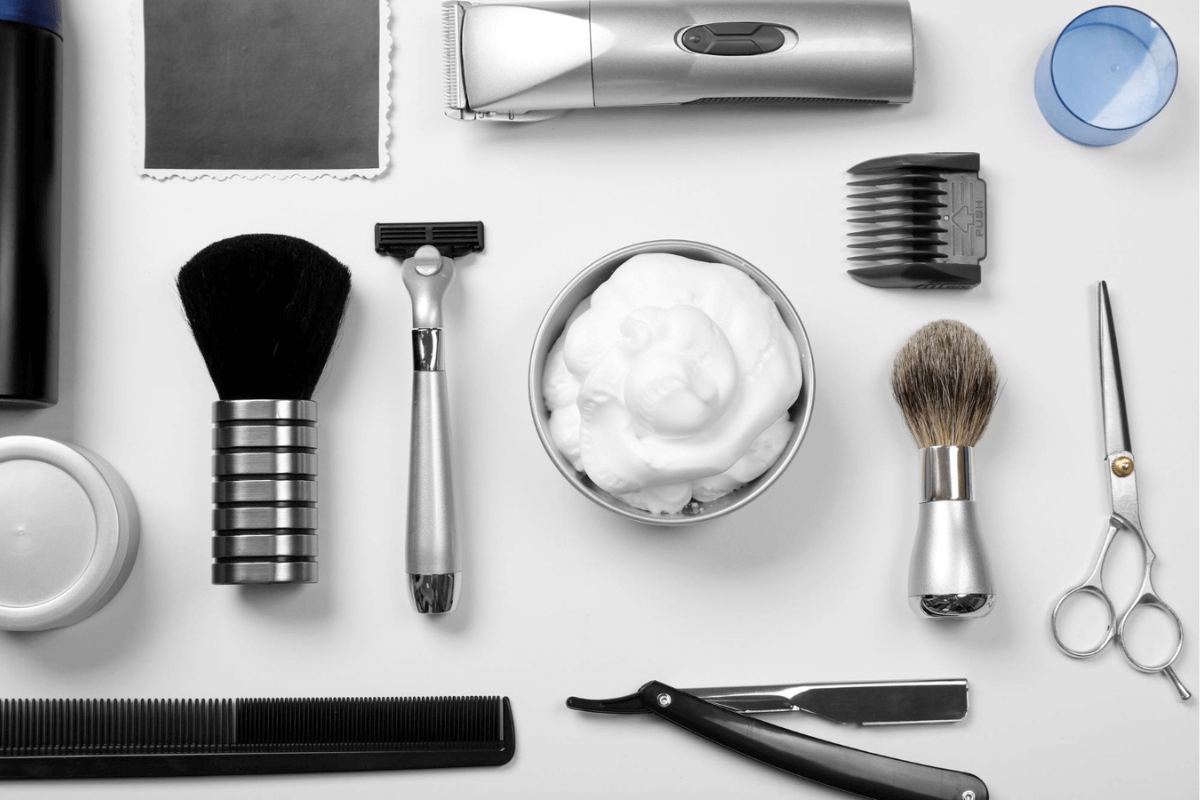
Everything from clippers, trimmers, blow dryers, shears, chairs, capes, compressors, and replacement parts all have a lifespan. Indeed you buy them because you need them to do your job properly but you also need to recover their cost over time. If you spent $1,500 on tools this year, part of your service revenue must cover that investment. Many barbers forget this, but it’s important to take it into account if you want to stay profitable.
A service that takes 45 minutes should cost more than a service that takes 20 because of its complexity and because time is one of your most valuable resources. Beyond time, experience and barber skills also matter. A highly trained barber with years of consistency, speed, and specialization brings more value to the client than someone still learning the basics and the pricing should reflect the quality and reliability you provide.

If you’re consistently booked out, it’s a sign that your value is higher than your prices and you should reset them accordingly. On the flip side, if you’re slow, you may need to examine either your pricing or your marketing.
Let's get things straight. You shouldn’t have to match their prices, but the other local barbershops can help you understand where you fit in the market based on the type of clients you want and how you're positioning your brand versus your competition. You definitely shouldn't compete solely on price. It’s a losing game. Instead, try to focus more on adding value, experience, and great results.
To set prices that support your business, you need to understand your costs, your time, and the value of your work. Below you’ll find a simplified, structured breakdown of the steps needed to calculate sustainable barbershop service prices.

The first thing you want to look at is your annual overhead, meaning everything that costs you to run your business for an entire year. This includes your rent, utilities, supplies, software, insurance, your desired profit, and even your self-employment taxes. All of these are real expenses. Write down everything you spend each month, add it up, and multiply it by twelve. That total is the amount you need to bring in each year just to keep the doors open.
💈Keep in mind: Recalculate your annual overhead at least once a year to make sure your pricing stays accurate.
Once you know your overhead, the next step is figuring out your draft annual hours, which is just a fancy way of saying how many hours you want to work in a year. Start with your weekly schedule. For example, if you prefer to work eight hours a day for four days a week, that’s 32 hours per week. Multiply that by the 52 weeks in a year, and you get 1,664 hours. That’s your working potential if you never took a single day off.
You’re not a machine and you shouldn’t run your business like you are one. So you need time off and you should build that into your pricing. This is where your final annual hours come in. Maybe you want a two-week vacation every year. If you work four days a week, that’s eight working days off, which equals 64 hours. Subtract that from your draft hours, and you end up with 1,600 hours. This number is important because it creates built-in paid time off for yourself and your life.
Break-even number is the amount you need to earn per minute just to cover those yearly expenses. In general a shop often needs roughly 10-15 haircuts per day (about 300–400 per month), depending on pricing and overhead to break-even. Using the example above, let's say your annual overhead is $115,350 and you plan to work 1,600 hours. If you divide your overhead by your annual hours, you get about $72.09 per working hour. Break that down even further by dividing by 60, and it comes out to roughly $1.20 per minute. That means every minute you work needs to generate at least $1.20 just for you to break even. No profit, no cushion just covering costs.
To calculate your break-even rate, use the formulas below:
Break-even per hour = Annual overhead ÷ Final annual hours
Break-even per minute = Hourly rate ÷ 60
Using our example:

Next, you want to understand your product cost per service. This is often overlooked, but it matters more than you think. Let’s say you use a 24-ounce product that costs $24. That’s a dollar per ounce. If on average you use two ounces for a specific service, that service uses $2 worth of product. If you use multiple products, you add each one up. It might seem tedious, but this level of detail is exactly how successful businesses stay profitable.
Now that you know your product costs, you need to calculate how long the service actually takes. Time yourself on a typical service, with as few distractions as possible. Don’t time yourself on your fastest or “perfect” service because your pricing should be based on your real, everyday pace and not on the rare days when everything goes perfectly. Now, convert that time into minutes whether it takes you 30 minutes, 60 minutes, or 90 minutes on average. The time and the pricing will be raised proportionally. For example a skin fade might consistently take 45 minutes, while a buzz cut takes 20. Tracking this allows you to price each service appropriately instead of using a one-size-fits-all price.
💈Keep in mind: Also include the time it takes to sanitize your station, change your razor, reset your tools, and transition between clients. Even 3-5 minutes per client adds up and affects your true earning time.

The basic men’s haircut costs can range from $30 to $50, with premium or specialty services reaching $50-$150 but to find your correct price you need to calculate your total cost per service. Using our example numbers, if a service takes 30 minutes and your break-even rate is $1.20 per minute, that service costs you $36 in labor alone. Add an average $6 product cost, and you’re at $42 just to break even. That means if you charge less than $42, you’re losing money. If you charge exactly $42, you’re breaking even and this is not a sustainable long-term business because you won’t be able to build savings, invest back into your business, and pay yourself for your skill, experience, and value.
Now that you know how to calculate your barbershop service prices, let’s take a look at what are the most common pricing mistakes barbers make.
When it comes to setting prices, most barbers don’t intentionally undervalue themselves but many simply fall into common traps without even realizing it and some of mistakes are:
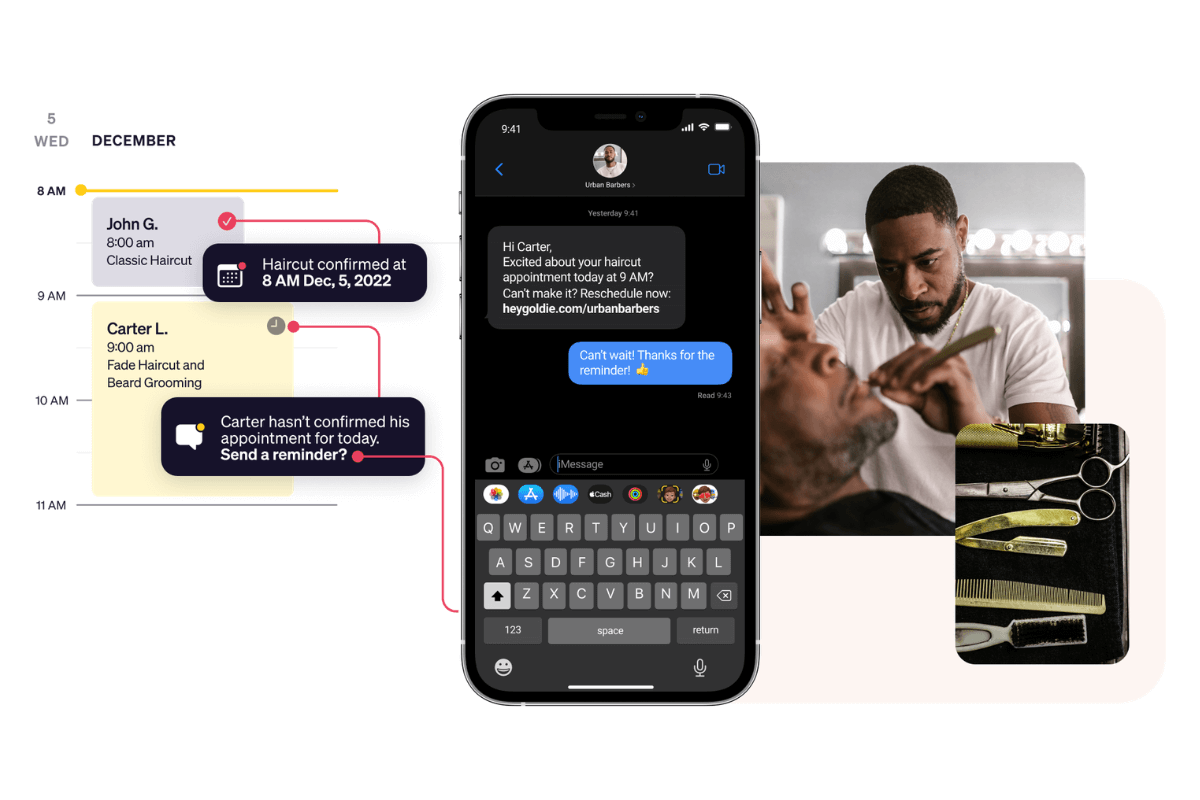
A lot of barbers avoid asking clients to rebook because they feel awkward or they are not confident enough. But think about it, if your dentist didn’t schedule your next appointment, how often would you randomly remember to go? Probably not often. If you don’t guide your clients to book their next appointment, you leave the relationship up to chance. Sure, your closest clients will come back no matter what but what about the other 50%, 70%, or even 80% who like you but aren’t loyal yet? If you don’t have the confidence to tell them to rebook, Goldie comes in hand. It helps barbers automatically send rebooking messages, reminders, and follow-up messages to your clients while you do what you know best, making men look and feel great.
Just because the shop down the street charges $30 a cut doesn’t mean you should. Their overhead might be lower, their experience may differ, or their brand might attract a completely different type of client. When barbers copy prices blindly, they often end up undercharging because they haven’t accounted for their own expenses, skill level, location, or goals.
Another common issue is charging based on confidence or guessing instead of doing the math. Many barbers choose a price that “feels safe” so they won’t scare clients away. But this often leads to burnout because you’re working too hard for too little pay. You might feel exhausted at the end of the week but still struggle to cover your bills. Clear, calculated pricing, as mentioned above, gives you control and removes the stress of wondering whether you're charging enough.
A lot of barbers also never raise their prices for years, even though everything else around them becomes more expensive. And we get it, announcing a barbershop price increase is not easy and comes with the mental stress of losing clients. But inflation, changes in the local economy, and the rising cost of supplies will directly affect your bottom line and eat your business alive. Or if the city you work in becomes more expensive or the demand for barbers increases, your prices should reflect that. Staying at the same price point year after year means you’re slowly making less money, even if your workload stays the same.
When your prices are built on real numbers instead of emotion or guesswork, your barbershop becomes more profitable and easier to grow. Know your numbers, price with intention, and let your business support your craft not drain the life out of it.

.webp)